Sie sind bereits eingeloggt. Klicken Sie auf 2. tolino select Abo, um fortzufahren.
Bitte loggen Sie sich zunächst in Ihr Kundenkonto ein oder registrieren Sie sich bei bücher.de, um das eBook-Abo tolino select nutzen zu können.
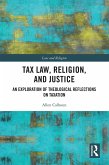
The book highlights the interconnections between three framing concepts in the development of modern western law: religion, race, and rights. The author challenges the assumption that law is an objective, rational and secular enterprise by showing that the rule of law is historically grounded and linked to the particularities of Christian morality, the forces of capitalism dependent upon exploitation of minorities, and specific conceptions of individualism that surfaced with the Reformation in the sixteenth century and rapidly developed in the Enlightenment in the seventeenth and eighteenth…mehr
The book highlights the interconnections between three framing concepts in the development of modern western law: religion, race, and rights. The author challenges the assumption that law is an objective, rational and secular enterprise by showing that the rule of law is historically grounded and linked to the particularities of Christian morality, the forces of capitalism dependent upon exploitation of minorities, and specific conceptions of individualism that surfaced with the Reformation in the sixteenth century and rapidly developed in the Enlightenment in the seventeenth and eighteenth centuries. Drawing upon landmark legal decisions and historical events, the book emphasises that justice is not blind because our concept of justice changes over time and is linked to economic power, social values, and moral sensibilities that are neither universal nor apolitical. Highlighting the historical interconnections between religion, race and rights aids our understanding of contemporary socio-legal issues. In the twenty-first century, the economic might of the USA and the west often leads to a myopic vision of law and a belief in its universal application. This ignores the cultural specificity of western legal concepts, and prevents us from appreciating that, analogous to previous colonial periods, in a global political economy Anglo-American law is not always transportable, transferable, or translatable across political landscapes and religious communities.
Die Herstellerinformationen sind derzeit nicht verfügbar.
Autorenporträt
Eve Darian-Smith is Professor of Global & International Studies at the University of California Santa Barbara, USA, and the author of Bridging Divides: The Channel Tunnel and English Legal Identity in the New Europe (Winner of the Law and Society Association Herbert Jacob Book Prize).
Inhaltsangabe
Introduction: Connecting Religion, Race and Rights I: Moving toward Separation of Church and State Chapter 1: Martin Luther and the Challenge to the Catholic Church (1517) Religion: Protest and Reform Race: The Infidel Turk Rights: Demanding Secular Law Conclusion Chapter 2: Executing the King: The Trial of Charles I (1649) Religion: Protestant and Catholic Violence Race: Religious Intolerance and Legalizing Racism Rights: Defining the Rights of King, Parliament and Subject Conclusion Chapter 3: Revolution and Thomas Paine's Rights of Man (1791) Religion: The Age of Reason and the Challenge of Science Race: Questioning Slavery and Discrimination Rights: Law's Coming of Age in Rights of Man Conclusion II: Capitalism, Colonialism and Nationalism Chapter 4: Sugar, Slaves, Rebellion, Murder (1865) Religion: The 'Divine Institution' of Slavery Race: Scientific Racism Rights: Empire's Right to Massacre Conclusion Chapter 5: Demanding the Eight-Hour Workday (1886) Religion: Law as Faith Race: Racializing Labor 161 Rights: Workers versus Laissez-Faire Capitalism Conclusion Chapter 6: Civilizing Native Americans-The Dawes Act (1887) Religion: Missionaries and Heathens Race: Determining the Race Within Rights: Limiting Native Sovereignty Conclusion III: Religion, Race and Rights in a Global Era Chapter 7: Nuremberg's Legacy (1945-49) Religion: Confronting Religious Pluralism Race: Rethinking Race Rights: Implementing Human Rights Conclusion Chapter 8: Democracy, Neoliberalism, and the New Crusades Religion: Exploiting God Race: 'Saving Brown Women' Rights: The Challenges of Neoliberalism Conclusion Conclusion: The Resurgence of Faith
Es gelten unsere Allgemeinen Geschäftsbedingungen: www.buecher.de/agb
Impressum
www.buecher.de ist ein Internetauftritt der buecher.de internetstores GmbH
Geschäftsführung: Monica Sawhney | Roland Kölbl | Günter Hilger
Sitz der Gesellschaft: Batheyer Straße 115 - 117, 58099 Hagen
Postanschrift: Bürgermeister-Wegele-Str. 12, 86167 Augsburg
Amtsgericht Hagen HRB 13257
Steuernummer: 321/5800/1497
USt-IdNr: DE450055826