22,95 €
22,95 €
inkl. MwSt.
Sofort per Download lieferbar

11 °P sammeln
22,95 €
Als Download kaufen
22,95 €
inkl. MwSt.
Sofort per Download lieferbar
11 °P sammeln
Jetzt verschenken
Alle Infos zum eBook verschenken
22,95 €
inkl. MwSt.
Sofort per Download lieferbar
Alle Infos zum eBook verschenken
11 °P sammeln

Andere Kunden interessierten sich auch für
") Remembering the Past in Contemporary African American Fiction (eBook, ePUB)19,95 €
Remembering the Past in Contemporary African American Fiction (eBook, ePUB)19,95 €") The Afro-Latino Memoir (eBook, ePUB)21,95 €
The Afro-Latino Memoir (eBook, ePUB)21,95 €") Class Interruptions (eBook, ePUB)16,95 €
Class Interruptions (eBook, ePUB)16,95 €") Dislocating Race and Nation (eBook, ePUB)19,95 €
Dislocating Race and Nation (eBook, ePUB)19,95 €") Knave, Fool, and Genius (eBook, ePUB)15,95 €
Knave, Fool, and Genius (eBook, ePUB)15,95 €") In This Remote Country (eBook, ePUB)15,95 €
In This Remote Country (eBook, ePUB)15,95 €") Ain't Got No Home (eBook, ePUB)19,95 €
Ain't Got No Home (eBook, ePUB)19,95 €






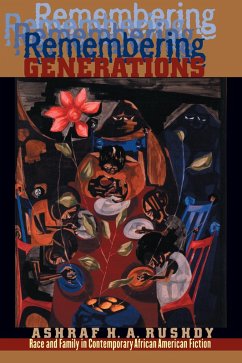
Slavery is America’s family secret, a partially hidden phantom that continues to haunt our national imagination. Remembering Generations explores how three contemporary African American writers artistically represent this notion in novels about the enduring effects of slavery on the descendants of slaves in the post–civil rights era. Focusing on Gayl Jones’s Corregidora (1975), David Bradley’s The Chaneysville Incident (1981), and Octavia Butler’s Kindred (1979), Ashraf Rushdy situates these works in their cultural moment of production, highlighting the ways in which they respond to contemporary debates about race and family. Tracing the evolution of this literary form, he considers such works as Edward Ball’s Slaves in the Family (1998), in which descendants of slaveholders expose the family secrets of their ancestors. Remembering Generations examines how cultural works contribute to social debates, how a particular representational form emerges out of a specific historical epoch, and how some contemporary intellectuals meditate on the issue of historical responsibility — of recognizing that the slave past continues to exert an influence on contemporary American society.
Dieser Download kann aus rechtlichen Gründen nur mit Rechnungsadresse in A, D ausgeliefert werden.