47,95 €
inkl. MwSt.
Sofort per Download lieferbar
24 °P sammeln

Andere Kunden interessierten sich auch für
") Renewable Energies (eBook, ePUB)47,95 €
Renewable Energies (eBook, ePUB)47,95 €") Venezuela: A Petro-State Using Renewable Energies (eBook, PDF)40,95 €
Venezuela: A Petro-State Using Renewable Energies (eBook, PDF)40,95 €") Sustainable Energy Transitions (eBook, PDF)48,95 €
Sustainable Energy Transitions (eBook, PDF)48,95 €") A Critical Review of Scottish Renewable and Low Carbon Energy Policy (eBook, PDF)72,95 €
A Critical Review of Scottish Renewable and Low Carbon Energy Policy (eBook, PDF)72,95 €") Unsustainable (eBook, PDF)24,95 €
Unsustainable (eBook, PDF)24,95 €") Handbuch Energiewende und Partizipation (eBook, PDF)139,99 €
Handbuch Energiewende und Partizipation (eBook, PDF)139,99 €") Global Energy Transition and Sustainable Development Challenges, Vol. 2 (eBook, PDF)112,95 €
Global Energy Transition and Sustainable Development Challenges, Vol. 2 (eBook, PDF)112,95 €


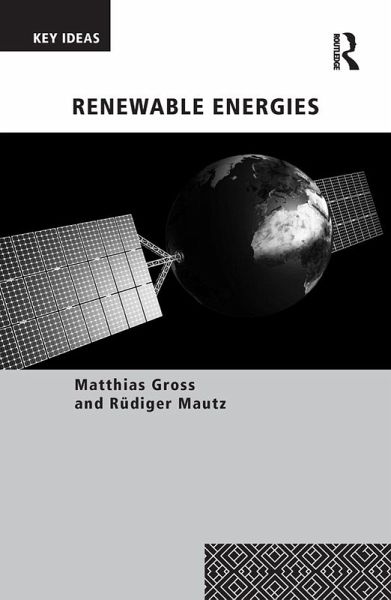
Renewable Energy normally refers to usable energy sources that are an alternative to fuel sources, but without the negatively evaluated consequences of the replaced fuels. Although energy issues have a long tradition in sociology and other social sciences, it may now be high time to conceptualize these in sociological terms as the lynchpin in our understanding of the way societies are set to develop in the 21st century.
This concise book focuses on sociological attempts at better framing contemporary theories of energy transformations and to deliver an accessible overview on the relationships between different types of renewable energy sources and their practical usages in modern societies. A strong focus is laid upon new forms of environmental governance and unavoidable knowledge gaps triggered by attempts to transform contemporary energy systems to renewable ones.
Critical topics include the challenge of transition from centralized to decentralized system structures, the integration of renewable energies into existing energy structures or the replacement of these, coping strategies to unforeseen risks and conflict issues, and socio-cultural reservations to new technologies connected to renewable energies.
This concise book focuses on sociological attempts at better framing contemporary theories of energy transformations and to deliver an accessible overview on the relationships between different types of renewable energy sources and their practical usages in modern societies. A strong focus is laid upon new forms of environmental governance and unavoidable knowledge gaps triggered by attempts to transform contemporary energy systems to renewable ones.
Critical topics include the challenge of transition from centralized to decentralized system structures, the integration of renewable energies into existing energy structures or the replacement of these, coping strategies to unforeseen risks and conflict issues, and socio-cultural reservations to new technologies connected to renewable energies.
Dieser Download kann aus rechtlichen Gründen nur mit Rechnungsadresse in A, B, BG, CY, CZ, D, DK, EW, E, FIN, F, GR, HR, H, IRL, I, LT, L, LR, M, NL, PL, P, R, S, SLO, SK ausgeliefert werden.
'The ongoing transition to renewable energy sources is much more than a substitution of fossil fuels by alternative energy carriers. The great merit of this book is to shed light on the interdependency of new forms of energy provision with profound changes in our societies and to show that social sciences are essential for understanding this challenge.' - Harald Rohracher, Professor of Technology and Social Change, Linköping University
It is a great merit of this book to alert to the effects of the energy transition as a real world experiment. [...] Gross and Mautz clarify that such real world experiments cannot be assessed with classical tools of risk assessments since there are no models or reliable data available to cope with the complexity of the processes involved. Therefore, a high level of ignorance is involved so that trust in experts and politics becomes ever more important. - Christian Büscher, Technology Assessment: Theory and Practice
It is a great merit of this book to alert to the effects of the energy transition as a real world experiment. [...] Gross and Mautz clarify that such real world experiments cannot be assessed with classical tools of risk assessments since there are no models or reliable data available to cope with the complexity of the processes involved. Therefore, a high level of ignorance is involved so that trust in experts and politics becomes ever more important. - Christian Büscher, Technology Assessment: Theory and Practice