14,95 €
14,95 €
inkl. MwSt.
Sofort per Download lieferbar

7 °P sammeln
14,95 €
Als Download kaufen
14,95 €
inkl. MwSt.
Sofort per Download lieferbar
7 °P sammeln
Jetzt verschenken
Alle Infos zum eBook verschenken
14,95 €
inkl. MwSt.
Sofort per Download lieferbar
Alle Infos zum eBook verschenken
7 °P sammeln

Andere Kunden interessierten sich auch für
") Racial Reconciliation (eBook, ePUB)76,95 €
Racial Reconciliation (eBook, ePUB)76,95 €") Justice before Reconciliation (eBook, ePUB)55,95 €
Justice before Reconciliation (eBook, ePUB)55,95 €") Indigenous Reconciliation and Decolonization (eBook, ePUB)41,95 €
Indigenous Reconciliation and Decolonization (eBook, ePUB)41,95 €") Sociology of World Heritage (eBook, ePUB)41,95 €
Sociology of World Heritage (eBook, ePUB)41,95 €") System Kids (eBook, ePUB)14,95 €
System Kids (eBook, ePUB)14,95 €") Racial Imagination and the American Dream (eBook, ePUB)39,95 €
Racial Imagination and the American Dream (eBook, ePUB)39,95 €") Routledge International Handbook of Memory Studies (eBook, ePUB)47,95 €
Routledge International Handbook of Memory Studies (eBook, ePUB)47,95 €



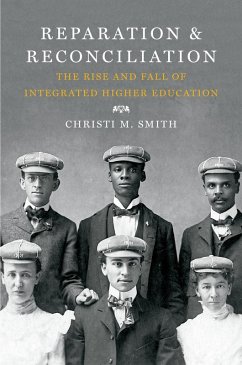
Reparation and Reconciliation is the first book to reveal the nineteenth-century struggle for racial integration on U.S. college campuses. As the Civil War ended, the need to heal the scars of slavery, expand the middle class, and reunite the nation engendered a dramatic interest in higher education by policy makers, voluntary associations, and African Americans more broadly. Formed in 1846 by Protestant abolitionists, the American Missionary Association united a network of colleges open to all, designed especially to educate African American and white students together, both male and female. The AMA and its affiliates envisioned integrated campuses as a training ground to produce a new leadership class for a racially integrated democracy. Case studies at three colleges — Berea College, Oberlin College, and Howard University — reveal the strategies administrators used and the challenges they faced as higher education quickly developed as a competitive social field. Through a detailed analysis of archival and press data, Christi M. Smith demonstrates that pressures between organizations — including charities and foundations — and the emergent field of competitive higher education led to the differentiation and exclusion of African Americans, Appalachian whites, and white women from coeducational higher education and illuminates the actors and the strategies that led to the persistent salience of race over other social boundaries.
Dieser Download kann aus rechtlichen Gründen nur mit Rechnungsadresse in A, D ausgeliefert werden.