76,95 €
76,95 €
inkl. MwSt.
Sofort per Download lieferbar

38 °P sammeln
76,95 €
Als Download kaufen
76,95 €
inkl. MwSt.
Sofort per Download lieferbar
38 °P sammeln
Jetzt verschenken
Alle Infos zum eBook verschenken
76,95 €
inkl. MwSt.
Sofort per Download lieferbar
Alle Infos zum eBook verschenken
38 °P sammeln

Andere Kunden interessierten sich auch für
") Restoring America's Fiscal Constitution (eBook, PDF)76,95 €
Restoring America's Fiscal Constitution (eBook, PDF)76,95 €") Race Neutrality (eBook, ePUB)31,95 €
Race Neutrality (eBook, ePUB)31,95 €") Public Performance Budgeting (eBook, ePUB)39,95 €
Public Performance Budgeting (eBook, ePUB)39,95 €") Rural Tax Reform in China (eBook, ePUB)45,95 €
Rural Tax Reform in China (eBook, ePUB)45,95 € (eBook, ePUB)") Fiscal Tiers (Routledge Revivals) (eBook, ePUB)37,95 €
Fiscal Tiers (Routledge Revivals) (eBook, ePUB)37,95 €") Public Sector Entrepreneurship (eBook, ePUB)28,95 €
Public Sector Entrepreneurship (eBook, ePUB)28,95 €") The Paradox of Fiscal Austerity (eBook, ePUB)28,95 €
The Paradox of Fiscal Austerity (eBook, ePUB)28,95 €




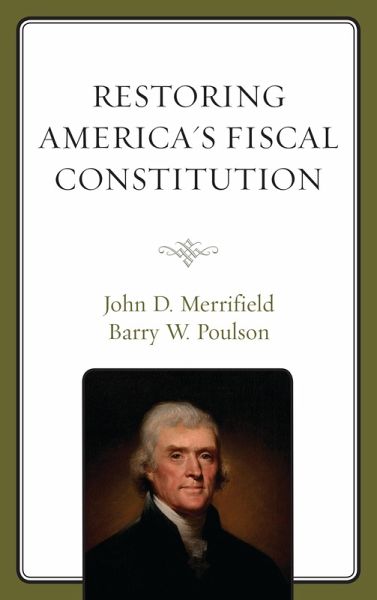
Restoring America's Fiscal Constitution estimates the potential impact of new fiscal rules on the U.S. economy over the next two decades. The new rules would require a cyclically balanced budget and an expenditure limit. The study shows that over the forecast period, the budget could be balanced and the total debt-to-GDP ratio reduced to the 60 percent tolerance level under this scheme, but this fiscal consolidation can only be achieved using a combination of fiscal reforms that go far beyond what has been proposed by Congress and the President.
The first chapter explores the theoretical foundations of a fiscal constitution. The orthodox public finance view of public debt is contrasted with a public choice perspective. This is followed by chapters surveying the new fiscal rules enacted in other countries to address debt issues. Several chapters provide a historical perspective on U.S. debt, including a critical appraisal of our fiscal rules. New laws are proposed to address the debt crisis, and a dynamic simulation model is used to estimate the impact of the proposed laws on the U.S. economy. The final section provides a roadmap for enacting the proposed constitutional and statutory fiscal rules.
The first chapter explores the theoretical foundations of a fiscal constitution. The orthodox public finance view of public debt is contrasted with a public choice perspective. This is followed by chapters surveying the new fiscal rules enacted in other countries to address debt issues. Several chapters provide a historical perspective on U.S. debt, including a critical appraisal of our fiscal rules. New laws are proposed to address the debt crisis, and a dynamic simulation model is used to estimate the impact of the proposed laws on the U.S. economy. The final section provides a roadmap for enacting the proposed constitutional and statutory fiscal rules.