56,95 €
56,95 €
inkl. MwSt.
Sofort per Download lieferbar

28 °P sammeln
56,95 €
Als Download kaufen
56,95 €
inkl. MwSt.
Sofort per Download lieferbar
28 °P sammeln
Jetzt verschenken
Alle Infos zum eBook verschenken
56,95 €
inkl. MwSt.
Sofort per Download lieferbar
Alle Infos zum eBook verschenken
28 °P sammeln

Andere Kunden interessierten sich auch für
") Rethinking Industrial Relations (eBook, PDF)56,95 €
Rethinking Industrial Relations (eBook, PDF)56,95 €") Labor Struggle in the Post Office: From Selective Lobbying to Collective Bargaining (eBook, ePUB)49,95 €
Labor Struggle in the Post Office: From Selective Lobbying to Collective Bargaining (eBook, ePUB)49,95 €") Labor and Employment Issues for the Safety Professional (eBook, ePUB)88,95 €
Labor and Employment Issues for the Safety Professional (eBook, ePUB)88,95 €") Double Shift (eBook, ePUB)43,95 €
Double Shift (eBook, ePUB)43,95 €") Rethinking Strategic Learning (eBook, ePUB)45,95 €
Rethinking Strategic Learning (eBook, ePUB)45,95 €") The Negotiation Handbook (eBook, ePUB)37,95 €
The Negotiation Handbook (eBook, ePUB)37,95 €") Evaluating Information Systems (eBook, ePUB)55,95 €
Evaluating Information Systems (eBook, ePUB)55,95 €





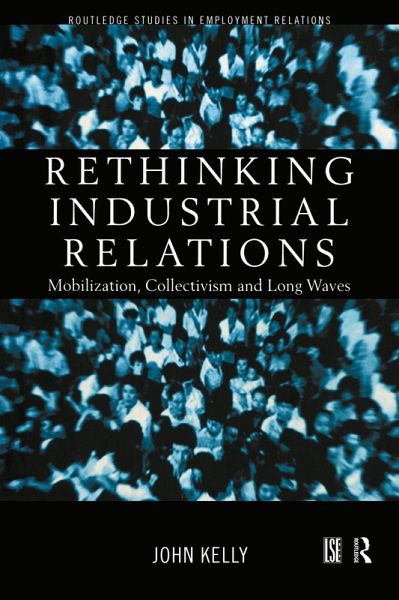
This original book is a wide-ranging, radical and highly innovative critique of the prevailing orthodoxies within industrial relations and human resource management. It covers:
Containing a detailed examination of the evolution of industrial relations, it argues that the area is often under-theorized and influenced by the policy agenda of the state or employers, and will prove informative reading for students of industrial relations.
- central problems in industrial relations
- the mobilization theory of collective action
- the growth of non-union workplaces and the prospects and desirability of a new labour-management social partnership
- an historical account of worker collectivism, organization and militancy and state or employer counter mobilization
- a critique of postmodernism and accounts of the end of the labour movement
Containing a detailed examination of the evolution of industrial relations, it argues that the area is often under-theorized and influenced by the policy agenda of the state or employers, and will prove informative reading for students of industrial relations.
Dieser Download kann aus rechtlichen Gründen nur mit Rechnungsadresse in A, B, BG, CY, CZ, D, DK, EW, E, FIN, F, GR, HR, H, IRL, I, LT, L, LR, M, NL, PL, P, R, S, SLO, SK ausgeliefert werden.
'One of the key and outstanding contributions to the study of employment and industrial relations in the last generation.' - Gregor Gall and Jane Holgate, Economic and Industrial Democracy
'One of the most important theoretical developments in contemporary IR scholarship.' - Martin Behrens and Andreas Pekarek
'Ambitious and provocative' - The Journal of Industrial Relations
'One of the most important theoretical developments in contemporary IR scholarship.' - Martin Behrens and Andreas Pekarek
'Ambitious and provocative' - The Journal of Industrial Relations
'One of the key and outstanding contributions to the study of employment and industrial relations in the last generation.' - Gregor Gall and Jane Holgate, Economic and Industrial Democracy
'One of the most important theoretical developments in contemporary IR scholarship.' - Martin Behrens and Andreas Pekarek
'Ambitious and provocative' - The Journal of Industrial Relations
'One of the most important theoretical developments in contemporary IR scholarship.' - Martin Behrens and Andreas Pekarek
'Ambitious and provocative' - The Journal of Industrial Relations