Sie sind bereits eingeloggt. Klicken Sie auf 2. tolino select Abo, um fortzufahren.
Bitte loggen Sie sich zunächst in Ihr Kundenkonto ein oder registrieren Sie sich bei bücher.de, um das eBook-Abo tolino select nutzen zu können.
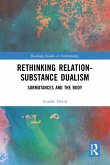
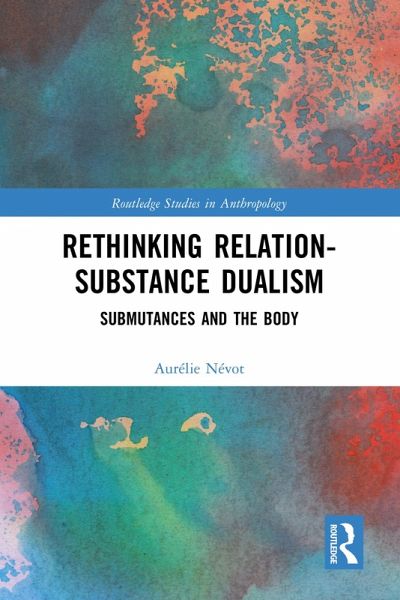
This book analyses anthropological debates on "relationism" (referring to methodological and theoretical issues) and sets out to reconsider these discussions with regards to the notion of "substance" (generally associated with the body). Reflecting on the philosophical origins and implications of these two concepts, the author aims to bring them to the heart of contemporary anthropological discourse and addresses the erasure (or blurring) of "substance" in favour of "relation." The argument put forward is that the conceptual pairing of "substance-relation" should be substituted for the…mehr
This book analyses anthropological debates on "relationism" (referring to methodological and theoretical issues) and sets out to reconsider these discussions with regards to the notion of "substance" (generally associated with the body). Reflecting on the philosophical origins and implications of these two concepts, the author aims to bring them to the heart of contemporary anthropological discourse and addresses the erasure (or blurring) of "substance" in favour of "relation." The argument put forward is that the conceptual pairing of "substance-relation" should be substituted for the "nature-culture" dualism that has been dominant in structural anthropology. The chapters engage with the work of scholars such as Philippe Descola, Eduardo Viveiros de Castro, and Wang Mingming as part of a decentring and questioning of the tradition in which anthropology is rooted. The book also considers the role that the anthropology of China plays in the re-evaluation of the relationship between relation and substance. The concept of "submutance" is introduced with Chinese ethnographic material to explore the possibility of moving beyond the relation-substance dualism of Western heritage. This is valuable reading for scholars interested in the theory and history of anthropology.
Dieser Download kann aus rechtlichen Gründen nur mit Rechnungsadresse in A, B, BG, CY, CZ, D, DK, EW, E, FIN, F, GR, HR, H, IRL, I, LT, L, LR, M, NL, PL, P, R, S, SLO, SK ausgeliefert werden.
Die Herstellerinformationen sind derzeit nicht verfügbar.
Autorenporträt
Aurélie Névot is an anthropologist and research professor at the French National Scientific Research Centre (CNRS).
Inhaltsangabe
Introduction. Lévi-Strauss' Enfants Terribles
Part I Historiographical Overview
1 From Substantialist Premises to Relationalist Perspectives. From Aristotle to Cognitivism via Lévi-Strauss
2 Anthropo-Philosophical and Ethno-Phenomenological Relations. From Torment to Ecstasy?
Conclusion to Part I
Part II Structuralist Legacies
3 Body and Intentionality. Descola's "Relative Universalism"
4 The body-Sign. Viveiros de Castro's anti-substantialist relationism
Conclusion to Part II
Part III Chinese Relationisms and Submutances
5 The Lost Body. Wang Mingming's "Cosmology of Relationship" and Hierarchical Relationism
6 Shamanic Bodies and Submutances. The Course of Writing, Blood, Breath and Water
Conclusion to Part III
Conclusion. "What the body can do"
Introduction. Lévi-Strauss' Enfants Terribles Part I Historiographical Overview 1 From Substantialist Premises to Relationalist Perspectives. From Aristotle to Cognitivism via Lévi-Strauss 2 Anthropo-Philosophical and Ethno-Phenomenological Relations. From Torment to Ecstasy? Conclusion to Part I Part II Structuralist Legacies 3 Body and Intentionality. Descola's "Relative Universalism" 4 The body-Sign. Viveiros de Castro's anti-substantialist relationism Conclusion to Part II Part III Chinese Relationisms and Submutances 5 The Lost Body. Wang Mingming's "Cosmology of Relationship" and Hierarchical Relationism 6 Shamanic Bodies and Submutances. The Course of Writing, Blood, Breath and Water Conclusion to Part III Conclusion. "What the body can do"
1 From Substantialist Premises to Relationalist Perspectives. From Aristotle to Cognitivism via Lévi-Strauss
2 Anthropo-Philosophical and Ethno-Phenomenological Relations. From Torment to Ecstasy?
Conclusion to Part I
Part II Structuralist Legacies
3 Body and Intentionality. Descola's "Relative Universalism"
4 The body-Sign. Viveiros de Castro's anti-substantialist relationism
Conclusion to Part II
Part III Chinese Relationisms and Submutances
5 The Lost Body. Wang Mingming's "Cosmology of Relationship" and Hierarchical Relationism
6 Shamanic Bodies and Submutances. The Course of Writing, Blood, Breath and Water
Conclusion to Part III
Conclusion. "What the body can do"
Introduction. Lévi-Strauss' Enfants Terribles Part I Historiographical Overview 1 From Substantialist Premises to Relationalist Perspectives. From Aristotle to Cognitivism via Lévi-Strauss 2 Anthropo-Philosophical and Ethno-Phenomenological Relations. From Torment to Ecstasy? Conclusion to Part I Part II Structuralist Legacies 3 Body and Intentionality. Descola's "Relative Universalism" 4 The body-Sign. Viveiros de Castro's anti-substantialist relationism Conclusion to Part II Part III Chinese Relationisms and Submutances 5 The Lost Body. Wang Mingming's "Cosmology of Relationship" and Hierarchical Relationism 6 Shamanic Bodies and Submutances. The Course of Writing, Blood, Breath and Water Conclusion to Part III Conclusion. "What the body can do"
Es gelten unsere Allgemeinen Geschäftsbedingungen: www.buecher.de/agb
Impressum
www.buecher.de ist ein Internetauftritt der buecher.de internetstores GmbH
Geschäftsführung: Monica Sawhney | Roland Kölbl | Günter Hilger
Sitz der Gesellschaft: Batheyer Straße 115 - 117, 58099 Hagen
Postanschrift: Bürgermeister-Wegele-Str. 12, 86167 Augsburg
Amtsgericht Hagen HRB 13257
Steuernummer: 321/5800/1497
USt-IdNr: DE450055826