8,95 €
inkl. MwSt.
Sofort per Download lieferbar
4 °P sammeln

Andere Kunden interessierten sich auch für
") How Elites Ate the Social Justice Movement (eBook, ePUB)14,83 €
How Elites Ate the Social Justice Movement (eBook, ePUB)14,83 €") Are Prisons Obsolete? (eBook, ePUB)6,99 €
Are Prisons Obsolete? (eBook, ePUB)6,99 €") Against Borders (eBook, ePUB)11,95 €
Against Borders (eBook, ePUB)11,95 €") Who Killed Berta Cáceres? (eBook, ePUB)14,95 €
Who Killed Berta Cáceres? (eBook, ePUB)14,95 €") Commune or Nothing! (eBook, ePUB)9,95 €
Commune or Nothing! (eBook, ePUB)9,95 €") The Dialectics of Dependency (eBook, ePUB)13,95 €
The Dialectics of Dependency (eBook, ePUB)13,95 €") Burn Loot Murder (eBook, ePUB)3,99 €
Burn Loot Murder (eBook, ePUB)3,99 €





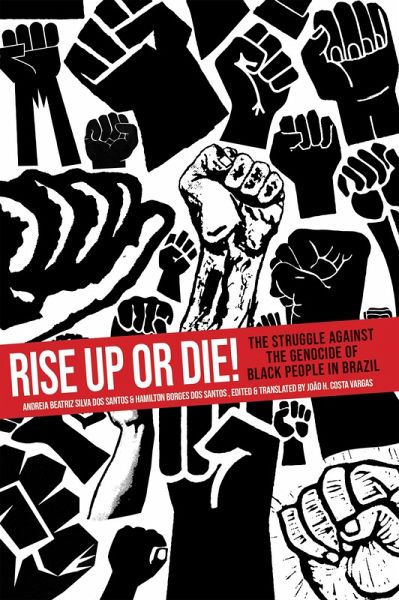
Inside one of the most daring and provocative Black organizations in Brazil of the last two decades, from the perspective of its founders and militants.
Rise Up or Die! describes the origins, main concepts, distinct phases, and visions of the future of one of the most innovative, daring, and militant Black organizations in Brazil. Firmly rooted in that country's long tradition of resistance and rebellion against a nation that depends on the continued hyper-exploitation, dehumanization, abandonment, and social and physical death of Black people, the organization invented what it refers to as bad manners in Black politics. If bad manners mean a refusal to abide by expectations of decorum, analysis, collective organizationand indeed the Brazilian genocidal model of racial democracythen Rise Up certainly fits the description. The organization invented a new political vocabulary, led to the formation of an autonomous Black School in Salvador (the Winnie Mandela School), and constantly attracts people from the most marginalized Black spaces of the largest Black nation in the world, second only to Nigeria.
Drawing on a constantly replenished matrix of Black radical traditions, the activists of Rise Up or Die relentlessly pursue invention as the necessary alternative to a social formation that simply hates Black people.
Rise Up or Die! describes the origins, main concepts, distinct phases, and visions of the future of one of the most innovative, daring, and militant Black organizations in Brazil. Firmly rooted in that country's long tradition of resistance and rebellion against a nation that depends on the continued hyper-exploitation, dehumanization, abandonment, and social and physical death of Black people, the organization invented what it refers to as bad manners in Black politics. If bad manners mean a refusal to abide by expectations of decorum, analysis, collective organizationand indeed the Brazilian genocidal model of racial democracythen Rise Up certainly fits the description. The organization invented a new political vocabulary, led to the formation of an autonomous Black School in Salvador (the Winnie Mandela School), and constantly attracts people from the most marginalized Black spaces of the largest Black nation in the world, second only to Nigeria.
Drawing on a constantly replenished matrix of Black radical traditions, the activists of Rise Up or Die relentlessly pursue invention as the necessary alternative to a social formation that simply hates Black people.
Dieser Download kann aus rechtlichen Gründen nur mit Rechnungsadresse in A, D ausgeliefert werden.