81,95 €
81,95 €
inkl. MwSt.
Sofort per Download lieferbar

41 °P sammeln
81,95 €
Als Download kaufen
81,95 €
inkl. MwSt.
Sofort per Download lieferbar
41 °P sammeln
Jetzt verschenken
Alle Infos zum eBook verschenken
81,95 €
inkl. MwSt.
Sofort per Download lieferbar
Alle Infos zum eBook verschenken
41 °P sammeln

Andere Kunden interessierten sich auch für
") Risk-Taking, Prevention and Design (eBook, PDF)81,95 €
Risk-Taking, Prevention and Design (eBook, PDF)81,95 €") Organizational Accidents Revisited (eBook, ePUB)49,95 €
Organizational Accidents Revisited (eBook, ePUB)49,95 €") Learning and Relearning Equipment Complexity (eBook, ePUB)45,95 €
Learning and Relearning Equipment Complexity (eBook, ePUB)45,95 €") Aviation Safety and Security (eBook, ePUB)45,95 €
Aviation Safety and Security (eBook, ePUB)45,95 €") Risk Management (eBook, ePUB)51,95 €
Risk Management (eBook, ePUB)51,95 €") Safety at Height (eBook, ePUB)52,95 €
Safety at Height (eBook, ePUB)52,95 €") Productive Safety Management (eBook, ePUB)38,95 €
Productive Safety Management (eBook, ePUB)38,95 €





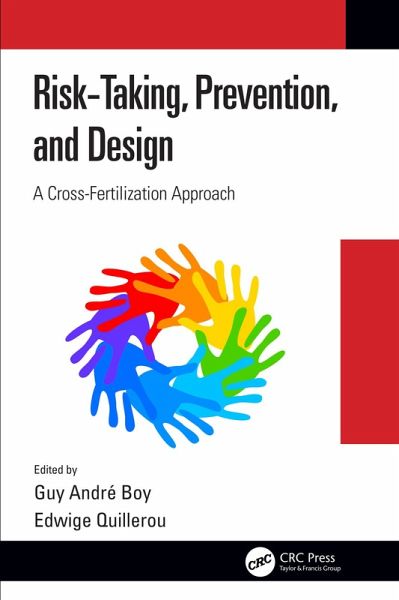
Most approaches that contribute to the design of life-critical systems almost only consider nominal situations where procedures can be developed and used to achieve satisfactory operations. These kinds of approaches lead to rigid ways of doing things and poorly address the needs for flexibility, especially when things go wrong. It is not a matter of human adaptation but of human systems integration (HSI) flexibility. HSI flexibility requires cross-fertilization of appropriate experiences combined with creativity. This book provides risk-management approaches and methods for combining prevention and design.
Features:
This book gathers and analyzes relevant field data to rationalize human and systems activity in various life-critical environments and workplaces, in a systemic manner, and in a variety of safety domains (e.g., aviation, road, navy, manufacturing, hospital, transportation, defense, sport). It further formalizes and analyzes risk-taking experience, expertise, stories about critical events, and scientific and professional literature data to help engineering designers, managers, and health and safety specialists.
The text is primarily written for graduate students and professionals working in the fields of occupational health and safety, ergonomics, human factors, cognitive engineering, and human-system integration.
Features:
- Discusses risk-management approaches and methods for combining prevention and design
- Examines a transdisciplinary approach to risk management in design and operations of safer life-critical systems
- Proposes an approach of work analysis during design, which enables design teams to consider HSI issues early enough to fix organizational problems upstream
- Teaches the combination of prevention and design for safety management
This book gathers and analyzes relevant field data to rationalize human and systems activity in various life-critical environments and workplaces, in a systemic manner, and in a variety of safety domains (e.g., aviation, road, navy, manufacturing, hospital, transportation, defense, sport). It further formalizes and analyzes risk-taking experience, expertise, stories about critical events, and scientific and professional literature data to help engineering designers, managers, and health and safety specialists.
The text is primarily written for graduate students and professionals working in the fields of occupational health and safety, ergonomics, human factors, cognitive engineering, and human-system integration.
Dieser Download kann aus rechtlichen Gründen nur mit Rechnungsadresse in A, B, BG, CY, CZ, D, DK, EW, E, FIN, F, GR, HR, H, IRL, I, LT, L, LR, M, NL, PL, P, R, S, SLO, SK ausgeliefert werden.