1,99 €
inkl. MwSt.
Sofort per Download lieferbar
0 °P sammeln

Andere Kunden interessierten sich auch für
") The Industrial History of England (eBook, ePUB)0,49 €
The Industrial History of England (eBook, ePUB)0,49 €") Britain for the British (eBook, ePUB)0,49 €
Britain for the British (eBook, ePUB)0,49 €") Venice (eBook, ePUB)3,99 €
Venice (eBook, ePUB)3,99 €") Chronicles of Old Rome (eBook, ePUB)13,95 €
Chronicles of Old Rome (eBook, ePUB)13,95 €") Importance of Being Civil (eBook, ePUB)14,95 €
Importance of Being Civil (eBook, ePUB)14,95 €") Don't Forward That Text! (eBook, ePUB)5,99 €
Don't Forward That Text! (eBook, ePUB)5,99 €") The Genesis of Modernity (eBook, ePUB)45,95 €
The Genesis of Modernity (eBook, ePUB)45,95 €





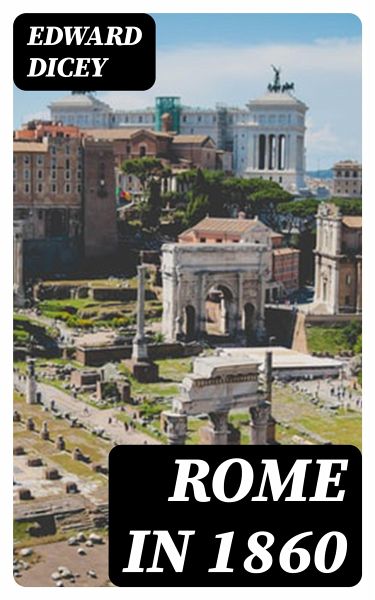
In "Rome in 1860," Edward Dicey masterfully chronicles the profound transformations occurring in Italian society and politics on the cusp of unification. Through a richly woven narrative interspersed with keen observations and vivid descriptions, Dicey captures the pulse of Rome during a pivotal year marked by social change, political fervor, and burgeoning nationalism. His journalistic style marries the aesthetic traditions of travel literature with incisive political commentary, offering readers a multifaceted understanding of Rome's evolution from papal rule to a unified state, set against the turbulent backdrop of 19th-century Europe. Edward Dicey was a British journalist and writer whose experiences in Italy informed his acute insights into the complexities of the Italian unification process. His background in travel writing and his deep understanding of European political dynamics further enriched his perspective, allowing him to navigate the intricate tapestry of Italian life with both empathy and critical acumen. Dicey's immersion in the culture and politics of the period renders his observations not only timely but also deeply resonant in the context of contemporary discussions around national identity and statehood. "Rome in 1860" is an essential read for historians, students of literature, and anyone keen to explore the confluence of travel writing and political discourse. Dicey's passionate examination not only illuminates a transformative epoch in Italian history but also serves as a timeless reflection on the intricate relationship between place, identity, and governance.
Dieser Download kann aus rechtlichen Gründen nur mit Rechnungsadresse in A, B, BG, CY, CZ, D, DK, EW, E, FIN, F, GR, H, IRL, I, LT, L, LR, M, NL, PL, P, R, S, SLO, SK ausgeliefert werden.