0,49 €
0,49 €
inkl. MwSt.
Sofort per Download lieferbar

0 °P sammeln
0,49 €
Als Download kaufen
0,49 €
inkl. MwSt.
Sofort per Download lieferbar
0 °P sammeln
Jetzt verschenken
Alle Infos zum eBook verschenken
0,49 €
inkl. MwSt.
Sofort per Download lieferbar
Alle Infos zum eBook verschenken
0 °P sammeln

Andere Kunden interessierten sich auch für
") Rousseau and Romanticism (eBook, ePUB)0,49 €
Rousseau and Romanticism (eBook, ePUB)0,49 €") A Short History of French Literature (eBook, ePUB)0,49 €
A Short History of French Literature (eBook, ePUB)0,49 € The "Characters" of Jean de La Bruyère (eBook, ePUB)1,99 €
") A Short History of French Literature (eBook, ePUB)0,49 €
A Short History of French Literature (eBook, ePUB)0,49 €") Animal Rhetoric and Natural Science in Eighteenth-Century Liberal Political Writing (eBook, ePUB)42,95 €
Animal Rhetoric and Natural Science in Eighteenth-Century Liberal Political Writing (eBook, ePUB)42,95 €") Gesammelte Literaturkritiken: Franz Kafka, die Tragödie eines Lebens + Thomas Mann, der Zauberberg + Giacomo Casanova + Ernest Hemingway + Rousseau + Cervantes zu Ehren + Kleist als Erzähler und mehr (eBook, ePUB)1,99 €
Gesammelte Literaturkritiken: Franz Kafka, die Tragödie eines Lebens + Thomas Mann, der Zauberberg + Giacomo Casanova + Ernest Hemingway + Rousseau + Cervantes zu Ehren + Kleist als Erzähler und mehr (eBook, ePUB)1,99 €") Confessions (eBook, ePUB)2,13 €
Confessions (eBook, ePUB)2,13 €




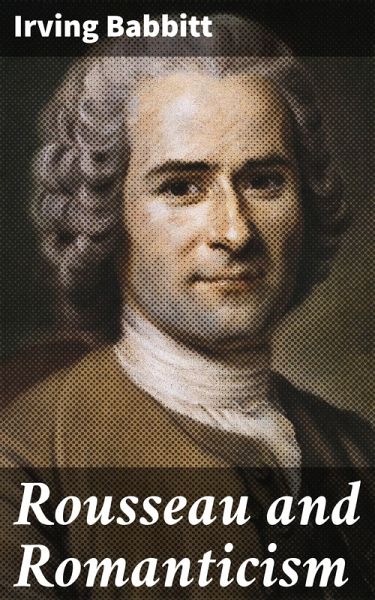
In "Rousseau and Romanticism," Irving Babbitt delves into the complex interplay between Jean-Jacques Rousseau's philosophical ideas and the burgeoning Romantic movement of the 18th and 19th centuries. Babbitt employs a critical lens, analyzing Rousseau's notions of individuality, emotion, and nature, proposing that his ideas served both as a catalyst for and a counterpoint to Romanticism's ideals. The prose is characterized by Babbitt's incisive clarity and rigorous scholarship, offering a nuanced exploration that situates Rousseau within the broader literary and philosophical context of his time, while examining the ramifications of his work on subsequent thinkers and artists. Irving Babbitt, an esteemed American literary scholar and critic, was deeply engaged with the intellectual currents of his era, particularly the tension between reason and sentiment. His academic journey fueled his exploration of the Romantic movement as both a response to and a departure from Enlightenment rationalism. This book reflects Babbitt's keen insights into human nature and culture, which were shaped by his background in classical literature and a commitment to the values of literary humanism. For scholars, students, and enthusiasts of literary criticism, "Rousseau and Romanticism" offers a profound reflection on the roots of Romantic thought. Babbitt's work encourages readers to reevaluate the impact of Rousseau's philosophy and its enduring consequences. This engaging study is not only a vital contribution to literary scholarship but also a compelling read for anyone interested in understanding the evolution of modern thought.
Dieser Download kann aus rechtlichen Gründen nur mit Rechnungsadresse in A, B, BG, CY, CZ, D, DK, EW, E, FIN, F, GR, H, IRL, I, LT, L, LR, M, NL, PL, P, R, S, SLO, SK ausgeliefert werden.