47,95 €
47,95 €
inkl. MwSt.
Sofort per Download lieferbar

24 °P sammeln
47,95 €
Als Download kaufen
47,95 €
inkl. MwSt.
Sofort per Download lieferbar
24 °P sammeln
Jetzt verschenken
Alle Infos zum eBook verschenken
47,95 €
inkl. MwSt.
Sofort per Download lieferbar
Alle Infos zum eBook verschenken
24 °P sammeln

Andere Kunden interessierten sich auch für
") New Perspectives on Medical Clowning (eBook, ePUB)19,95 €
New Perspectives on Medical Clowning (eBook, ePUB)19,95 €") Routledge International Handbook of Qualitative Nursing Research (eBook, ePUB)61,95 €
Routledge International Handbook of Qualitative Nursing Research (eBook, ePUB)61,95 €") Routledge Handbook of Complementary and Alternative Medicine (eBook, ePUB)49,95 €
Routledge Handbook of Complementary and Alternative Medicine (eBook, ePUB)49,95 €") Routledge Handbook of Well-Being (eBook, ePUB)39,95 €
Routledge Handbook of Well-Being (eBook, ePUB)39,95 €") Routledge Handbook of Health and Media (eBook, ePUB)43,95 €
Routledge Handbook of Health and Media (eBook, ePUB)43,95 €") Medicine, Health and the Arts (eBook, ePUB)54,95 €
Medicine, Health and the Arts (eBook, ePUB)54,95 €") Collaborative Arts-based Research for Social Justice (eBook, ePUB)42,95 €
Collaborative Arts-based Research for Social Justice (eBook, ePUB)42,95 €
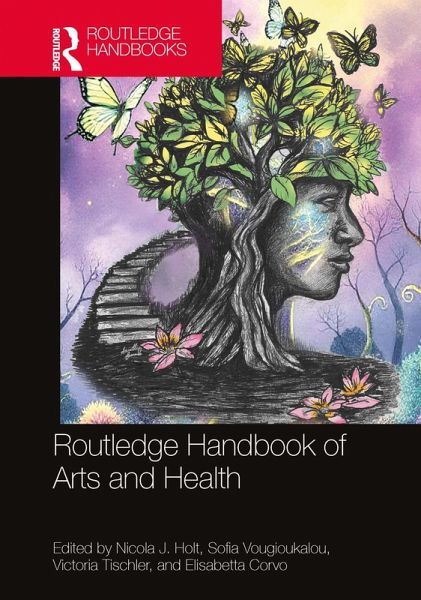
This comprehensive Handbook defines, surveys, and critiques the burgeoning discipline of arts and health. It brings together the growing evidence base and discusses policy and practice from around the world. Divided into five sections, the Handbook introduces the discipline of the arts and health, explains its importance, and critically examines historical developments, current practice, research theory, and policy.
The first section looks at historical and contemporary approaches to the arts and health, including considerations from global perspectives and discussion of relevant models and frameworks for conceptualising it. The second section provides an overview of the main methods, applications, evidence base, and active ingredients of individual domains of art, such as the performing arts, creative writing, and the visual arts. The third section highlights how the arts are used to help with specific health needs and with specific populations, providing a more detailed overview of research and practice in key areas, such as adult mental health, and working with children and young people. In the fourth section, consideration is given to how the arts can be used and integrated with specific health professions, such as within public health interventions, forensic settings, psychiatry, schools, hospitals, and occupational therapy. The fifth section explores established and emerging theoretical perspectives, debates, and models for understanding the impact of the arts for health, including epidemiological, biological, social, ethical and critical perspectives. The Handbook ends with a discussion of trends, complexities, and future directions in the field.
A comprehensive overview of the expanding research and scholarship in the arts and health, this Handbook is an essential reference for all advanced students, scholars, and practitioners from a wide range of related backgrounds, including the health professions, psychology, education, and the medical humanities.
The first section looks at historical and contemporary approaches to the arts and health, including considerations from global perspectives and discussion of relevant models and frameworks for conceptualising it. The second section provides an overview of the main methods, applications, evidence base, and active ingredients of individual domains of art, such as the performing arts, creative writing, and the visual arts. The third section highlights how the arts are used to help with specific health needs and with specific populations, providing a more detailed overview of research and practice in key areas, such as adult mental health, and working with children and young people. In the fourth section, consideration is given to how the arts can be used and integrated with specific health professions, such as within public health interventions, forensic settings, psychiatry, schools, hospitals, and occupational therapy. The fifth section explores established and emerging theoretical perspectives, debates, and models for understanding the impact of the arts for health, including epidemiological, biological, social, ethical and critical perspectives. The Handbook ends with a discussion of trends, complexities, and future directions in the field.
A comprehensive overview of the expanding research and scholarship in the arts and health, this Handbook is an essential reference for all advanced students, scholars, and practitioners from a wide range of related backgrounds, including the health professions, psychology, education, and the medical humanities.
Dieser Download kann aus rechtlichen Gründen nur mit Rechnungsadresse in A, B, BG, CY, CZ, D, DK, EW, E, FIN, F, GR, HR, H, IRL, I, LT, L, LR, M, NL, PL, P, R, S, SLO, SK ausgeliefert werden.