47,95 €
47,95 €
inkl. MwSt.
Sofort per Download lieferbar

24 °P sammeln
47,95 €
Als Download kaufen
47,95 €
inkl. MwSt.
Sofort per Download lieferbar
24 °P sammeln
Jetzt verschenken
Alle Infos zum eBook verschenken
47,95 €
inkl. MwSt.
Sofort per Download lieferbar
Alle Infos zum eBook verschenken
24 °P sammeln

Andere Kunden interessierten sich auch für
") The Routledge Handbook of Henri Lefebvre, The City and Urban Society (eBook, PDF)47,95 €
The Routledge Handbook of Henri Lefebvre, The City and Urban Society (eBook, PDF)47,95 €") Reluctant Partners? Non-Governmental Organizations, the State and Sustainable Agricultural Development (eBook, PDF)26,95 €
Reluctant Partners? Non-Governmental Organizations, the State and Sustainable Agricultural Development (eBook, PDF)26,95 €") Urban America Examined (eBook, PDF)21,95 €
Urban America Examined (eBook, PDF)21,95 €") Third World in the First (eBook, PDF)79,95 €
Third World in the First (eBook, PDF)79,95 €") An Introduction to Tourism and Anthropology (eBook, PDF)56,95 €
An Introduction to Tourism and Anthropology (eBook, PDF)56,95 €") Non-Governmental Organizations and the State in Asia (eBook, PDF)37,95 €
Non-Governmental Organizations and the State in Asia (eBook, PDF)37,95 €") Geographies of Exclusion (eBook, PDF)79,95 €
Geographies of Exclusion (eBook, PDF)79,95 €



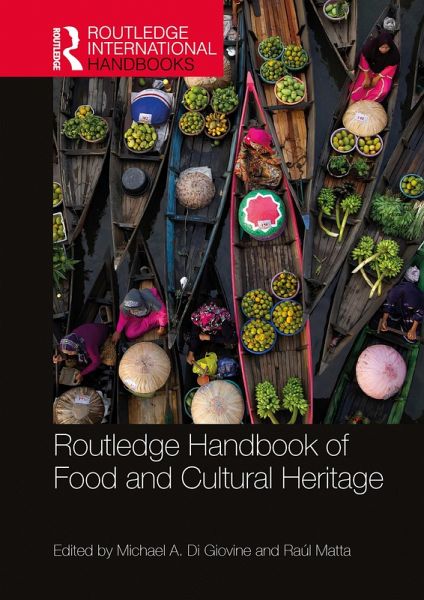
The Routledge Handbook of Food and Cultural Heritage explores the many varied intersections of food and cultural heritage from a robust, transdisciplinary perspective.
Innovative in its approach, this cutting-edge Handbook thinks beyond traditional boundaries to present unique perspectives on the myriad ways in which food and cultural heritage are entangled in theory and practice. Both are growing industries; both are deeply rooted in families, cultures, and societies; both generate controversy and are deployed for political and economic activism. They also both have intellectual lives of their own, and are centers of interdisciplinary fields themselves-yet they also intersect in interesting and, until this book, under-theorized ways. After a comprehensive introduction that presents and challenges the state-of-the-art in the disciplines of critical food and critical heritage studies, the Handbook's chapters are divided into six themes common to both fields: Ontologies and epistemologies of food and cultural heritage; material culture; identity, placemaking and belonging; politics and regulation; tourism development and heritage management; and contemporary issues and emerging approaches. To give representation of voices not usually heard in the scholarly tradition, special interviews with food-and-heritage practitioners complement the comprehensive chapters, adding further depth to the volume through their own lived experiences.
With contributions from nearly 50 internationally recognized scholars, social scientists, dieticians, practitioners, and activists, this book is essential reading to scholars, students, researchers, industry professionals, and practitioners looking to understand the complex and compelling ways in which food, foodways, and cultural heritage overlap and impact each other, providing venues for collaborations.
Innovative in its approach, this cutting-edge Handbook thinks beyond traditional boundaries to present unique perspectives on the myriad ways in which food and cultural heritage are entangled in theory and practice. Both are growing industries; both are deeply rooted in families, cultures, and societies; both generate controversy and are deployed for political and economic activism. They also both have intellectual lives of their own, and are centers of interdisciplinary fields themselves-yet they also intersect in interesting and, until this book, under-theorized ways. After a comprehensive introduction that presents and challenges the state-of-the-art in the disciplines of critical food and critical heritage studies, the Handbook's chapters are divided into six themes common to both fields: Ontologies and epistemologies of food and cultural heritage; material culture; identity, placemaking and belonging; politics and regulation; tourism development and heritage management; and contemporary issues and emerging approaches. To give representation of voices not usually heard in the scholarly tradition, special interviews with food-and-heritage practitioners complement the comprehensive chapters, adding further depth to the volume through their own lived experiences.
With contributions from nearly 50 internationally recognized scholars, social scientists, dieticians, practitioners, and activists, this book is essential reading to scholars, students, researchers, industry professionals, and practitioners looking to understand the complex and compelling ways in which food, foodways, and cultural heritage overlap and impact each other, providing venues for collaborations.
Dieser Download kann aus rechtlichen Gründen nur mit Rechnungsadresse in A, B, BG, CY, CZ, D, DK, EW, E, FIN, F, GR, HR, H, IRL, I, LT, L, LR, M, NL, PL, P, R, S, SLO, SK ausgeliefert werden.