43,95 €
43,95 €
inkl. MwSt.
Sofort per Download lieferbar

22 °P sammeln
43,95 €
Als Download kaufen
43,95 €
inkl. MwSt.
Sofort per Download lieferbar
22 °P sammeln
Jetzt verschenken
Alle Infos zum eBook verschenken
43,95 €
inkl. MwSt.
Sofort per Download lieferbar
Alle Infos zum eBook verschenken
22 °P sammeln

Andere Kunden interessierten sich auch für
") Routledge Handbook of Islam in Africa (eBook, PDF)43,95 €
Routledge Handbook of Islam in Africa (eBook, PDF)43,95 €") Routledge Handbook of Islamic Ritual and Practice (eBook, ePUB)43,95 €
Routledge Handbook of Islamic Ritual and Practice (eBook, ePUB)43,95 €") Routledge Handbook of Political Islam (eBook, ePUB)43,95 €
Routledge Handbook of Political Islam (eBook, ePUB)43,95 €") Routledge Handbook on Christian-Muslim Relations (eBook, ePUB)46,95 €
Routledge Handbook on Christian-Muslim Relations (eBook, ePUB)46,95 €") Islamic Radicalism and Multicultural Politics (eBook, ePUB)45,95 €
Islamic Radicalism and Multicultural Politics (eBook, ePUB)45,95 €") Women in Sufism (eBook, ePUB)41,95 €
Women in Sufism (eBook, ePUB)41,95 €") Making Sense of Muslim Fundamentalisms (eBook, ePUB)38,95 €
Making Sense of Muslim Fundamentalisms (eBook, ePUB)38,95 €


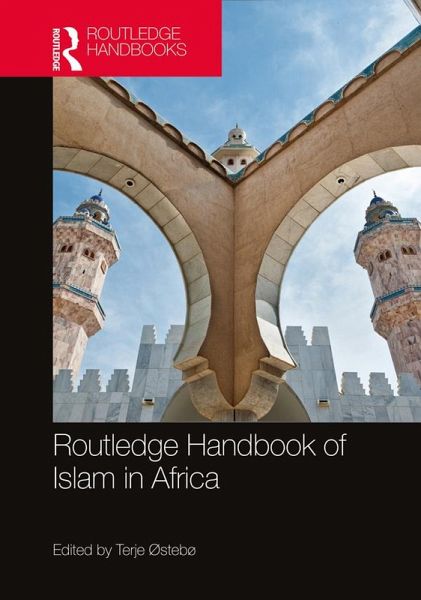
Bringing together cutting-edge research from a range of disciplines, this handbook argues that despite often being overlooked or treated as marginal, the study of Islam from an African context is integral to the broader Muslim world.
Challenging the portrayal of African Muslims as passive recipients of religious impetuses arriving from the outside, this book shows how the continent has been a site for the development of rich Islamic scholarship and religious discourses. Over the course of the book, the contributors reflect on:
Written by leading scholars in the field, the contributions examine the connections between Islam and broader sociopolitical developments across the continent, demonstrating the important role of religion in the everyday lives of Africans.
This book is an important and timely contribution to a subject that is often diffusely studied, and will be of interest to researchers across religious studies, African studies, politics, and sociology.
Challenging the portrayal of African Muslims as passive recipients of religious impetuses arriving from the outside, this book shows how the continent has been a site for the development of rich Islamic scholarship and religious discourses. Over the course of the book, the contributors reflect on:
- The history and infrastructure of Islam in Africa
- Politics and Islamic reform
- Gender, youth, and everyday life for African Muslims
- New technologies, media, and popular culture.
Written by leading scholars in the field, the contributions examine the connections between Islam and broader sociopolitical developments across the continent, demonstrating the important role of religion in the everyday lives of Africans.
This book is an important and timely contribution to a subject that is often diffusely studied, and will be of interest to researchers across religious studies, African studies, politics, and sociology.
Dieser Download kann aus rechtlichen Gründen nur mit Rechnungsadresse in A, B, BG, CY, CZ, D, DK, EW, E, FIN, F, GR, HR, H, IRL, I, LT, L, LR, M, NL, PL, P, R, S, SLO, SK ausgeliefert werden.
"The Routledge Handbook of Islam in Africa provides a fresh synthesis of a field that has grown rapidly over the past four decades. Assembling the insights from first-hand research by twenty leading academics from three continents, the expertise on display here will benefit students and scholars alike, not least through the division of the book into thematic chapters that, each in its own way, open up new windows on the Islamic experience in Africa."
Rüdiger Seesemann, Chair of Islamic Studies, University of Bayreuth, Germany
"Featuring rich, well-researched contributions by leading scholars in the field, this handbook offers an excellent synthesis of Islam and Muslim societies in Africa. The essays challenge assumptions that Islam in Africa sits on the fringe of the Muslim world and provide much needed insights on Africa's role in the production of Islam as a global religion. This will be a great resource for students and scholars alike."
Adeline Masquelier, Department of Anthropology, Tulane University, USA
Rüdiger Seesemann, Chair of Islamic Studies, University of Bayreuth, Germany
"Featuring rich, well-researched contributions by leading scholars in the field, this handbook offers an excellent synthesis of Islam and Muslim societies in Africa. The essays challenge assumptions that Islam in Africa sits on the fringe of the Muslim world and provide much needed insights on Africa's role in the production of Islam as a global religion. This will be a great resource for students and scholars alike."
Adeline Masquelier, Department of Anthropology, Tulane University, USA