47,95 €
inkl. MwSt.
Sofort per Download lieferbar
24 °P sammeln

Andere Kunden interessierten sich auch für
") Routledge Handbook of NFT Law (eBook, ePUB)47,95 €
Routledge Handbook of NFT Law (eBook, ePUB)47,95 €") Routledge Handbook of Risk Management and the Law (eBook, PDF)43,95 €
Routledge Handbook of Risk Management and the Law (eBook, PDF)43,95 €") Multiparty and Linked Contracts, Transport Logistics and the Uniform Transport Law (eBook, PDF)143,95 €
Multiparty and Linked Contracts, Transport Logistics and the Uniform Transport Law (eBook, PDF)143,95 €") Routledge Handbook of Financial Technology and Law (eBook, PDF)43,95 €
Routledge Handbook of Financial Technology and Law (eBook, PDF)43,95 €") Cyberspace Law (eBook, PDF)45,95 €
Cyberspace Law (eBook, PDF)45,95 €") Technology (eBook, PDF)18,95 €
Technology (eBook, PDF)18,95 €") International Internet Law (eBook, PDF)39,95 €
International Internet Law (eBook, PDF)39,95 €







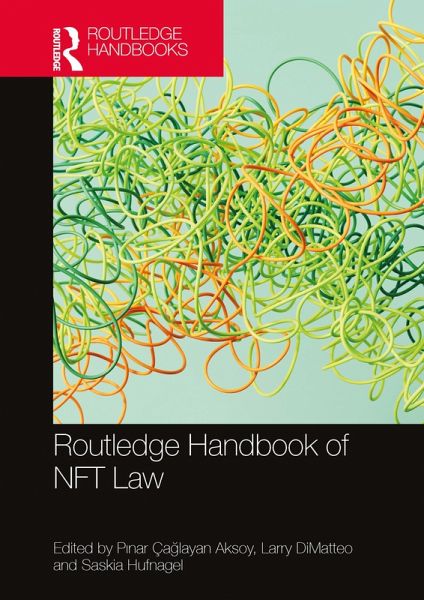
Non-fungible tokens (NFTs) are types of crypto-assets that function on the blockchain. Anything that one can digitize has the potential of becoming an NFT. While NFTs raise similar issues as other crypto-assets, there are many use cases and characteristics that are unique and call for special attention. At a time when individual countries have started responding to various legal issues, this volume examines these matters from a comparative law perspective.
The book approaches NFTs from a multidisciplinary perspective and provides in-depth information about the potential legal problems that arise from their use and transfer. The work looks at NFTs from different areas of law to determine the problems and how they can be resolved. Divided into seven parts, Part I introduces the key elements of NFTs and lays the foundation for the understanding of subsequent chapters. Part II focuses on NFTs from the perspective of contract law and discusses if/how they conflict with its traditional principles. Part III examines issues around intellectual property, trademark and patent law. Part IV reflects on how NFTs will transform business law. Part V deals with complex public law aspects. Part VI focuses on data and consumer protection problems that arise when NFTs become mainstream. Finally, Part VII focuses on how NFTs will change the dispute resolution process and the courts.
The book will be an essential resource for academics, researchers and policymakers working in the areas of technology and law.
The book approaches NFTs from a multidisciplinary perspective and provides in-depth information about the potential legal problems that arise from their use and transfer. The work looks at NFTs from different areas of law to determine the problems and how they can be resolved. Divided into seven parts, Part I introduces the key elements of NFTs and lays the foundation for the understanding of subsequent chapters. Part II focuses on NFTs from the perspective of contract law and discusses if/how they conflict with its traditional principles. Part III examines issues around intellectual property, trademark and patent law. Part IV reflects on how NFTs will transform business law. Part V deals with complex public law aspects. Part VI focuses on data and consumer protection problems that arise when NFTs become mainstream. Finally, Part VII focuses on how NFTs will change the dispute resolution process and the courts.
The book will be an essential resource for academics, researchers and policymakers working in the areas of technology and law.
Dieser Download kann aus rechtlichen Gründen nur mit Rechnungsadresse in A, B, BG, CY, CZ, D, DK, EW, E, FIN, F, GR, HR, H, IRL, I, LT, L, LR, M, NL, PL, P, R, S, SLO, SK ausgeliefert werden.