0,99 €
inkl. MwSt.
Sofort per Download lieferbar
0 °P sammeln

Andere Kunden interessierten sich auch für
") Royal Highness (eBook, ePUB)8,99 €
Royal Highness (eBook, ePUB)8,99 €") Royal Highness (eBook, ePUB)6,99 €
Royal Highness (eBook, ePUB)6,99 € / Married for the Prince's Convenience / Her Highness and the Bodyguard (eBook, ePUB)") After Hours: Royal Duty: Desert Prince's Stolen Bride (Conveniently Wed!) / Married for the Prince's Convenience / Her Highness and the Bodyguard (eBook, ePUB)10,87 €
After Hours: Royal Duty: Desert Prince's Stolen Bride (Conveniently Wed!) / Married for the Prince's Convenience / Her Highness and the Bodyguard (eBook, ePUB)10,87 €") His Royal Highness (eBook, ePUB)8,99 €
His Royal Highness (eBook, ePUB)8,99 €") Her Royal Highness (eBook, ePUB)1,99 €
Her Royal Highness (eBook, ePUB)1,99 €") Royal Highness (eBook, ePUB)3,99 €
Royal Highness (eBook, ePUB)3,99 €") Her Highness and the Highlander (eBook, ePUB)4,99 €
Her Highness and the Highlander (eBook, ePUB)4,99 €




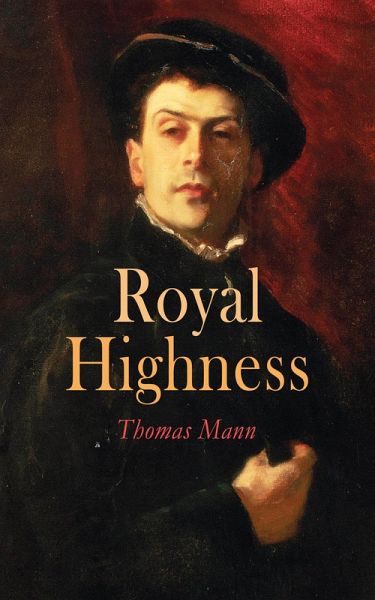
Thomas Mann's 'Royal Highness' is a satirical yet profound exploration of dynastic decline and societal transformation in pre-World War I Europe. Through the fictional principality of Grimmburg, Mann crafts a narrative that blends classical realism with incisive social critique, echoing both the nuanced prose of Dickens and the perceptivity of Dostoevsky. The novel delves into the life of Prince Klaus Heinrich, whose personal journey from privileged insularity to a broader societal consciousness serves as an allegory for the fading relevance of aristocracy. Mann's meticulous style, characterized by its rich descriptions and layered characters, effectively captures the essence of an era standing precariously at the brink of modernity. Thomas Mann, born into an aristocratic family in Lübeck, Germany, was acutely aware of the societal tectonics that characterized his time. His personal experiences of privilege interwoven with the changing tide of the bourgeoisie provided fertile ground for his reflection on class and the human condition. 'Royal Highness' exemplifies Mann's profound engagement with the socio-political currents of the early 20th century and his masterful ability to reflect them through literature. Mann's insight into human nature and societal structures undoubtedly enriches this narrative. 'Royal Highness' is essential reading for those captivated by the intersection of history, literature, and social commentary. Mann's quintessential blend of intricate storytelling and philosophical depth invites readers to reflect on the perennially relevant themes of power, identity, and transformation. With its rich tapestry of characters and eloquent prose, the book remains a compelling narrative from one of the most incisive literary minds of the 20th century. Those who appreciate classical European literature will find Mann's work both enlightening and enduring in its contemporary resonance. This translation has been assisted by artificial intelligence.
Dieser Download kann aus rechtlichen Gründen nur mit Rechnungsadresse in A, B, BG, CY, CZ, D, DK, EW, E, FIN, F, GR, H, IRL, I, LT, L, LR, M, NL, PL, P, R, S, SLO, SK ausgeliefert werden.
German novelist, short story author, social commentator, philanthropist, essayist, and 1929 Nobel Prize in Literature winner Paul Thomas Mann lived from 6 June 1875 to 12 August 1955. His sardonic and highly symbolic epic novels and novellas are renowned for their understanding of the minds of artists and intellectuals. He incorporated modernized versions of German and Biblical tales, as well as concepts from Friedrich Nietzsche, Arthur Schopenhauer, and Johann Wolfgang von Goethe, in his analysis and critique of the European and German spirit. In his first book, Buddenbrooks, Mann-a member of the Hanseatic Mann family-depicted his clan and social status. Three of Heinrich Mann's six children, Erika Mann, Klaus Mann, and Golo Mann, all went on to become well-known German writers, as did his older brother Heinrich Mann, a radical writer. Mann escaped to Switzerland in 1933, the year Adolf Hitler took office. He relocated to the United States in 1939 when World War II began, then went back to Switzerland in 1952. One of the most well-known authors of the so-called Exilliteratur, German writing produced in exile by individuals opposed to the Hitler government, is Mann.
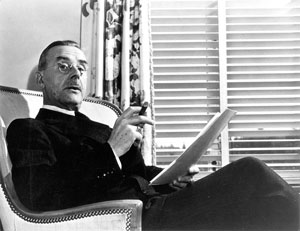
Thomas Mann 1944.© S.Fischer Verlag