1,99 €
inkl. MwSt.
Sofort per Download lieferbar
1 °P sammeln

Andere Kunden interessierten sich auch für
") Rudin (eBook, ePUB)0,99 €
Rudin (eBook, ePUB)0,99 €") Rudin (eBook, ePUB)0,91 €
Rudin (eBook, ePUB)0,91 €") Rudin (eBook, ePUB)1,99 €
Rudin (eBook, ePUB)1,99 € (eBook, ePUB)") The Duel (and Other Stories) (eBook, ePUB)0,99 €
The Duel (and Other Stories) (eBook, ePUB)0,99 €") In the First Circle (eBook, ePUB)13,99 €
In the First Circle (eBook, ePUB)13,99 €") Oblomov (eBook, ePUB)0,99 €
Oblomov (eBook, ePUB)0,99 €") March 1917 (eBook, ePUB)17,95 €
March 1917 (eBook, ePUB)17,95 €





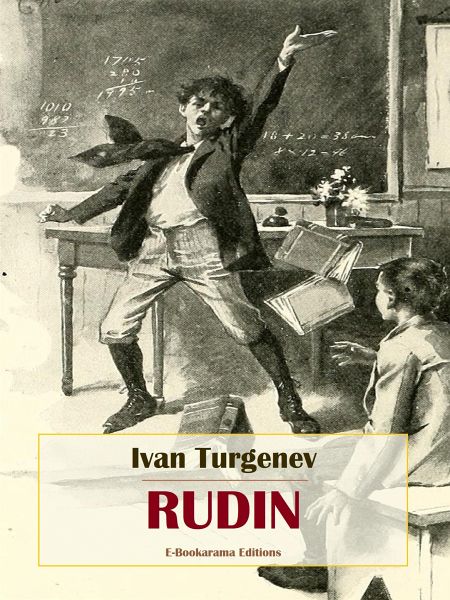
First published as a serial in the journal Sovremennik and as a book in 1856, "Rudin" is an essential novel by Russian author Ivan Turgenev. "Rudin" tells of an eloquent intellectual, Dmitry Rudin, a character modelled partly on the revolutionary agitator Mikhail Bakunin, whom Turgenev had known in Moscow in the 1830s. Rudin is a character typical to Turgenev -- a "superfluous" man, weak of will, brimming with indecisive frustration -- and yet tormented by ideals. Rudin's power of oratory and passionate belief in the need for progress so affect the younger members of a provincial salon that the heroine, Natalya, falls in love with him. But when she challenges him to live up to his words, he fails her. Rudin is made impotent by the dissonance of honouring the older generations while at the same time embracing the new bold epoch of pre-revolutionary Russia The theme of melancholic powerless men coupled with vital idealistic women is prevalent in Turgenev's work, and it would be hard to find a clearer study of the type than "Rudin".
Dieser Download kann aus rechtlichen Gründen nur mit Rechnungsadresse in A, B, BG, CY, CZ, D, DK, EW, E, FIN, F, GR, HR, H, IRL, I, LT, L, LR, M, NL, PL, P, R, S, SLO, SK ausgeliefert werden.