34,95 €
inkl. MwSt.
Sofort per Download lieferbar
17 °P sammeln

Andere Kunden interessierten sich auch für
") Salome's Embrace (eBook, PDF)34,95 €
Salome's Embrace (eBook, PDF)34,95 €") Life and Work of Erich Neumann (eBook, ePUB)35,95 €
Life and Work of Erich Neumann (eBook, ePUB)35,95 €") Analytical Psychology in Exile (eBook, ePUB)25,95 €
Analytical Psychology in Exile (eBook, ePUB)25,95 €") Jung and Philosophy (eBook, ePUB)28,95 €
Jung and Philosophy (eBook, ePUB)28,95 €") The Essential Writings of Sabina Spielrein (eBook, ePUB)37,95 €
The Essential Writings of Sabina Spielrein (eBook, ePUB)37,95 €") Cult Fictions (eBook, ePUB)34,95 €
Cult Fictions (eBook, ePUB)34,95 €") The Paradoxical Meeting of Depth Psychology and Physics (eBook, ePUB)39,95 €
The Paradoxical Meeting of Depth Psychology and Physics (eBook, ePUB)39,95 €
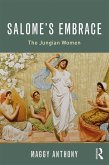






C. G. Jung, a man who accomplished a revolution in analytical psychology and made an impact both directly and indirectly on a great number of people, also took women seriously. The release of The Red Book has greatly added to our knowledge of Jung's relationship with the feminine: from his mother, his wife and his extramarital affairs to the effect these had on the formulation of his psychology and on the women who had the courage to explore the need for a spiritual link to Jung and who became known as the Valkyries.
In this revised and expanded study of the many women in Jung's close circle, Anthony explores the women who followed Jung during his lifetime, his need for their company, and their contributions to his work. The book includes studies of Emma Jung, Sabina Spielrein and Toni Wolff, as well as Jung's mother Emilie, and many other collaborators and followers. It also includes chapters on The Red Book, the Zurich Psychological Club and Dadaism. Including never-before published primary material, including interviews with the women themselves, Salome's Embrace assesses their work and its value for the generations of Jungian analysts that have followed, including women who practice depth psychology today.
The book will be of great interest to analytical psychologists and Jungian psychotherapists in practice and in training, academics and students of Jungian and post-Jungian studies, gender, and women's history.
In this revised and expanded study of the many women in Jung's close circle, Anthony explores the women who followed Jung during his lifetime, his need for their company, and their contributions to his work. The book includes studies of Emma Jung, Sabina Spielrein and Toni Wolff, as well as Jung's mother Emilie, and many other collaborators and followers. It also includes chapters on The Red Book, the Zurich Psychological Club and Dadaism. Including never-before published primary material, including interviews with the women themselves, Salome's Embrace assesses their work and its value for the generations of Jungian analysts that have followed, including women who practice depth psychology today.
The book will be of great interest to analytical psychologists and Jungian psychotherapists in practice and in training, academics and students of Jungian and post-Jungian studies, gender, and women's history.
Dieser Download kann aus rechtlichen Gründen nur mit Rechnungsadresse in A, B, BG, CY, CZ, D, DK, EW, E, FIN, F, GR, HR, H, IRL, I, LT, L, LR, M, NL, PL, P, R, S, SLO, SK ausgeliefert werden.
Any study concerned with the history of Jung's ideas and their establishment in modern thought will profit from Ms. Anthony's careful and enlightening survey of the early years of the Jungian community, and especially the support of Jungian women. (Charles Poncé, Rosebridge Graduate School, Human Relations Institute Santa Barbara and the San Francisco Art Institute)
Maggy Anthony, in Salome's Embrace, her latest book about the women around Carl Jung, enlarges and deepens her previous studies. She uses original research, interviews and critical reassessments in mini-biographies which reclaim an essential part of women's often forgotten contributions to Jungian psychology. Her welcome and well-crafted work leaves the reader hungry for more. (Claire Douglas, PhD, is a clinical psychologist and a Jungian Analyst with the C. G. Institute of Los Angeles)
Maggy Anthony's book conjures up the world of ideas as it developed around the figure of C.G. Jung -- and the fascinating personalities behind it. It offers telling insights into the early female followers of Jung and explores their intellectual passion for the project of analytical psychology in its nascent phase. As an exercise in cultural history in general and as a contribution to the institutional history of Jungian psychology in particular, this book brings alive a lost era whose significance is gradually being re-assessed and appreciated anew. (Paul Bishop, William Jacks Chair, University of Glasgow)
Maggy Anthony, in Salome's Embrace, her latest book about the women around Carl Jung, enlarges and deepens her previous studies. She uses original research, interviews and critical reassessments in mini-biographies which reclaim an essential part of women's often forgotten contributions to Jungian psychology. Her welcome and well-crafted work leaves the reader hungry for more. (Claire Douglas, PhD, is a clinical psychologist and a Jungian Analyst with the C. G. Institute of Los Angeles)
Maggy Anthony's book conjures up the world of ideas as it developed around the figure of C.G. Jung -- and the fascinating personalities behind it. It offers telling insights into the early female followers of Jung and explores their intellectual passion for the project of analytical psychology in its nascent phase. As an exercise in cultural history in general and as a contribution to the institutional history of Jungian psychology in particular, this book brings alive a lost era whose significance is gradually being re-assessed and appreciated anew. (Paul Bishop, William Jacks Chair, University of Glasgow)