Sie sind bereits eingeloggt. Klicken Sie auf 2. tolino select Abo, um fortzufahren.
Bitte loggen Sie sich zunächst in Ihr Kundenkonto ein oder registrieren Sie sich bei bücher.de, um das eBook-Abo tolino select nutzen zu können.
In the early decades of European integration the enforcement of EU competition law was highly centralised. Virtually all enforcement actions under Articles 101 and 102 TFEU were initiated by the European Commission. More recently the enforcement of EU competition law has become less centralised - many would say even decentralised. In 2004, essentially in an effort to increase enforcement capacity in the wake of EU enlargement, the involvement of Member State competition authorities was significantly reinforced by national authorities being given power to pursue infringements of EU competition…mehr
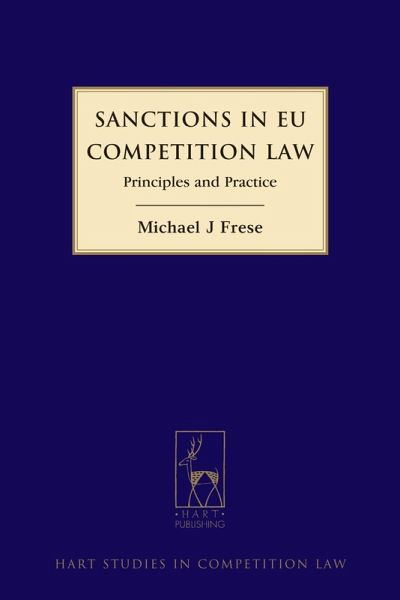
In the early decades of European integration the enforcement of EU competition law was highly centralised. Virtually all enforcement actions under Articles 101 and 102 TFEU were initiated by the European Commission. More recently the enforcement of EU competition law has become less centralised - many would say even decentralised. In 2004, essentially in an effort to increase enforcement capacity in the wake of EU enlargement, the involvement of Member State competition authorities was significantly reinforced by national authorities being given power to pursue infringements of EU competition law largely on the basis of their domestic enforcement regimes. This combination of decentralisation and enforcement autonomy raises questions about the relationship between EU law and national law, as well as about the costs of enforcement. This new book links these questions by analysing how competences in the area of sanctions are distributed between EU and national law, and how this influences the costs of enforcement. The author's conclusions, which highlight the economic implications of the choices made by competition authorities, courts and legislators, will be of use to all the above in further developing EU competition policy. The PhD thesis on which this book is based was declared runner-up in the 2013 Concurrences Awards.
Die Herstellerinformationen sind derzeit nicht verfügbar.
Autorenporträt
Michael J Frese is a fellow at the Amsterdam Centre of European Law and Governance and the Amsterdam Center for Law and Economics and practises law in Brussels.
MICHAEL FRESE is a Visiting Professor of the London Business School, holds a Chair for Work and Organizational Psychology at the University of Giessen, Germany, and holds a similar position part-time at the University of Amsterdam, Netherlands. President-elect of the International Association of Applied Psychology, he serves on the editorial boards of 11 international publications based variously in the U.S., England, Netherlands, Germany, and elsewhere. Frese is author and coauthor of about 200 articles and author or editor of fifteen books.
Inhaltsangabe
1 General Introduction 2 The Decentralisation of EU Competition Law 6 2.1 Introduction 2.2 Shared Administration 2.3 Sanctioning Autonomy 2.4 Cooperation and Coordination 2.5 Conclusion 3 The Economics of Decentralisation 3.1 Introduction 3.2 Economic Considerations in the Allocation of Competences 3.3 Transaction Costs and Diseconomies of Scale 3.4 Information Advantages 3.5 Accommodating Domestic Preferences 3.6 Regulatory Competition 3.7 Regulatory Innovation 3.8 Conclusion 4 Uncovering EU Sanctioning Principles 4.1 Introduction 4.2 EU Principles in the National Legal Order 4.3 Sanctioning Principles in Articles 101 and 102 TFEU 4.4 Sanctioning Principles in the Free Movement Rights 4.5 Sanctioning Principles in the Fundamental Rights 4.6 Sanctioning Principles in the Duty of Sincere Cooperation 4.7 Conclusion 5 The Development of Domestic Sanctioning Powers 5.1 Introduction 5.2 Institutional Enforcement Frameworks 5.3 Interim Measures 5.4 Early Resolution Measures 5.5 Declaratory Findings 5.6 Reparatory Sanctions 5.7 Pecuniary Sanctions 5.8 Custodial Sanctions 5.9 Disqualification Orders 5.10 Conclusion 6 Economies and Diseconomies in the Division of Sanctioning Competences 6.1 Introduction 6.2 Cost-Reducing Sanctioning Principles and Convergence Tendencies 6.3 Domestic Preferences and the Efficient Use of Enforcement Expenditures 6.4 Innovation through Decentralisation 7 General Conclusions 7.1 Sanctioning Principles, Convergence Tendencies and Enforcement Costs 7.2 Reflections and Recommendations
1 General Introduction 2 The Decentralisation of EU Competition Law 6 2.1 Introduction 2.2 Shared Administration 2.3 Sanctioning Autonomy 2.4 Cooperation and Coordination 2.5 Conclusion 3 The Economics of Decentralisation 3.1 Introduction 3.2 Economic Considerations in the Allocation of Competences 3.3 Transaction Costs and Diseconomies of Scale 3.4 Information Advantages 3.5 Accommodating Domestic Preferences 3.6 Regulatory Competition 3.7 Regulatory Innovation 3.8 Conclusion 4 Uncovering EU Sanctioning Principles 4.1 Introduction 4.2 EU Principles in the National Legal Order 4.3 Sanctioning Principles in Articles 101 and 102 TFEU 4.4 Sanctioning Principles in the Free Movement Rights 4.5 Sanctioning Principles in the Fundamental Rights 4.6 Sanctioning Principles in the Duty of Sincere Cooperation 4.7 Conclusion 5 The Development of Domestic Sanctioning Powers 5.1 Introduction 5.2 Institutional Enforcement Frameworks 5.3 Interim Measures 5.4 Early Resolution Measures 5.5 Declaratory Findings 5.6 Reparatory Sanctions 5.7 Pecuniary Sanctions 5.8 Custodial Sanctions 5.9 Disqualification Orders 5.10 Conclusion 6 Economies and Diseconomies in the Division of Sanctioning Competences 6.1 Introduction 6.2 Cost-Reducing Sanctioning Principles and Convergence Tendencies 6.3 Domestic Preferences and the Efficient Use of Enforcement Expenditures 6.4 Innovation through Decentralisation 7 General Conclusions 7.1 Sanctioning Principles, Convergence Tendencies and Enforcement Costs 7.2 Reflections and Recommendations
Es gelten unsere Allgemeinen Geschäftsbedingungen: www.buecher.de/agb
Impressum
www.buecher.de ist ein Internetauftritt der buecher.de internetstores GmbH
Geschäftsführung: Monica Sawhney | Roland Kölbl | Günter Hilger
Sitz der Gesellschaft: Batheyer Straße 115 - 117, 58099 Hagen
Postanschrift: Bürgermeister-Wegele-Str. 12, 86167 Augsburg
Amtsgericht Hagen HRB 13257
Steuernummer: 321/5800/1497
USt-IdNr: DE450055826