9,95 €
inkl. MwSt.
Sofort per Download lieferbar
5 °P sammeln

Andere Kunden interessierten sich auch für
") SAS Combat Vehicles 1942-91 (eBook, PDF)9,95 €
SAS Combat Vehicles 1942-91 (eBook, PDF)9,95 €") The Browning High-Power Pistol (eBook, ePUB)12,95 €
The Browning High-Power Pistol (eBook, ePUB)12,95 €") The Siege (eBook, ePUB)9,49 €
The Siege (eBook, ePUB)9,49 €") Secret and Special (eBook, ePUB)10,99 €
Secret and Special (eBook, ePUB)10,99 €") The MP5 Submachine Gun (eBook, ePUB)12,95 €
The MP5 Submachine Gun (eBook, ePUB)12,95 €") Weapons of the US Special Operations Command (eBook, ePUB)11,95 €
Weapons of the US Special Operations Command (eBook, ePUB)11,95 €") British Gunboats of Victoria's Empire (eBook, ePUB)9,95 €
British Gunboats of Victoria's Empire (eBook, ePUB)9,95 €

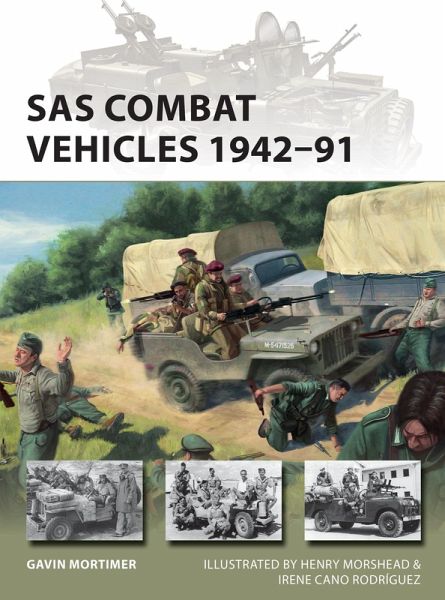
A concise illustrated history of the Special Air Service's lightweight, heavily armed vehicles and their combat use.
The SAS, the world's most famous special operations unit, made its name in the desert of North Africa, shooting up Axis airfields from specially modified Willys jeeps. Following the start of the El Alamein offensive in October 1942, the SAS used jeeps effectively in reconnoitring and ambushing the retreating Afrika Korps. After the conclusion of the North African campaign, the Willys underwent several small but significant changes, including the introduction of the .303 Browning machine gun. Jeeps were also used in Occupied France up to the push into Germany in the spring of 1945. Transported across the Rhine in 'Buffalo' amphibious landing craft, they formed part of the vanguard of the Allied advance, and their agility, speed and firepower proved crucial in crushing fanatical pockets of Nazi resistance.
In 1952, 22 SAS adopted the Series 1 Land Rover as the successor to the Willys jeep. A decade later, the Series IIA 90 "Pink Panther" Land Rover saw service in the Oman and Aden, and in the 1970s, the SAS begin using Range Rovers for covert operations while the Land Rover 110 HCPU became the SAS's new Desert Patrol Vehicle (DPV) in the 1991 Gulf War.
This book describes the successful deployment of these combat vehicles in SAS operations from the Second World War to the present day and gives a rare insight into one of the most prestigious and secret forces of modern times.
The SAS, the world's most famous special operations unit, made its name in the desert of North Africa, shooting up Axis airfields from specially modified Willys jeeps. Following the start of the El Alamein offensive in October 1942, the SAS used jeeps effectively in reconnoitring and ambushing the retreating Afrika Korps. After the conclusion of the North African campaign, the Willys underwent several small but significant changes, including the introduction of the .303 Browning machine gun. Jeeps were also used in Occupied France up to the push into Germany in the spring of 1945. Transported across the Rhine in 'Buffalo' amphibious landing craft, they formed part of the vanguard of the Allied advance, and their agility, speed and firepower proved crucial in crushing fanatical pockets of Nazi resistance.
In 1952, 22 SAS adopted the Series 1 Land Rover as the successor to the Willys jeep. A decade later, the Series IIA 90 "Pink Panther" Land Rover saw service in the Oman and Aden, and in the 1970s, the SAS begin using Range Rovers for covert operations while the Land Rover 110 HCPU became the SAS's new Desert Patrol Vehicle (DPV) in the 1991 Gulf War.
This book describes the successful deployment of these combat vehicles in SAS operations from the Second World War to the present day and gives a rare insight into one of the most prestigious and secret forces of modern times.