25,95 €
25,95 €
inkl. MwSt.
Sofort per Download lieferbar

13 °P sammeln
25,95 €
Als Download kaufen
25,95 €
inkl. MwSt.
Sofort per Download lieferbar
13 °P sammeln
Jetzt verschenken
Alle Infos zum eBook verschenken
25,95 €
inkl. MwSt.
Sofort per Download lieferbar
Alle Infos zum eBook verschenken
13 °P sammeln

Andere Kunden interessierten sich auch für
") Thomas Gray among the Disciplines (eBook, ePUB)42,95 €
Thomas Gray among the Disciplines (eBook, ePUB)42,95 €") Rosella, or Modern Occurrences (eBook, ePUB)52,95 €
Rosella, or Modern Occurrences (eBook, ePUB)52,95 €") What Has Been, A Novel by Eliza Kirkham Mathews (eBook, ePUB)52,95 €
What Has Been, A Novel by Eliza Kirkham Mathews (eBook, ePUB)52,95 €") Biblical Sterne (eBook, ePUB)25,95 €
Biblical Sterne (eBook, ePUB)25,95 €") Theodora, A Novel (eBook, ePUB)52,95 €
Theodora, A Novel (eBook, ePUB)52,95 €") A Guide to the Cosmology of William Blake (eBook, ePUB)46,95 €
A Guide to the Cosmology of William Blake (eBook, ePUB)46,95 €") New Perspectives on Delarivier Manley and Eighteenth Century Literature (eBook, ePUB)42,95 €
New Perspectives on Delarivier Manley and Eighteenth Century Literature (eBook, ePUB)42,95 €


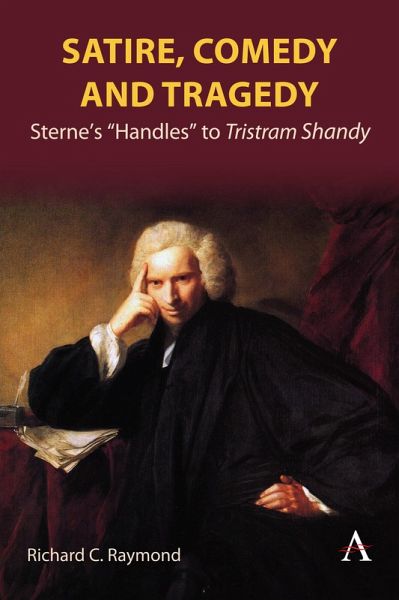
Reflecting the turn toward cultural studies, the rich site for exploring issues of race, gender, and social injustices, the twenty-first century has seen most university presses publishing books focusing on multiple works by an array of authors. While I do not dispute the value and timeliness of such culture-centered publications, I would argue that the time has come for a fresh reading of Laurence Sterne's greatest novel, one frequently cited as a precursor to the work of James Joyce and to twentieth- and twenty-first-century existential thought. Such book-length studies of Sterne's TristramShandy appeared frequently in the 1950s, 1960s, and 1970s; since then, Sterne studies have multiplied and prospered, but primarily in academic journals. While we can readily find chapters on TristramShandy in more recent books such as Patricia Meyer Spacks'sNovel Beginnings: Experiments in Eighteenth-Century Fiction (2006) and Ryan Stark's Biblical Sterne: Rhetoric and Religion in the Shandyverse (2021), we find no books focused just on Sterne's novel.
This book demonstrates, then, that, beyond the traditional objects of satire found in Sterne's TristramShandy, Sterne has revised the satiric plot in developing what I call the "benevolent dullness" of Walter, Toby, and Tristram. I borrow this term "dullness," of course, from Alexander Pope's great satire The Dunciad, published in 1743, two decades before Sterne began publishing the first volumes of his novel.
The Shandys' self-defeats derive, as thisbook will show, from generous instincts and from deliberate "moral characters" as well as from arrogant self-deceptions that typify traditional objects of satire, such as leaders in government, the military, the sciences, the arts, and literature-the intelligent but sinisterly self-absorbed dunces who populate Pope's nightmarish poem and threaten collectively to "bury all" in a culture of "darkness." Additionally, the book will show that this paradoxical blend of dullness and benevolence in Sterne's characters generates an ambiguous moral condition that should stir both praise and blame in Sterne's readers. The book will argue, further, that the reader's ambivalent response to Sterne's Shandean characters testifies to the operation of a fictional structure too dynamic in the conflicts it portrays to permit defining the novel's plot as chiefly satiric, comic, or tragic, as many influential scholars have done.
The book will then conclude that Sterne revised the satiric action in his novel to draw the reader toward the standard of humble but active benevolence represented by Parson Yorick; Sterne did so by luring the reader first into the confused but laughing world of generous "true Shandeism." If Sterne's readers can see the nobility as well as the humor of the Shandys' inevitable self-defeats, the reader will discover the difficulty of living the Yorick standard but also the possibility of escaping from the utter darkness of dullness.
This book demonstrates, then, that, beyond the traditional objects of satire found in Sterne's TristramShandy, Sterne has revised the satiric plot in developing what I call the "benevolent dullness" of Walter, Toby, and Tristram. I borrow this term "dullness," of course, from Alexander Pope's great satire The Dunciad, published in 1743, two decades before Sterne began publishing the first volumes of his novel.
The Shandys' self-defeats derive, as thisbook will show, from generous instincts and from deliberate "moral characters" as well as from arrogant self-deceptions that typify traditional objects of satire, such as leaders in government, the military, the sciences, the arts, and literature-the intelligent but sinisterly self-absorbed dunces who populate Pope's nightmarish poem and threaten collectively to "bury all" in a culture of "darkness." Additionally, the book will show that this paradoxical blend of dullness and benevolence in Sterne's characters generates an ambiguous moral condition that should stir both praise and blame in Sterne's readers. The book will argue, further, that the reader's ambivalent response to Sterne's Shandean characters testifies to the operation of a fictional structure too dynamic in the conflicts it portrays to permit defining the novel's plot as chiefly satiric, comic, or tragic, as many influential scholars have done.
The book will then conclude that Sterne revised the satiric action in his novel to draw the reader toward the standard of humble but active benevolence represented by Parson Yorick; Sterne did so by luring the reader first into the confused but laughing world of generous "true Shandeism." If Sterne's readers can see the nobility as well as the humor of the Shandys' inevitable self-defeats, the reader will discover the difficulty of living the Yorick standard but also the possibility of escaping from the utter darkness of dullness.
Dieser Download kann aus rechtlichen Gründen nur mit Rechnungsadresse in A, D ausgeliefert werden.