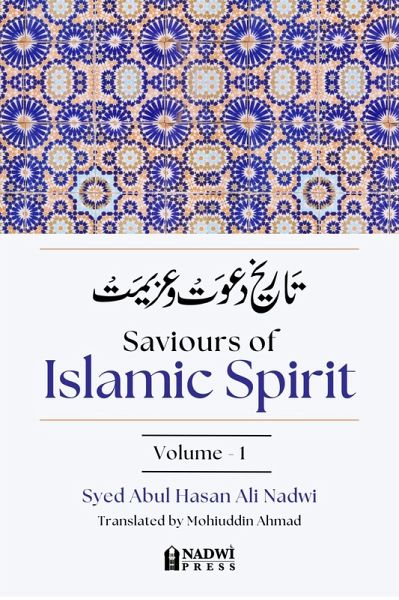
5,99 €
5,99 €
inkl. MwSt.
Sofort per Download lieferbar

3 °P sammeln
5,99 €
Als Download kaufen
5,99 €
inkl. MwSt.
Sofort per Download lieferbar
3 °P sammeln
Jetzt verschenken
Alle Infos zum eBook verschenken
5,99 €
inkl. MwSt.
Sofort per Download lieferbar
Alle Infos zum eBook verschenken
3 °P sammeln

Andere Kunden interessierten sich auch für
") Saviours of Islamic Spirit - Vol. 2 (eBook, ePUB)5,99 €
Saviours of Islamic Spirit - Vol. 2 (eBook, ePUB)5,99 €") Saviours of Islamic Spirit - Vol. 4 (eBook, ePUB)4,99 €
Saviours of Islamic Spirit - Vol. 4 (eBook, ePUB)4,99 €") Saviours of Islamic Spirit - Vol. 3 (eBook, ePUB)5,99 €
Saviours of Islamic Spirit - Vol. 3 (eBook, ePUB)5,99 €") The Islam in Islamic Terrorism (eBook, ePUB)7,99 €
The Islam in Islamic Terrorism (eBook, ePUB)7,99 €") The Higher Objectives of Islamic Theology (eBook, ePUB)30,95 €
The Higher Objectives of Islamic Theology (eBook, ePUB)30,95 €") Why, as a Muslim, I Defend Liberty (eBook, ePUB)5,99 €
Why, as a Muslim, I Defend Liberty (eBook, ePUB)5,99 €") The Story of Prophet Muhammad (eBook, ePUB)2,99 €
The Story of Prophet Muhammad (eBook, ePUB)2,99 €



A Monumental Exploration of Islamic Intellectual Vitality and Religious Renewal
Saviours of Islamic Spirit, Volume I represents one of the most significant contributions to English-language Islamic scholarship in the twentieth century. Written by the distinguished scholar Abul Hasan Ali Nadwi (Ali Miyan) and masterfully translated by Mohiuddin Ahmad, this work fundamentally challenges widespread misconceptions about Islamic civilization by demonstrating the continuous presence of reformers, scholars, and spiritual masters who revitalized Muslim societies across thirteen centuries.
The Genesis and Significance of This Work
Originally conceived as a series of lectures delivered in Lucknow in 1953, Nadwi quickly realized that the subject demanded comprehensive treatment. The resulting work, first published in Urdu as Tarikh-i-Dawat-o-Azeemat and subsequently translated into Arabic as Rijal ul-Fikr wad-Da'wah fil-Islam, filled a critical gap in Islamic literature. Nadwi observed that while Islamic historical writing traditionally focused on dynasties, conquests, and political events, it largely neglected the intellectual and spiritual movements that truly sustained Islam's vitality. This work remedies that deficiency.
Central Thesis and Revolutionary Approach
Nadwi's central argument challenges the notion that Islam produced only occasional luminaries separated by centuries of intellectual dormancy. Instead, he demonstrates an unbroken chain of reform and revivala continuous tradition of scholars, jurists, theologians, and spiritual masters who defended Islamic principles, combated heresies and innovations, preserved prophetic teachings, and revitalized faith in their respective ages. The book reveals that every generation faced unique challenges and received divinely inspired defenders equal to those challenges.
The author's methodology sets this work apart from conventional Islamic histories. Rather than providing brief biographical sketches, Nadwi:
The Ten Pillars of Islamic Revival
This volume chronicles ten pivotal figures and movements spanning the first eight centuries after the Prophet Muhammad:
1. Umar ibn Abdul Aziz (d. 720 CE) Known as the Fifth Rightly-Guided Caliph, Umar transformed the Umayyad caliphate, which had degenerated into Arab kingship marked by materialism and nepotism. During his brief reign of two years and five months, he restored justice, abolished illegal taxes, lived in ascetic simplicity, and attempted to return the caliphate to prophetic principles. His regime demonstrated that Islamic governance differed fundamentally from conventional monarchy.
2. Hasan al-Basri (d. 728 CE) This eloquent sage combated moral decadence and materialism threatening Muslim society during the Umayyad period. His soul-stirring sermons preserved moral consciousness among the masses when political leadership failed to provide ethical guidance, exemplifying the scholar-saint tradition that shaped Islamic civilization.
3. The Traditionists and Jurists Nadwi explores the monumental achievement of scholars like Abu Hanifa, Malik ibn Anas, Muhammad ibn Idris al-Shafi'i, and others who systematized Islamic law and preserved prophetic traditions. These figures established methodologies for deriving rulings, compiled hadith, and created schools of jurisprudence that continue guiding Muslims worldwide.
4. Ahmad ibn Hanbal (d. 855 CE) Perhaps the most dramatic chapter recounts Ahmad's courageous resistance to the Abbasid caliphs' attempt to impose Mu'tazilite rationalist theology. Despite imprisonment and torture, he refused to compromise orthodox belief, establishing the principle of scholarly independence from political power.
5. Abul Hasan al-Ash'ari (d. 936 CE) A former Mu'tazilite who renounced rationalist theology, al-Ash'ari founded Islamic scholasticism (kalam), demonstrating that revelation and reason harmonize when properly understood.
6. The Decline of Dialectics Nadwi analyzes how speculative theology drifted into hairsplitting debates divorced from spiritual reality, necessitating renewed emphasis on prophetic teachings and spiritual practice.
7. Imam al-Ghazali (d. 1111 CE) Known as Hujjat al-Islam, al-Ghazali mastered law, theology, philosophy, and spirituality. His synthesis revitalized Islamic thought and remains foundational across the Muslim world.
8. Sheikh Abdul Qadir Jilani (d. 1166 CE) Founder of the Qadiriyya order, Jilani transformed Baghdad through preaching and exemplary character, integrating strict adherence to Islamic law with deep spiritual purification.
9. Ibn al-Jawzi (d. 1201 CE) A prolific scholar and preacher, he fought religious innovations, social corruption, and deviations within Sufism, influencing Islamic thought through hundreds of works.
10. Nur ud-din Zangi and Salah ud-din Ayyubi Military leaders whose piety and justice shaped resistance against the Crusades, showing how political authority can embody prophetic virtues.
What Readers Gain
Translation Excellence
Mohiuddin Ahmad's translation deserves special recognition. Working closely with Nadwi, who reviewed and approved the manuscript, Ahmad rendered complex prose into elegant English while preserving scholarly precision. His footnotes, transliteration, bibliography, and glossary add significant research value.
Enduring Relevance
Though published decades ago, this work remains profoundly relevant. In an era of oversimplified narrativeswhether apologetic or polemicalSaviours of Islamic Spirit offers historically grounded understanding of Islam's intellectual vitality. It demonstrates that Islam's strength derives from moral and intellectual giants who defended its principles in every generation.
For anyone seeking to understand Islamic history beyond political events, appreciate the tradition of religious renewal, or encounter the personalities who shaped Muslim civilization, this volume is indispensablea testament to Islam's continuous capacity for self-examination, reform, and revival.
Saviours of Islamic Spirit, Volume I represents one of the most significant contributions to English-language Islamic scholarship in the twentieth century. Written by the distinguished scholar Abul Hasan Ali Nadwi (Ali Miyan) and masterfully translated by Mohiuddin Ahmad, this work fundamentally challenges widespread misconceptions about Islamic civilization by demonstrating the continuous presence of reformers, scholars, and spiritual masters who revitalized Muslim societies across thirteen centuries.
The Genesis and Significance of This Work
Originally conceived as a series of lectures delivered in Lucknow in 1953, Nadwi quickly realized that the subject demanded comprehensive treatment. The resulting work, first published in Urdu as Tarikh-i-Dawat-o-Azeemat and subsequently translated into Arabic as Rijal ul-Fikr wad-Da'wah fil-Islam, filled a critical gap in Islamic literature. Nadwi observed that while Islamic historical writing traditionally focused on dynasties, conquests, and political events, it largely neglected the intellectual and spiritual movements that truly sustained Islam's vitality. This work remedies that deficiency.
Central Thesis and Revolutionary Approach
Nadwi's central argument challenges the notion that Islam produced only occasional luminaries separated by centuries of intellectual dormancy. Instead, he demonstrates an unbroken chain of reform and revivala continuous tradition of scholars, jurists, theologians, and spiritual masters who defended Islamic principles, combated heresies and innovations, preserved prophetic teachings, and revitalized faith in their respective ages. The book reveals that every generation faced unique challenges and received divinely inspired defenders equal to those challenges.
The author's methodology sets this work apart from conventional Islamic histories. Rather than providing brief biographical sketches, Nadwi:
- Draws extensively from primary sources, often providing lengthy extracts from reformers' own writings, sermons, letters, and recorded teachings
- Contextualizes each figure within their specific historical, cultural, and intellectual environment
- Illuminates the character of these personalitiestheir spiritual depth, moral excellence, intellectual courage, and unwavering commitment
- Demonstrates continuity with prophetic teachings while showing how each reformer addressed contemporary needs
- Assesses impact and legacy, revealing how their efforts shaped subsequent Islamic thought and practice
The Ten Pillars of Islamic Revival
This volume chronicles ten pivotal figures and movements spanning the first eight centuries after the Prophet Muhammad:
1. Umar ibn Abdul Aziz (d. 720 CE) Known as the Fifth Rightly-Guided Caliph, Umar transformed the Umayyad caliphate, which had degenerated into Arab kingship marked by materialism and nepotism. During his brief reign of two years and five months, he restored justice, abolished illegal taxes, lived in ascetic simplicity, and attempted to return the caliphate to prophetic principles. His regime demonstrated that Islamic governance differed fundamentally from conventional monarchy.
2. Hasan al-Basri (d. 728 CE) This eloquent sage combated moral decadence and materialism threatening Muslim society during the Umayyad period. His soul-stirring sermons preserved moral consciousness among the masses when political leadership failed to provide ethical guidance, exemplifying the scholar-saint tradition that shaped Islamic civilization.
3. The Traditionists and Jurists Nadwi explores the monumental achievement of scholars like Abu Hanifa, Malik ibn Anas, Muhammad ibn Idris al-Shafi'i, and others who systematized Islamic law and preserved prophetic traditions. These figures established methodologies for deriving rulings, compiled hadith, and created schools of jurisprudence that continue guiding Muslims worldwide.
4. Ahmad ibn Hanbal (d. 855 CE) Perhaps the most dramatic chapter recounts Ahmad's courageous resistance to the Abbasid caliphs' attempt to impose Mu'tazilite rationalist theology. Despite imprisonment and torture, he refused to compromise orthodox belief, establishing the principle of scholarly independence from political power.
5. Abul Hasan al-Ash'ari (d. 936 CE) A former Mu'tazilite who renounced rationalist theology, al-Ash'ari founded Islamic scholasticism (kalam), demonstrating that revelation and reason harmonize when properly understood.
6. The Decline of Dialectics Nadwi analyzes how speculative theology drifted into hairsplitting debates divorced from spiritual reality, necessitating renewed emphasis on prophetic teachings and spiritual practice.
7. Imam al-Ghazali (d. 1111 CE) Known as Hujjat al-Islam, al-Ghazali mastered law, theology, philosophy, and spirituality. His synthesis revitalized Islamic thought and remains foundational across the Muslim world.
8. Sheikh Abdul Qadir Jilani (d. 1166 CE) Founder of the Qadiriyya order, Jilani transformed Baghdad through preaching and exemplary character, integrating strict adherence to Islamic law with deep spiritual purification.
9. Ibn al-Jawzi (d. 1201 CE) A prolific scholar and preacher, he fought religious innovations, social corruption, and deviations within Sufism, influencing Islamic thought through hundreds of works.
10. Nur ud-din Zangi and Salah ud-din Ayyubi Military leaders whose piety and justice shaped resistance against the Crusades, showing how political authority can embody prophetic virtues.
What Readers Gain
- For scholars: Rigorous research, extensive citations, and nuanced analysis of intellectual movements
- For students: Accessible introductions to major figures and movements with clear explanations of complex issues
- For general readers: Inspiring accounts of faith, courage, and integrity
- For Muslims: Connection to intellectual and spiritual heritage and models of authentic renewal
- For non-Muslims: Insight into Islamic civilization's dynamism and enduring contributions
Translation Excellence
Mohiuddin Ahmad's translation deserves special recognition. Working closely with Nadwi, who reviewed and approved the manuscript, Ahmad rendered complex prose into elegant English while preserving scholarly precision. His footnotes, transliteration, bibliography, and glossary add significant research value.
Enduring Relevance
Though published decades ago, this work remains profoundly relevant. In an era of oversimplified narrativeswhether apologetic or polemicalSaviours of Islamic Spirit offers historically grounded understanding of Islam's intellectual vitality. It demonstrates that Islam's strength derives from moral and intellectual giants who defended its principles in every generation.
For anyone seeking to understand Islamic history beyond political events, appreciate the tradition of religious renewal, or encounter the personalities who shaped Muslim civilization, this volume is indispensablea testament to Islam's continuous capacity for self-examination, reform, and revival.
Dieser Download kann aus rechtlichen Gründen nur mit Rechnungsadresse in A, D ausgeliefert werden.