5,99 €
5,99 €
inkl. MwSt.
Sofort per Download lieferbar

3 °P sammeln
5,99 €
Als Download kaufen
5,99 €
inkl. MwSt.
Sofort per Download lieferbar
3 °P sammeln
Jetzt verschenken
Alle Infos zum eBook verschenken
5,99 €
inkl. MwSt.
Sofort per Download lieferbar
Alle Infos zum eBook verschenken
3 °P sammeln

Andere Kunden interessierten sich auch für
") Saviours of Islamic Spirit - Vol. 2 (eBook, ePUB)5,99 €
Saviours of Islamic Spirit - Vol. 2 (eBook, ePUB)5,99 €") Saviours of Islamic Spirit - Vol. 1 (eBook, ePUB)5,99 €
Saviours of Islamic Spirit - Vol. 1 (eBook, ePUB)5,99 €") Saviours of Islamic Spirit - Vol. 4 (eBook, ePUB)4,99 €
Saviours of Islamic Spirit - Vol. 4 (eBook, ePUB)4,99 €") The Higher Objectives of Islamic Theology (eBook, ePUB)30,95 €
The Higher Objectives of Islamic Theology (eBook, ePUB)30,95 €") The Conference of the Birds (eBook, ePUB)9,49 €
The Conference of the Birds (eBook, ePUB)9,49 €") The Book of Contemplation (eBook, ePUB)10,99 €
The Book of Contemplation (eBook, ePUB)10,99 €") Islamische Theologie im 14. Jahrhundert (eBook, ePUB)129,95 €
Islamische Theologie im 14. Jahrhundert (eBook, ePUB)129,95 €

THE DEFINITIVE BIOGRAPHY OF ISLAM'S GREAT REFORMER
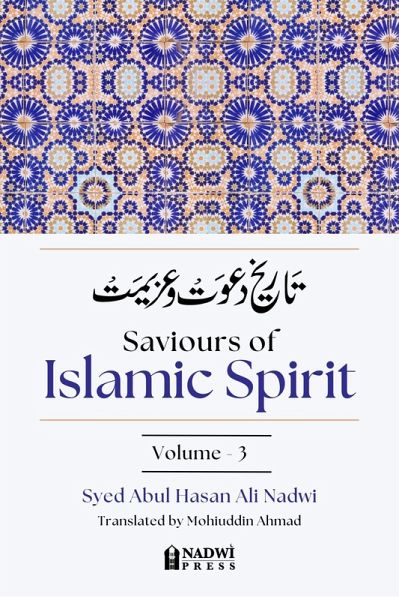
Saviors of Islamic Spirit Volume III presents the comprehensive biography of Imam Rabbani Ahmad Sirhindi (15641624), universally recognized as Mujaddid Alf Thani (Renovator of the Second Millennium)a scholar, mystic, and reformer whose influence transformed Islamic civilization during one of its most critical junctures. Written by the acclaimed scholar S. Abul Hasan Ali Nadwi and expertly translated by Mohiuddin Ahmad, this work stands as the most thorough English-language treatment of this pivotal figure in Islamic history.
A CIVILIZATION IN CRISIS
The sixteenth century CE (tenth century Hijri) marked a period of unprecedented challenge for Islam in South Asia. Under Emperor Akbar (15561605), the Mughal Empirethe second-largest Muslim polity of its timefaced a systematic assault on Islamic orthodoxy from within. Akbar's innovations included:
• Promulgation of Din-i-Ilahi (Divine Faith), a syncretic religion designed to replace Islam • Introduction of fire and sun worship within the imperial court • Public ridicule of the Prophet Muhammad and prophetic miracles • Prohibition of prayer, fasting, pilgrimage, and other Islamic practices • Promotion of philosophical skepticism and rejection of scriptural authority • Establishment of an Infallibility Decree elevating the emperor above religious law • Systematic persecution of orthodox scholars who resisted these innovations
This program was not mere political opportunism. It was a calculated ideological project supported by intellectuals such as Abul Fazl and Faizi, rooted in Persian philosophy, Hindu influences, and millennial expectations. The survival of Islam in the subcontinent was at stake.
THE EMERGENCE OF A REFORMER
Into this crisis emerged Shaikh Ahmad Sirhindi, born in 1564 in Sirhind (Punjab). His lineage traced back to Caliph Umar ibn al-Khattab, and his father, Makhdum Abdul Ahad, was a celebrated scholar and Sufi master. Ahmad Sirhindi received rigorous training in both exoteric sciences (Qur'an, Hadith, jurisprudence, theology) and esoteric disciplines (Sufism, spiritual psychology, mystical states).
His defining strength was a synthesis of scholarly mastery and spiritual realization. After extensive studies under the leading scholars of his age, he underwent intensive Naqshbandiyah spiritual training under Khwaja Baqi Billah. This dual grounding prepared him uniquely for the monumental task ahead.
STRATEGY OF TRANSFORMATION
Sirhindi's reformation strategy operated through several interconnected channels:
1. Spiritual Training: Establishing a vast network of Naqshbandiyah disciples who combined spiritual discipline with strict adherence to Shariah and Sunnah, serving as agents of renewal across the empire.
2. Intellectual Combat: Through his Maktubat (over 500 letters), he engaged in rigorous debates, refuted heterodox doctrines, and clarified orthodox positionsespecially regarding wahdat al-wujud and wahdat al-shuhud.
3. Strategic Correspondence: Influencing nobles, generals, and administrators through carefully crafted letters that offered spiritual guidance while subtly shaping political and religious policy.
4. Educational Reform: Deploying disciples to create teaching centers across India, Afghanistan, and Central Asia, ensuring the transmission of authentic Islamic knowledge.
5. Doctrinal Precision: Addressing theological errors that facilitated heterodoxy, reinforcing prophetic superiority, finality of prophethood, permanence of Shariah, and correcting deviations within Sufism.
THE TRIAL AND TRIUMPH
Sirhindi's rising influence alarmed Emperor Jahangir, who imprisoned him in Gwalior Fort. The imprisonment backfired: his dignity, composure, and spiritual strength elevated his reputation. Upon release, his influence expanded further, eventually shaping imperial policy.
ENDURING LEGACY
His legacy includes:
• Establishment of reform movements across the Islamic world • The Maktubat becoming foundational texts for scholars • Global spread of the Mujaddidiyah order • Influence on later reformers such as Shah Waliullah and Sayyid Ahmad Shahid • A model for synthesizing mysticism with orthodoxy • Reassertion of prophetic authority and correction of Sufi excesses • A strategic method of reforming from within
SCHOLARLY EXCELLENCE OF THIS VOLUME
Nadwi's biography stands out for:
• Extensive primary sources: Maktubat, court chronicles, biographical works • Critical methodology: Balanced evaluation of sources and controversies • Contextual depth: Detailed analysis of political, theological, and intellectual landscapes • Theological rigor: Clear explanations of complex mystical and metaphysical debates • Comparative lens: Positioning Sirhindi within global reform movements • Contemporary relevance: Lessons for today's reform challenges
WHO SHOULD READ THIS BOOK
This volume is essential for:
• Students and scholars of Islamic history, theology, and mysticism • Researchers on Mughal India and Islamic reform • Muslim activists and thinkers studying renewal movements • Comparative religion scholars • Readers interested in civilizational reform and spiritual leadership
THE SAVIORS OF ISLAMIC SPIRIT SERIES
This volume belongs to Nadwi's renowned series on great Islamic reformers. Previous volumes covered Hasan al-Basri, Imam Ghazali, Khwaja Nizamuddin Auliya, and Sharafuddin Maneri. Together, they reveal a pattern of scholarly excellence, spiritual depth, and strategic wisdom guiding Muslim societies through crises.
A TIMELESS MESSAGE
Sirhindi's life answers timeless questions about revival, strategy, authority, spirituality, and adaptation. His example continues to illuminate pathways for principled reform today.
Saviors of Islamic Spirit Volume III is not merely historical biographyit is a masterclass in reformation, showing how one man, through knowledge, spirituality, and strategic engagement, reshaped an empire and left an enduring mark on Islamic civilization.
Saviors of Islamic Spirit Volume III presents the comprehensive biography of Imam Rabbani Ahmad Sirhindi (15641624), universally recognized as Mujaddid Alf Thani (Renovator of the Second Millennium)a scholar, mystic, and reformer whose influence transformed Islamic civilization during one of its most critical junctures. Written by the acclaimed scholar S. Abul Hasan Ali Nadwi and expertly translated by Mohiuddin Ahmad, this work stands as the most thorough English-language treatment of this pivotal figure in Islamic history.
A CIVILIZATION IN CRISIS
The sixteenth century CE (tenth century Hijri) marked a period of unprecedented challenge for Islam in South Asia. Under Emperor Akbar (15561605), the Mughal Empirethe second-largest Muslim polity of its timefaced a systematic assault on Islamic orthodoxy from within. Akbar's innovations included:
• Promulgation of Din-i-Ilahi (Divine Faith), a syncretic religion designed to replace Islam • Introduction of fire and sun worship within the imperial court • Public ridicule of the Prophet Muhammad and prophetic miracles • Prohibition of prayer, fasting, pilgrimage, and other Islamic practices • Promotion of philosophical skepticism and rejection of scriptural authority • Establishment of an Infallibility Decree elevating the emperor above religious law • Systematic persecution of orthodox scholars who resisted these innovations
This program was not mere political opportunism. It was a calculated ideological project supported by intellectuals such as Abul Fazl and Faizi, rooted in Persian philosophy, Hindu influences, and millennial expectations. The survival of Islam in the subcontinent was at stake.
THE EMERGENCE OF A REFORMER
Into this crisis emerged Shaikh Ahmad Sirhindi, born in 1564 in Sirhind (Punjab). His lineage traced back to Caliph Umar ibn al-Khattab, and his father, Makhdum Abdul Ahad, was a celebrated scholar and Sufi master. Ahmad Sirhindi received rigorous training in both exoteric sciences (Qur'an, Hadith, jurisprudence, theology) and esoteric disciplines (Sufism, spiritual psychology, mystical states).
His defining strength was a synthesis of scholarly mastery and spiritual realization. After extensive studies under the leading scholars of his age, he underwent intensive Naqshbandiyah spiritual training under Khwaja Baqi Billah. This dual grounding prepared him uniquely for the monumental task ahead.
STRATEGY OF TRANSFORMATION
Sirhindi's reformation strategy operated through several interconnected channels:
1. Spiritual Training: Establishing a vast network of Naqshbandiyah disciples who combined spiritual discipline with strict adherence to Shariah and Sunnah, serving as agents of renewal across the empire.
2. Intellectual Combat: Through his Maktubat (over 500 letters), he engaged in rigorous debates, refuted heterodox doctrines, and clarified orthodox positionsespecially regarding wahdat al-wujud and wahdat al-shuhud.
3. Strategic Correspondence: Influencing nobles, generals, and administrators through carefully crafted letters that offered spiritual guidance while subtly shaping political and religious policy.
4. Educational Reform: Deploying disciples to create teaching centers across India, Afghanistan, and Central Asia, ensuring the transmission of authentic Islamic knowledge.
5. Doctrinal Precision: Addressing theological errors that facilitated heterodoxy, reinforcing prophetic superiority, finality of prophethood, permanence of Shariah, and correcting deviations within Sufism.
THE TRIAL AND TRIUMPH
Sirhindi's rising influence alarmed Emperor Jahangir, who imprisoned him in Gwalior Fort. The imprisonment backfired: his dignity, composure, and spiritual strength elevated his reputation. Upon release, his influence expanded further, eventually shaping imperial policy.
ENDURING LEGACY
His legacy includes:
• Establishment of reform movements across the Islamic world • The Maktubat becoming foundational texts for scholars • Global spread of the Mujaddidiyah order • Influence on later reformers such as Shah Waliullah and Sayyid Ahmad Shahid • A model for synthesizing mysticism with orthodoxy • Reassertion of prophetic authority and correction of Sufi excesses • A strategic method of reforming from within
SCHOLARLY EXCELLENCE OF THIS VOLUME
Nadwi's biography stands out for:
• Extensive primary sources: Maktubat, court chronicles, biographical works • Critical methodology: Balanced evaluation of sources and controversies • Contextual depth: Detailed analysis of political, theological, and intellectual landscapes • Theological rigor: Clear explanations of complex mystical and metaphysical debates • Comparative lens: Positioning Sirhindi within global reform movements • Contemporary relevance: Lessons for today's reform challenges
WHO SHOULD READ THIS BOOK
This volume is essential for:
• Students and scholars of Islamic history, theology, and mysticism • Researchers on Mughal India and Islamic reform • Muslim activists and thinkers studying renewal movements • Comparative religion scholars • Readers interested in civilizational reform and spiritual leadership
THE SAVIORS OF ISLAMIC SPIRIT SERIES
This volume belongs to Nadwi's renowned series on great Islamic reformers. Previous volumes covered Hasan al-Basri, Imam Ghazali, Khwaja Nizamuddin Auliya, and Sharafuddin Maneri. Together, they reveal a pattern of scholarly excellence, spiritual depth, and strategic wisdom guiding Muslim societies through crises.
A TIMELESS MESSAGE
Sirhindi's life answers timeless questions about revival, strategy, authority, spirituality, and adaptation. His example continues to illuminate pathways for principled reform today.
Saviors of Islamic Spirit Volume III is not merely historical biographyit is a masterclass in reformation, showing how one man, through knowledge, spirituality, and strategic engagement, reshaped an empire and left an enduring mark on Islamic civilization.
Dieser Download kann aus rechtlichen Gründen nur mit Rechnungsadresse in A, D ausgeliefert werden.