7,13 €
7,13 €
inkl. MwSt.
Sofort per Download lieferbar

0 °P sammeln
7,13 €
Als Download kaufen
7,13 €
inkl. MwSt.
Sofort per Download lieferbar
0 °P sammeln
Jetzt verschenken
Alle Infos zum eBook verschenken
7,13 €
inkl. MwSt.
Sofort per Download lieferbar
Alle Infos zum eBook verschenken
0 °P sammeln

Andere Kunden interessierten sich auch für
") Stop Doing That Sh*t \ Deja de hacer p*ndejadas (eBook, ePUB)8,99 €
Stop Doing That Sh*t \ Deja de hacer p*ndejadas (eBook, ePUB)8,99 €") Writing That Works, 3rd Edition (eBook, ePUB)9,99 €
Writing That Works, 3rd Edition (eBook, ePUB)9,99 €") The Anxiety Practitioner: An Approach You Haven't Tried That Actually Works (eBook, ePUB)4,99 €
The Anxiety Practitioner: An Approach You Haven't Tried That Actually Works (eBook, ePUB)4,99 €") Acceptance and Commitment Therapy: Discover the Joy of living Mindfully with CBT, ACT, and Management Strategies that Balance Your Mental Health with Emotional Resilience (eBook, ePUB)4,99 €
Acceptance and Commitment Therapy: Discover the Joy of living Mindfully with CBT, ACT, and Management Strategies that Balance Your Mental Health with Emotional Resilience (eBook, ePUB)4,99 €") Forces that Keep Gays in the Closet (eBook, ePUB)8,99 €
Forces that Keep Gays in the Closet (eBook, ePUB)8,99 €") That Guy Who Loves The Universe (eBook, ePUB)6,99 €
That Guy Who Loves The Universe (eBook, ePUB)6,99 €") Complexity Fatigue: How Excess Environments Impair Cognitive Function-And the Minimalist Evidence Framework That Restores Clarity (eBook, ePUB)4,99 €
Complexity Fatigue: How Excess Environments Impair Cognitive Function-And the Minimalist Evidence Framework That Restores Clarity (eBook, ePUB)4,99 €



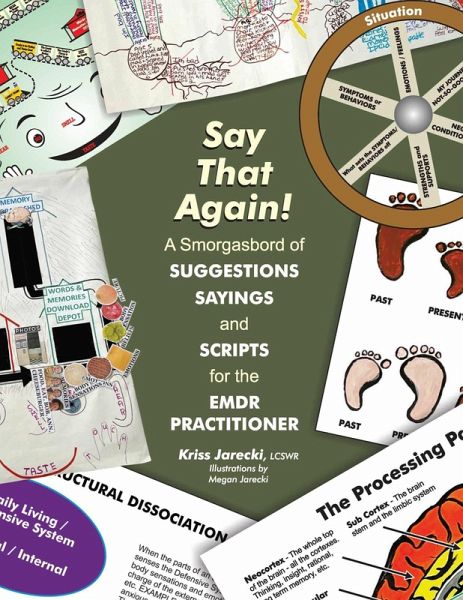
The book takes the therapist on a journey from "hello" to "congratulations, you completed treatment!" The journey starts with suggestions for creating a trauma-informed and trauma-sensitive office. This includes how to decorate and arrange a waiting room, training staff that also interact with clients and how to organize a therapy session. Then, you''ll be introduced to four different ways to explain and illustrate the Adaptive Information Processing Modal (AIP). Via metaphors such as the "sandwich" analogy, you''ll learn how our brain and body digest experiences, what can cause brain "indigestion" and ways to suggest therapies such as EMDR as a solution. This leads us into a hearty exploration of the brain on trauma. Follow the clearly written and illustrated map of how the brain (limbic and Cortexes), chemistry (Serotonin, Cortisol, etc.) and the nervous system (brain stem and Polyvagal nervous systems) work together to help our body and brain know how to react or not react in different situations (Adaptive Information Processing or AIP). Then, on to history taking. An over-all treatment approach and suggestions for mapping the road a client will follow after completing therapy. Look inside for much more!
Dieser Download kann aus rechtlichen Gründen nur mit Rechnungsadresse in A, B, BG, CY, CZ, D, DK, EW, E, FIN, F, GR, HR, H, IRL, I, LT, L, LR, M, NL, PL, P, R, S, SLO, SK ausgeliefert werden.