Sie sind bereits eingeloggt. Klicken Sie auf 2. tolino select Abo, um fortzufahren.
Bitte loggen Sie sich zunächst in Ihr Kundenkonto ein oder registrieren Sie sich bei bücher.de, um das eBook-Abo tolino select nutzen zu können.
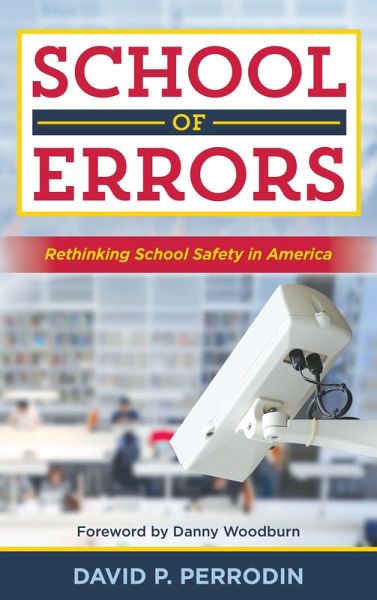
School of Errors establishes another voice in the discussion of how to promote safe schools. It challenges the unchecked expansion of school fortification and questions the realized benefit of inter-agency collaboration during a sentinel event. This book offers an alternative to traumatizing simulations by providing clear options for improving school safety by the empirically-proven effective measures of leakage detection (preventive) and sensemaking (reactive). School of Errors restores the scientific method to school safety and clears a path through the media rhetoric fogging this vital topic.…mehr
School of Errors establishes another voice in the discussion of how to promote safe schools. It challenges the unchecked expansion of school fortification and questions the realized benefit of inter-agency collaboration during a sentinel event. This book offers an alternative to traumatizing simulations by providing clear options for improving school safety by the empirically-proven effective measures of leakage detection (preventive) and sensemaking (reactive). School of Errors restores the scientific method to school safety and clears a path through the media rhetoric fogging this vital topic.
Die Herstellerinformationen sind derzeit nicht verfügbar.
Autorenporträt
David P. Perrodin, PhD, is an author, researcher, professor, and host of "The Safety Doc" podcast. Dr. Perrodin is a speech-language pathologist specializing in psycholinguistics. He has presented on PBS and written and directed a film about school safety with Pulitzer Prize winner David Obst. Dr. Perrodin is the author of the book School of Errors: Rethinking School Safety in America.
Inhaltsangabe
Foreword by Danny Woodburn Preface Acknowledgements Introduction Part One: The Torus Chapter One: How Thinking About a Bagel Can Get You Through the Worst Day of Your Life Chapter Two: Exploration Is a Kind of Safety Drill Chapter Three: Situational Awareness via Sensemaking, Your Sword and Shield Chapter Four: Legacy Knowledge Part Two: The Foolishness of Benchmarking Chapter Five: Disasters Are the Real Snowflakes Chapter Six: Another New Latin Word: Psychological Transference Chapter Seven: So, What's Wrong with Benchmarking? Critical Decision-Making in a Nonlinear World Chapter Eight: Why Comparing Disasters Feels Too Good to Be True Chapter Nine: One Variable, One Very Big Difference: the Internet Chapter Ten: A Final Word on Schools and Benchmarking Part Three: Drill Fidelity Chapter Eleven: Fancy Drills Are Worse Than Useless Chapter Twelve: The Right Way to Conduct a Drill: Critical Decision Making in a Nonlinear World Chapter Thirteen: Other Options: Tabletop Exercises and Focus Groups Chapter Fourteen: What is a Tabletop Exercise? Chapter Fifteen: Video Boondoggle Chapter Sixteen: One More Don't: Professional Standards for Educational Leaders (PSEL) Part Four: Systems Will Develop, So Let Them Chapter Seventeen: The Zen of Safety Chapter Eighteen: Incident Command Structure Chapter Nineteen: Tornadoes, Hurricanes, and the Fabulous Cajun Navy Relief Chapter Twenty: Seeing Faces on the Moon: How Pareidolia Helped the Rescue System on 9/11 Develop Chapter Twenty-One: Transitioning into Chaos - How Increasing the "Noise" Increases Options. Up to a Point Chapter Twenty-Two: Hobbes's Leviathan Meets the Twin Towers Part Five: How We Know What We Know. So Why Do These Systems Develop? Chapter Twenty-Three: Simulated Annealing, or SA: How the Human Brain is Specialized for Improvisation Chapter Twenty-Four: Leadership Theories AH (After Hobbes) Chapter Twenty-Five: Legacy Knowledge, Distributed Leadership, and Rookie Teachers vs. Admiral Loy Chapter Twenty-Six: Summary of What We Know Part Six: The Future Chapter Twenty-Seven: How Will Decisions Made in the Moment Be Studied? And How Will Future Decisions Be Directed? Chapter Twenty-Eight: Bollards and Planters: The Terrible Ideas That Are Coming to a School Near You Chapter Twenty-Nine: A Mile Wide and an Inch Deep Chapter Thirty: Final Implications for School Leaders Epilogue: Nothing Means Anything To Anyone Until It Means Everything To You References Index Meet the Author
Foreword by Danny Woodburn Preface Acknowledgements Introduction Part One: The Torus Chapter One: How Thinking About a Bagel Can Get You Through the Worst Day of Your Life Chapter Two: Exploration Is a Kind of Safety Drill Chapter Three: Situational Awareness via Sensemaking, Your Sword and Shield Chapter Four: Legacy Knowledge Part Two: The Foolishness of Benchmarking Chapter Five: Disasters Are the Real Snowflakes Chapter Six: Another New Latin Word: Psychological Transference Chapter Seven: So, What's Wrong with Benchmarking? Critical Decision-Making in a Nonlinear World Chapter Eight: Why Comparing Disasters Feels Too Good to Be True Chapter Nine: One Variable, One Very Big Difference: the Internet Chapter Ten: A Final Word on Schools and Benchmarking Part Three: Drill Fidelity Chapter Eleven: Fancy Drills Are Worse Than Useless Chapter Twelve: The Right Way to Conduct a Drill: Critical Decision Making in a Nonlinear World Chapter Thirteen: Other Options: Tabletop Exercises and Focus Groups Chapter Fourteen: What is a Tabletop Exercise? Chapter Fifteen: Video Boondoggle Chapter Sixteen: One More Don't: Professional Standards for Educational Leaders (PSEL) Part Four: Systems Will Develop, So Let Them Chapter Seventeen: The Zen of Safety Chapter Eighteen: Incident Command Structure Chapter Nineteen: Tornadoes, Hurricanes, and the Fabulous Cajun Navy Relief Chapter Twenty: Seeing Faces on the Moon: How Pareidolia Helped the Rescue System on 9/11 Develop Chapter Twenty-One: Transitioning into Chaos - How Increasing the "Noise" Increases Options. Up to a Point Chapter Twenty-Two: Hobbes's Leviathan Meets the Twin Towers Part Five: How We Know What We Know. So Why Do These Systems Develop? Chapter Twenty-Three: Simulated Annealing, or SA: How the Human Brain is Specialized for Improvisation Chapter Twenty-Four: Leadership Theories AH (After Hobbes) Chapter Twenty-Five: Legacy Knowledge, Distributed Leadership, and Rookie Teachers vs. Admiral Loy Chapter Twenty-Six: Summary of What We Know Part Six: The Future Chapter Twenty-Seven: How Will Decisions Made in the Moment Be Studied? And How Will Future Decisions Be Directed? Chapter Twenty-Eight: Bollards and Planters: The Terrible Ideas That Are Coming to a School Near You Chapter Twenty-Nine: A Mile Wide and an Inch Deep Chapter Thirty: Final Implications for School Leaders Epilogue: Nothing Means Anything To Anyone Until It Means Everything To You References Index Meet the Author
Es gelten unsere Allgemeinen Geschäftsbedingungen: www.buecher.de/agb
Impressum
www.buecher.de ist ein Internetauftritt der buecher.de internetstores GmbH
Geschäftsführung: Monica Sawhney | Roland Kölbl | Günter Hilger
Sitz der Gesellschaft: Batheyer Straße 115 - 117, 58099 Hagen
Postanschrift: Bürgermeister-Wegele-Str. 12, 86167 Augsburg
Amtsgericht Hagen HRB 13257
Steuernummer: 321/5800/1497
USt-IdNr: DE450055826