29,95 €
inkl. MwSt.
Sofort per Download lieferbar
15 °P sammeln

Andere Kunden interessierten sich auch für
") Citizens of Nowhere (eBook, PDF)11,95 €
Citizens of Nowhere (eBook, PDF)11,95 €") The Rise of Confucian Citizens in China (eBook, PDF)41,95 €
The Rise of Confucian Citizens in China (eBook, PDF)41,95 €") Democracy, States, and the Struggle for Social Justice (eBook, PDF)49,95 €
Democracy, States, and the Struggle for Social Justice (eBook, PDF)49,95 €") Situating Global Resistance (eBook, PDF)54,95 €
Situating Global Resistance (eBook, PDF)54,95 €") Citizens and the State (eBook, PDF)34,95 €
Citizens and the State (eBook, PDF)34,95 €") South Africa's Insurgent Citizens (eBook, PDF)19,95 €
South Africa's Insurgent Citizens (eBook, PDF)19,95 €") Citizenship and Social Movements (eBook, PDF)29,95 €
Citizenship and Social Movements (eBook, PDF)29,95 €

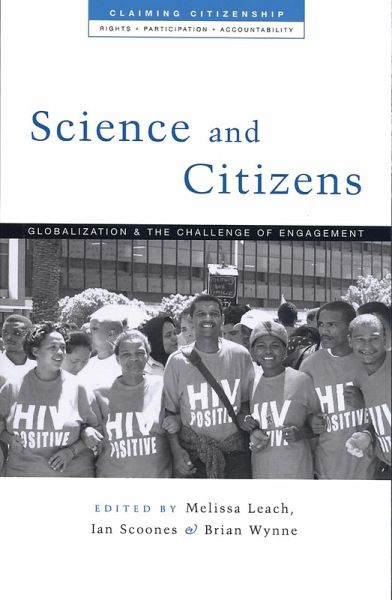
Rapid advances and new technologies in the life sciences - such as biotechnologies in health, agricultural and environmental arenas - pose a range of pressing challenges to questions of citizenship. This volume brings together for the first time authors from diverse experiences and analytical traditions, encouraging a conversation between science and technology and development studies around issues of science, citizenship and globalisation. It reflects on the nature of expertise; the framing of knowledge; processes of public engagement; and issues of rights, justice and democracy. A wide variety of pressing issues is explored, such as medical genetics, agricultural biotechnology, occupational health and HIV/AIDS. Drawing upon rich case studies from Asia, Africa, Latin America and Europe, Science and Citizens asks:
· Do new perspectives on science, expertise and citizenship emerge from comparing cases across different issues and settings?
· What difference does globalisation make?
· What does this tell us about approaches to risk, regulation and public participation?
· How might the notion of 'cognitive justice' help to further debate and practice?
· Do new perspectives on science, expertise and citizenship emerge from comparing cases across different issues and settings?
· What difference does globalisation make?
· What does this tell us about approaches to risk, regulation and public participation?
· How might the notion of 'cognitive justice' help to further debate and practice?