108,99 €
108,99 €
inkl. MwSt.
Sofort per Download lieferbar

0 °P sammeln
108,99 €
Als Download kaufen
108,99 €
inkl. MwSt.
Sofort per Download lieferbar
0 °P sammeln
Jetzt verschenken
Alle Infos zum eBook verschenken
108,99 €
inkl. MwSt.
Sofort per Download lieferbar
Alle Infos zum eBook verschenken
0 °P sammeln

Andere Kunden interessierten sich auch für
") Advances in Translational Neuroscience of Eye Movement Disorders (eBook, PDF)72,95 €
Advances in Translational Neuroscience of Eye Movement Disorders (eBook, PDF)72,95 €") The Intelligent Movement Machine (eBook, PDF)51,95 €
The Intelligent Movement Machine (eBook, PDF)51,95 €") Basal Ganglia and Thalamus in Health and Movement Disorders (eBook, PDF)112,95 €
Basal Ganglia and Thalamus in Health and Movement Disorders (eBook, PDF)112,95 €") Neural Prostheses for Restoration of Sensory and Motor Function (eBook, PDF)63,95 €
Neural Prostheses for Restoration of Sensory and Motor Function (eBook, PDF)63,95 €") Introduction to Dynamic Modeling of Neuro-Sensory Systems (eBook, PDF)211,95 €
Introduction to Dynamic Modeling of Neuro-Sensory Systems (eBook, PDF)211,95 €") Clinical Aspects of Sensory Motor Integration (eBook, PDF)72,95 €
Clinical Aspects of Sensory Motor Integration (eBook, PDF)72,95 €") Axon Growth and Guidance (eBook, PDF)112,95 €
Axon Growth and Guidance (eBook, PDF)112,95 €

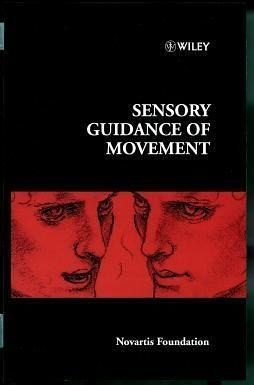
Sensory Guidance of Movement Chairman: Mitchell Glickstein, 1998 In the past few years there has been an increasing recognition of the multiplicity of sensory and motor areas of the cerebral cortex. However, still relatively little is known about the way in which sensory areas are functionally linked to motor areas. On the basis of current anatomical evidence, there are three major pathways involved in this linking. One of these routes is by way of cortico-cortical links, beginning in the primary sensory areas of the cortex, and connecting via a series of synaptic relays to motor or premotor areas. There are also two massive subcortical routes. One of these involves the basal ganglia, the other the cerebellum. This book focuses on current research on the structure and functions of these three pathways and their role in the sensory guidance of movement. Motor psychophysicists have made progress in characterizing the nature of movements such as reaching and grasping, and how such movements are modified by incoming sensory information. Anatomical studies have revealed important new information about the ways in which sensory information is relayed to the basal ganglia and cerebellum. There is now a volume of scanning evidence about the activity of brain areas in humans and recordings from individual neurons in animals during sensory guided movement. This book summarizes much of this recent knowledge and provides a forum for suggesting new avenues for further study. The topics covered also have important implications for understanding the role of these pathways in human disease.
Dieser Download kann aus rechtlichen Gründen nur mit Rechnungsadresse in D ausgeliefert werden.