Sie sind bereits eingeloggt. Klicken Sie auf 2. tolino select Abo, um fortzufahren.
Bitte loggen Sie sich zunächst in Ihr Kundenkonto ein oder registrieren Sie sich bei bücher.de, um das eBook-Abo tolino select nutzen zu können.
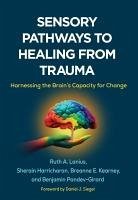
This forward-thinking book explores the impact of psychological trauma on the brain's sensory pathways and demonstrates the crucial role sensory-based interventions can play in recovery. Ruth A. Lanius and associates interweave neurobiological research with evocative case examples and narratives from survivors. The book shines a spotlight on the brain-body disconnect that is part of the lived experience of trauma, and traces what happens in all eight sensory systems when an individual is under threat. Featuring "Bridging to Practice" sections in each chapter, the book reveals how working with…mehr
This forward-thinking book explores the impact of psychological trauma on the brain's sensory pathways and demonstrates the crucial role sensory-based interventions can play in recovery. Ruth A. Lanius and associates interweave neurobiological research with evocative case examples and narratives from survivors. The book shines a spotlight on the brain-body disconnect that is part of the lived experience of trauma, and traces what happens in all eight sensory systems when an individual is under threat. Featuring "Bridging to Practice" sections in each chapter, the book reveals how working with sensory pathways can engage the whole brain, promote neuroplasticity, and optimize the effectiveness of standard psychotherapies. Illustrations include eight pages in full color.
Dieser Download kann aus rechtlichen Gründen nur mit Rechnungsadresse in A, D ausgeliefert werden.
Die Herstellerinformationen sind derzeit nicht verfügbar.
Autorenporträt
Ruth A. Lanius, MD, PhD, is Professor of Psychiatry and Harris-Woodman Chair at Western University in London, Ontario, Canada, where she is also director of the clinical research program for posttraumatic stress disorder (PTSD). She has worked with trauma-related disorders as a clinician and researcher since 2000, and established the Traumatic Stress Service at London Health Sciences Center. Dr. Lanius is particularly interested in the firsthand experience of traumatized individuals throughout treatment and how it relates to brain functioning. She has received numerous research and teaching awards, including the Banting Award for Military Health Research, and has published several books and over 200 research articles and book chapters focusing on brain adaptations to psychological trauma and novel adjunct treatments for PTSD. Dr. Lanius regularly lectures on the topic of psychological trauma, both nationally and internationally. Sherain Harricharan, PhD, completed her doctoral degree in neuroscience at Western University, in Ontario, Canada, and is currently pursuing a doctoral degree in clinical psychology at McMaster University. Dr. Harricharan's research focuses on posttraumatic stress disorder, employing various neuroimaging approaches to study altered neural circuitry patterns among traumatized individuals. Her interests include how sensory processing pathways in the brain are altered as a function of trauma and dissociation, with an emphasis on the influence sensory input can have in shaping higher-order cognitive functioning in trauma, including emotion regulation, social cognition, and attentional processing. Dr. Harricharan has published peer-reviewed articles and presented her work at numerous international conferences. Breanne E. Kearney, MS, MRes, is an occupational therapist and a doctoral candidate in neuroscience at Western University in Ontario, Canada. Ms. Kearney has over 10 years of experience working in a variety of settings with children and adolescents with sensory processing challenges, using a play- and relationship-based approach. She has received advanced training in sensorimotor-based interventions at the STAR Center in Denver, Colorado. Ms. Kearney's doctoral work in Ruth Lanius's lab involves using neuroimaging to investigate the neurobiology of sensory processing and the efficacy of mind-body treatments in posttraumatic stress disorder. She is particularly interested in studying the relationship between sensory processing, attachment, and trauma-related symptoms. Benjamin Pandev-Girard, MOT, is an occupational therapist in Montréal, Québec, Canada, with a focus on consulting to organizations and supporting individuals impacted by complex trauma and dissociation. He is passionate about bridging sensory processing research with practical interventions that meet diverse needs. Since 2021, Mr. Pandev-Girard has collaborated with Ruth Lanius and her trauma research team. He also works as a mentor, clinical supervisor, and consultant for schools, youth protection units, and early childhood centers; offers professional workshops on trauma, sensory processing, and mental health; and is a lecturer at Université de Sherbrooke. Mr. Pandev-Girard is a recipient of the Excellence in Clinical Supervision and Teaching award from the Canadian Association of Occupational Therapists.
Inhaltsangabe
Foreword, Daniel J. Siegel 1. Introduction to the Senses and the Sections of the Brain 2. A Sensational Journey: How Sensory Information Travels through the Brain 3. Feeling Safe or under Threat: The Diverging Roads of Sensory Experience 4. The Defense Cascade: How Sensory Experience Informs the Line of Defense 5. Understanding the Vestibular System: Balance, Center of Gravity, and Seeking Safety after Trauma 6. Interoception and Visceral Sensations after Trauma: The War Within 7. Feeling the World Through the Senses: The Shattered Universe after Trauma 8. The Hijacked Self: Overcoming the Compulsion to Repeat the Trauma 9. Becoming Whole: Synchronizing the Mind, Brain, and Body References Index
Foreword, Daniel J. Siegel 1. Introduction to the Senses and the Sections of the Brain 2. A Sensational Journey: How Sensory Information Travels through the Brain 3. Feeling Safe or under Threat: The Diverging Roads of Sensory Experience 4. The Defense Cascade: How Sensory Experience Informs the Line of Defense 5. Understanding the Vestibular System: Balance, Center of Gravity, and Seeking Safety after Trauma 6. Interoception and Visceral Sensations after Trauma: The War Within 7. Feeling the World Through the Senses: The Shattered Universe after Trauma 8. The Hijacked Self: Overcoming the Compulsion to Repeat the Trauma 9. Becoming Whole: Synchronizing the Mind, Brain, and Body References Index
Es gelten unsere Allgemeinen Geschäftsbedingungen: www.buecher.de/agb
Impressum
www.buecher.de ist ein Internetauftritt der buecher.de internetstores GmbH
Geschäftsführung: Monica Sawhney | Roland Kölbl | Günter Hilger
Sitz der Gesellschaft: Batheyer Straße 115 - 117, 58099 Hagen
Postanschrift: Bürgermeister-Wegele-Str. 12, 86167 Augsburg
Amtsgericht Hagen HRB 13257
Steuernummer: 321/5800/1497
USt-IdNr: DE450055826