2,99 €
inkl. MwSt.
Sofort per Download lieferbar
1 °P sammeln

Andere Kunden interessierten sich auch für







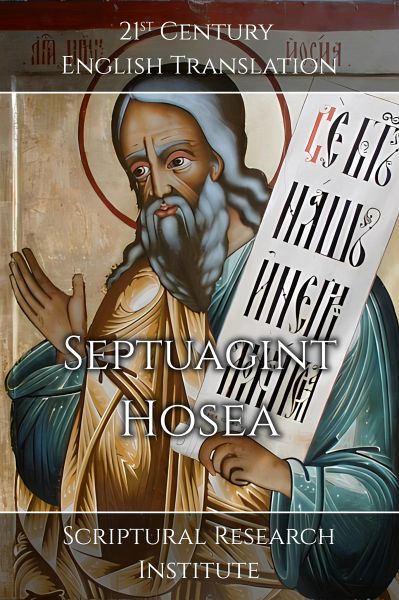
The Book of Hosea is generally considered one of the oldest surviving books of the Israelite Scriptures, with most scholars dating it to before the Torah was composed, or at least heavily redacted in the time of King Josiah. Most scholars accept that Hosea was written by a prophet called Hosea between 760 and 720 BCE, who was most likely from the region of Ephraim, in central modern Israel and the Palestinian West Bank. His world was very different from the later Kingdom of Judea that emerged in the 2nd century BCE, as the Israelites of his time were still polytheistic, worshiping the Canaanite gods, as well as statues of the calf god Yahweh, the God the Jews and Samaritans would later worship.
By Hosea's time, Samaria had fallen under the domination of the Neo-Assyrian Empire but had not been conquered outright yet. They fought a war of independence, now called the Syro-Ephraimite War, which they lost, ending up even more subjugated than they had previously been. Much of Hosea's book is little more than an angry tirade directed at his own tribe, the Ephraimites, who had led the war. According to Hosea, his people had allied themselves to Egypt, the ancient enemy, which was one reason Lord the god did not save them, the other being that they were worshiping an idol of Yahweh, and El was very angry about that. The Kingdom of Judah, to the south of Samaria, had allied with Assyria and helped them conquer the Samaritans, likely because they were more worried about the expansion of the Egyptian Empire, their southern neighbor than they were about the expansion of the Assyrian Empire north of Samaria. This Assyrian-Judahite alliance held Egypt back for more than a century, until Pharaoh Necho II killed King Josiah in 709 BCE, and reorganized Judah as a puppet state.
In the aftermath of their defeat in the Syro-Ephraimite War, many Israelites appear to have returned to worshiping the ancient Canaanite gods, implying they felt abandoned by El during the war. El, which means "God" in Hebrew, is also the name of the ancient Canaanite father of the gods, and husband of Asherah. The Temple of El is mentioned in many ancient Hebrew texts as having been in Shiloh, near the Temple of On / ¿¿n, and Hosea repeatedly refers to "Lord the god" in the Septuagint's version of his book, which clearly predates the Hebrew translation made during the Hasmonean dynasty, which replaced the Lord with Yahweh.
By Hosea's time, Samaria had fallen under the domination of the Neo-Assyrian Empire but had not been conquered outright yet. They fought a war of independence, now called the Syro-Ephraimite War, which they lost, ending up even more subjugated than they had previously been. Much of Hosea's book is little more than an angry tirade directed at his own tribe, the Ephraimites, who had led the war. According to Hosea, his people had allied themselves to Egypt, the ancient enemy, which was one reason Lord the god did not save them, the other being that they were worshiping an idol of Yahweh, and El was very angry about that. The Kingdom of Judah, to the south of Samaria, had allied with Assyria and helped them conquer the Samaritans, likely because they were more worried about the expansion of the Egyptian Empire, their southern neighbor than they were about the expansion of the Assyrian Empire north of Samaria. This Assyrian-Judahite alliance held Egypt back for more than a century, until Pharaoh Necho II killed King Josiah in 709 BCE, and reorganized Judah as a puppet state.
In the aftermath of their defeat in the Syro-Ephraimite War, many Israelites appear to have returned to worshiping the ancient Canaanite gods, implying they felt abandoned by El during the war. El, which means "God" in Hebrew, is also the name of the ancient Canaanite father of the gods, and husband of Asherah. The Temple of El is mentioned in many ancient Hebrew texts as having been in Shiloh, near the Temple of On / ¿¿n, and Hosea repeatedly refers to "Lord the god" in the Septuagint's version of his book, which clearly predates the Hebrew translation made during the Hasmonean dynasty, which replaced the Lord with Yahweh.
Dieser Download kann aus rechtlichen Gründen nur mit Rechnungsadresse in A, D ausgeliefert werden.