0,49 €
inkl. MwSt.
Sofort per Download lieferbar
0 °P sammeln

Andere Kunden interessierten sich auch für
") Serge et Bacchus (eBook, ePUB)18,95 €
Serge et Bacchus (eBook, ePUB)18,95 €") Serge et Bacchus (eBook, ePUB)16,95 €
Serge et Bacchus (eBook, ePUB)16,95 €") Schwarze Wasser (eBook, ePUB)18,99 €
Schwarze Wasser (eBook, ePUB)18,99 €") Gelber Schatten (eBook, ePUB)9,99 €
Gelber Schatten (eBook, ePUB)9,99 €") A Romance of Youth - Complete (eBook, ePUB)0,49 €
A Romance of Youth - Complete (eBook, ePUB)0,49 €") Evan Harrington - Complete (eBook, ePUB)0,49 €
Evan Harrington - Complete (eBook, ePUB)0,49 €") Daireen. Complete (eBook, ePUB)0,49 €
Daireen. Complete (eBook, ePUB)0,49 €







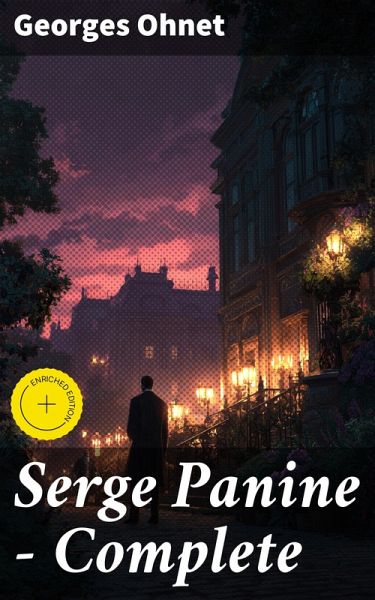
In 'Serge Panine '- Complete,' Georges Ohnet crafts a compelling narrative that intricately explores themes of love, ambition, and social class within the backdrop of 19th-century French society. Ohnet's literary style is characterized by a rich, descriptive prose that vividly portrays the emotional complexities of his characters, leading readers through a labyrinth of personal and social dilemmas. This novel is heavily infused with the naturalistic influences of its time, as it delves into the psychological motivations of its protagonist, Serge, a man torn between passion and moral responsibility, ultimately exemplifying the tensions of a rapidly changing modern world. Georges Ohnet, a prominent figure in the French literary scene, gained significant acclaim during the latter part of the 19th century. His background in law and journalism provided him with a unique perspective on societal issues, which he deftly wove into his narratives. Ohnet's experiences and observations of the bourgeois class and its moral complexities fuel the narrative of 'Serge Panine,' allowing for a profound commentary on human nature and societal constraints. I highly recommend 'Serge Panine '- Complete' to any reader interested in classic literature that explores deep social issues with remarkable character depth. Ohnet's ability to portray the intricate dance between desire and duty in a richly painted historical context offers an engaging reading experience that resonates with contemporary themes of personal struggle and societal expectation. In this enriched edition, we have carefully created added value for your reading experience: - A succinct Introduction situates the work's timeless appeal and themes. - The Synopsis outlines the central plot, highlighting key developments without spoiling critical twists. - A detailed Historical Context immerses you in the era's events and influences that shaped the writing. - A thorough Analysis dissects symbols, motifs, and character arcs to unearth underlying meanings. - Reflection questions prompt you to engage personally with the work's messages, connecting them to modern life. - Hand-picked Memorable Quotes shine a spotlight on moments of literary brilliance. - Interactive footnotes clarify unusual references, historical allusions, and archaic phrases for an effortless, more informed read.
Dieser Download kann aus rechtlichen Gründen nur mit Rechnungsadresse in A, B, BG, CY, CZ, D, DK, EW, E, FIN, F, GR, H, IRL, I, LT, L, LR, M, NL, PL, P, R, S, SLO, SK ausgeliefert werden.