104,95 €
104,95 €
inkl. MwSt.
Sofort per Download lieferbar

52 °P sammeln
104,95 €
Als Download kaufen
104,95 €
inkl. MwSt.
Sofort per Download lieferbar
52 °P sammeln
Jetzt verschenken
Alle Infos zum eBook verschenken
104,95 €
inkl. MwSt.
Sofort per Download lieferbar
Alle Infos zum eBook verschenken
52 °P sammeln

Andere Kunden interessierten sich auch für
") Cognitive Processes in Maturity and Old Age (eBook, PDF)40,95 €
Cognitive Processes in Maturity and Old Age (eBook, PDF)40,95 €") Personality and Healthy Aging in Adulthood (eBook, PDF)128,95 €
Personality and Healthy Aging in Adulthood (eBook, PDF)128,95 €") Sich selbst töten mit Hilfe Anderer (eBook, PDF)34,99 €
Sich selbst töten mit Hilfe Anderer (eBook, PDF)34,99 €") Sterbehilfe in Belgien (eBook, PDF)24,99 €
Sterbehilfe in Belgien (eBook, PDF)24,99 €") Relapse Prevention for Sexual Harassers (eBook, PDF)40,95 €
Relapse Prevention for Sexual Harassers (eBook, PDF)40,95 €") Clinical Perspectives on Elderly Sexuality (eBook, PDF)72,95 €
Clinical Perspectives on Elderly Sexuality (eBook, PDF)72,95 €") Feederism (eBook, PDF)56,95 €
Feederism (eBook, PDF)56,95 €



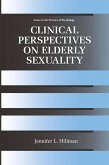

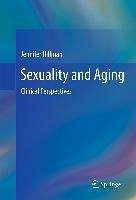
Despite continuing ageist beliefs that sexuality is a privilege designed only for the young and physically healthy, research continues to indicate that the majority of older adults maintain interest in sexuality and may engage in fulfilling sexual behavior well into their last decade of life. Unfortunately, many professionals remain unaware of general knowledge of elderly sexuality, including the expected and normal physiological changes that can occur within the context of both male and female aging. The presence of chronic illness and other medical problems certainly can influence the expression of an aging adult's sexuality, and emergent research suggests that there are effective ways to cope with menopause, heart disease, arthritis, incontinence, diabetes, sleep disorders, breast cancer, prostate cancer, and erectile dysfunction (ED), among others. Dramatic changes have taken place within the last decade alone in terms of non-surgical treatment for incontinence and ED, with forms of sex therapy, biofeedback, and PDE-5 inhibitors. Regrettably, many aging adults and their care providers remain unaware of their increased risk factors for STDs, including HIV infection via lack of knowledge, changes in the vaginal lining, and typical declines in immune function. Estimates suggest that by the year 2020, more than half of all individuals living with HIV will be over the age of 50. Although some high quality professional books are available for clinicians, they tend to be disjointed research bibliographies, edited volumes on a narrowly focused aspect of elderly sexuality, or texts that are more than 10 years old. With the extent of new information available regarding sexuality and aging, an up to date, empirically based text is necessary.
Dieser Download kann aus rechtlichen Gründen nur mit Rechnungsadresse in A, B, BG, CY, CZ, D, DK, EW, E, FIN, F, GR, HR, H, IRL, I, LT, L, LR, M, NL, PL, P, R, S, SLO, SK ausgeliefert werden.
"Sexuality and Aging: Clinical Perspectives by Jennifer Hillman is a welcome addition to the field of geropsychology and mental health, addressing a concern of aging that has been sorely neglected. Attempting to bridge this gap, the American Psychological Association and American Bar Association have collaborated to produce handbooks for psychologists, lawyers, and judges to specifically address issues such as capacity for sexual consent. However, the current book places such issues within a broader, more meaningful framework...The issue of capacity is addressed nicely, and the author highlights the need for a thorough evaluation of why an elder may or may not have the cognitive or psychological skills necessary to make independent decisions regarding his or her sexual behavior. There are links to useful external resources and good summaries of the primary information from those resources. The impact and dynamics of family perspectives and participation are well integrated, and Hillman provides concrete ideas on how to increase communication and processing within families...Kudos to Jennifer Hillman for establishing an up-to-date resource that highlights the need for professionals to increase awareness and self-education, becoming advocates for appropriate health care services across age, ethnicity, and sexual expression. Sexuality started way before research and evidence-based practice, and has been an ageless life tradition, a tradition that embraces all emotions of love, intimacy, caring, shock, wonderment, joy, fun, sharing, joining, learning, and embarrassment."Sigmund Hough and Amy S. Schultz (PsycCRITIQUES, Vol. 57) "Sexuality and Aging: Clinical Perspectives focuses on a myriad of issues related to social and physiological aspects of sexuality, sexual health, and sexual expression and diversity among aging and older adults. This book extends beyond traditional perspectives of sexuality and delves into intricate details specific to the influence of aging on one's sexuality. Although Hillman covers aspects of both women's and men's sexuality, readers specifically interested in women's sexuality will find the book particularly useful. Hillman's style and focus is best suited for clinicians working with aging and older adults; however, researchers and educators who work with older adults, and older adults themselves, may find the content particularly useful. As adults age, clinicians typically focus on sustaining health and striving for a positive quality of life. To that end, sexuality may be ignored or thought of as irrelevant within this population. Hillman describes situations in which sexuality may be overlooked among those working with older adults or may make care providers (e.g., medical, mental health, staff, children) uncomfortable, resulting in these needs getting largely ignored. To counter such stereotypes, Hillman walks through various health issues faced by aging adults, particularly focusing on managed care facilities and nursing homes, in conjunction with sexuality.The book is divided into 10 chapters, each describing specific health issues related to sexuality and aging; the chapters contain case studies that provide caretakers practical examples to draw from. For example, chapters 1 and 2 provide a general introduction describing baby boomers and sexual expression and diversity across the lifespan. Chapter 3 addresses caretakers' attitudes toward sexuality and aging, focusing on the challenges of navigating older adults' sexual expression and health. Chapter 4 provides perspectives of aging adults living in long-term care facilities, specifically highlighting the difficult role of caretakers as mental health problems set in. Chapter 4 also addresses nonconsensual sexual encounters, providing guidance for those who work with aging adults in terms of how to deal with combative adults who harass as well as protect vulnerable adults who may be at an increased risk for experiencing abuse. Chapter 5 outlines related to social and physiological aspects of sexuality, sexual health, and sexual expression and diversity among aging and older adults. This book extends beyond traditional perspectives of sexuality and delves into intricate details specific to the influence of aging on one's sexuality. Although Hillman covers aspects of both women's and men's sexuality, readers specifically interested in women's sexuality will find the book particularly useful. Hillman's style and focus is best suited for clinicians working with aging and older adults; however, researchers and educators who work with older adults, and older adults themselves, may find the content particularly useful. As adults age, clinicians typically focus on sustaining health and striving for a positive quality of life. To that end, sexuality may be ignored or thought of as irrelevant within this population. Hillman describes situations in which sexuality may be overlooked among those working with older adults or may make care providers (e.g., medical, mental health, staff, children) uncomfortable, resulting in these needs getting largely ignored. To counter such stereotypes, Hillman walks through various health issues faced by aging adults, particularly focusing on managed care facilities and nursing homes, in conjunction with sexuality. The book is divided into 10 chapters, each describing specific health issues related to sexuality and aging; the chapters contain case studies that provide caretakers practical examples to draw from. For example, chapters 1 and 2 provide a general introduction describing baby boomers and sexual expression and diversity across the lifespan. Chapter 3 addresses caretakers' attitudes toward sexuality and aging, focusing on the challenges of navigating older adults' sexual expression and health. Chapter 4 provides perspectives of aging adults living in long-term care facilities, specifically highlighting the difficult role of caretakers as mental health problems set in. Chapter 4 also addresses nonconsensual sexual encounters, providing guidance for those who work with aging adults in terms of how to deal with combative adults who harass as well as protect vulnerable adults who may be at an increased risk for experiencing abuse. Chapter 5 outlines major health issues faced by many aging Americans and their impact on sexuality and sexual expression for both aging individuals and those who provide care. Chapter 6 touches on unique issues related to IV/AIDS and other sexually transmitted infections (STI) among aging adults. Boomers and older adults may not consider themselves at risk for HIV/AIDS and STIs, and health-care providers may fail to discuss HIV/STI prevention with this population. However, Hillman reminds readers that most aging adults are sexually active, likely not utilizing proper HIV/STI prevention measures (i.e., condoms), and thus are at risk. Chapters 7, 8, and 9 highlight issues in sexuality and aging specifically targeting women, men, and lesbian, gay, bisexual, and transgendered (LGBT) persons respectively. Those specifically interested in women's sexuality will find chapter 7 particularly useful as Hillman discusses important physical changes experienced by aging women and the impact such changes can have on their sexuality. Hillman also emphasizes throughout the book that as adults age, women far outnumber men, creating a situation in which heterosexual women have less of an opportunity to find sexual and/or romantic partners. Although chapter 8 focuses on men, such information may be of interest to heterosexual women or those working with heterosexual women, as the information can help women better understand their male partners and the sexual issues they may be facing. Chapter 9 acknowledges the lack of research available on LGBT older adults, yet provides a preliminary introduction, highlighting the need to distinguish between each category of sexual minority and the need for additional research. Chapter 10 concludes the book with a discussion of contemporary issues facing older adults such as online dating, relationship variations, and sexuality at the end of life. Sexuality and Aging: Clinical Perspectives provides an important contribution to the body of literature addressing older adult sexuality. In addition to the rich content, an important strength of this book is the countless recommendations and questions/surveys that could be utilized by healthcare providers. For example, in chapter 2, Hillman provides a self-test that older adults could utilize to assess their knowledge about sexuality, chapter 7 provides a list of common body-image concerns many aging women experience, and chapter 10 concludes with a list of practical suggestions for caregivers to consider in regard to sexuality and providing care to older adults. Another important strength is Hillman's language choice and tone through which she subtly reminds the readers that aging is a natural part of life-span development and that sexuality is something experienced by all individuals, regardless of their age. The content, recommendations, and case study examples provided in this book are beneficial to those doing clinical work with aging adults as well as sex researchers interested in the aging and older adults." Journal of Women & Aging, 24:351-354, 2012 Kristen N. Jozkowski, PhD University of Arkansas
"Sexuality and Aging: Clinical Perspectives by Jennifer Hillman is a welcome addition to the field of geropsychology and mental health, addressing a concern of aging that has been sorely neglected. Attempting to bridge this gap, the American Psychological Association and American Bar Association have collaborated to produce handbooks for psychologists, lawyers, and judges to specifically address issues such as capacity for sexual consent. However, the current book places such issues within a broader, more meaningful framework...The issue of capacity is addressed nicely, and the author highlights the need for a thorough evaluation of why an elder may or may not have the cognitive or psychological skills necessary to make independent decisions regarding his or her sexual behavior. There are links to useful external resources and good summaries of the primary information from those resources. The impact and dynamics of family perspectives and participation are well integrated, and Hillman provides concrete ideas on how to increase communication and processing within families...Kudos to Jennifer Hillman for establishing an up-to-date resource that highlights the need for professionals to increase awareness and self-education, becoming advocates for appropriate health care services across age, ethnicity, and sexual expression. Sexuality started way before research and evidence-based practice, and has been an ageless life tradition, a tradition that embraces all emotions of love, intimacy, caring, shock, wonderment, joy, fun, sharing, joining, learning, and embarrassment."Sigmund Hough and Amy S. Schultz (PsycCRITIQUES, Vol. 57)
"Sexuality and Aging: Clinical Perspectives focuses on a myriad of issues related to social and physiological aspects of sexuality, sexual health, and sexual expression and diversity among aging and older adults. This book extends beyond traditional perspectives of sexuality and delves into intricate details specific to the influence of aging on one's sexuality. Although Hillman covers aspects of both women's and men's sexuality, readers specifically interested in women's sexuality will find the book particularly useful. Hillman's style and focus is best suited for clinicians working with aging and older adults; however, researchers and educators who work with older adults, and older adults themselves, may find the content particularly useful.
As adults age, clinicians typically focus on sustaining health and striving for a positive quality of life. To that end, sexuality may be ignored or thought of as irrelevant within this population. Hillman describes situations in which sexuality may be overlooked among those working with older adults or may make care providers (e.g., medical, mental health, staff, children) uncomfortable, resulting in these needs getting largely ignored. To counter such stereotypes, Hillman walks through various health issues faced by aging adults, particularly focusing on managed care facilities and nursing homes, in conjunction with sexuality.
The book is divided into 10 chapters, each describing specific health issues related to sexuality and aging; the chapters contain case studies that provide caretakers practical examples to draw from. For example, chapters 1 and 2 provide a general introduction describing baby boomers and sexual expression and diversity across the lifespan. Chapter 3 addresses caretakers' attitudes toward sexuality and aging, focusing on the challenges of navigating older adults' sexual expression and health. Chapter 4 provides perspectives of agingadults living in long-term care facilities, specifically highlighting the difficult role of caretakers as mental health problems set in. Chapter 4 also addresses nonconsensual sexual encounters, providing guidance for those who work with aging adults in terms of how to deal with combative adults who harass as well as protect vulnerable adults who may be at an increased risk for experiencing abuse. Chapter 5 outlines related to social and physiological aspects of sexuality, sexual health, and sexual expression and diversity among aging and older adults. This book extends beyond traditional perspectives of sexuality and delves into intricate details specific to the influence of aging on one's sexuality. Although Hillman covers aspects of both women's and men's sexuality, readers specifically interested in women's sexuality will find the book particularly useful. Hillman's style and focus is best suited for clinicians working with aging and older adults; however, researchers and educators who work with older adults, and older adults themselves, may find the content particularly useful. As adults age, clinicians typically focus on sustaining health and striving for a positive quality of life. To that end, sexuality may be ignored or thought of as irrelevant within this population. Hillman describes situations in which sexuality may be overlooked among those working with older adults or may make care providers (e.g., medical, mental health, staff, children) uncomfortable, resulting in these needs getting largely ignored. To counter such stereotypes, Hillman walks through various health issues faced by aging adults, particularly focusing on managed care facilities and nursing homes, in conjunction with sexuality. The book is divided into 10 chapters, each describing specific health issues related to sexuality and aging; the chapters contain case studies that provide caretakers practical examples to draw from. For example, chapters 1 and 2provide a general introduction describing baby boomers and sexual expression and diversity across the lifespan. Chapter 3 addresses caretakers' attitudes toward sexuality and aging, focusing on the challenges of navigating older adults' sexual expression and health. Chapter 4 provides perspectives of aging adults living in long-term care facilities, specifically highlighting the difficult role of caretakers as mental health problems set in. Chapter 4 also addresses nonconsensual sexual encounters, providing guidance for those who work with aging adults in terms of how to deal with combative adults who harass as well as protect vulnerable adults who may be at an increased risk for experiencing abuse. Chapter 5 outlines major health issues faced by many aging Americans and their impact on sexuality and sexual expression for both aging individuals and those who provide care. Chapter 6 touches on unique issues related to IV/AIDS and other sexually transmitted infections (STI) among aging adults. Boomers and older adults may not consider themselves at risk for HIV/AIDS and STIs, and health-care providers may fail to discussHIV/STI prevention with this population. However, Hillman reminds readers that most aging adults are sexually active, likely not utilizing proper HIV/STI prevention measures (i.e., condoms), and thus are at risk.
Chapters 7, 8, and 9 highlight issues in sexuality and aging specifically targeting women, men, and lesbian, gay, bisexual, and transgendered (LGBT) persons respectively. Those specifically interested in women's sexuality will find chapter 7 particularly useful as Hillman discusses important physical changes experienced by aging women and the impact such changes can have on their sexuality. Hillman also emphasizes throughout the book that as adults age, women far outnumber men, creating a situation in which heterosexual women have less of an opportunity to find sexual and/or romantic partners. Although chapter 8 focuses on men, such information may be of interest to heterosexual women or those working with heterosexual women, as the information canhelp women better understand their male partners and the sexual issues they may be facing. Chapter 9 acknowledges the lack of research available on LGBT older adults, yet provides a preliminary introduction, highlighting the need to distinguish between each category of sexual minority and the need for additional research. Chapter 10 concludes the book with a discussion of contemporary issues facing older adults such as online dating, relationship variations, and sexuality at the end of life.
Sexuality and Aging: Clinical Perspectives provides an important contribution to the body of literature addressing older adult sexuality. In addition to the rich content, an important strength of this book is the countless recommendations and questions/surveys that could be utilized by healthcare providers. For example, in chapter 2, Hillman provides a self-test that older adults could utilize to assess their knowledge about sexuality, chapter 7 provides a list of common body-image concerns many aging women experience, and chapter 10 concludes with a list of practical suggestions for caregivers to consider in regard to sexuality and providing care to older adults. Another important strength is Hillman's language choice and tone through which she subtly remindsthe readers that aging is a natural part of life-span development and that sexuality is something experienced by all individuals, regardless of their age. The content, recommendations, and case study examples provided in this book are beneficial to those doing clinical work with aging adults as well as sex researchers interested in the aging and older adults."
Journal of Women & Aging, 24:351-354, 2012
Kristen N. Jozkowski, PhD
University of Arkansas
"Sexuality and Aging: Clinical Perspectives focuses on a myriad of issues related to social and physiological aspects of sexuality, sexual health, and sexual expression and diversity among aging and older adults. This book extends beyond traditional perspectives of sexuality and delves into intricate details specific to the influence of aging on one's sexuality. Although Hillman covers aspects of both women's and men's sexuality, readers specifically interested in women's sexuality will find the book particularly useful. Hillman's style and focus is best suited for clinicians working with aging and older adults; however, researchers and educators who work with older adults, and older adults themselves, may find the content particularly useful.
As adults age, clinicians typically focus on sustaining health and striving for a positive quality of life. To that end, sexuality may be ignored or thought of as irrelevant within this population. Hillman describes situations in which sexuality may be overlooked among those working with older adults or may make care providers (e.g., medical, mental health, staff, children) uncomfortable, resulting in these needs getting largely ignored. To counter such stereotypes, Hillman walks through various health issues faced by aging adults, particularly focusing on managed care facilities and nursing homes, in conjunction with sexuality.
The book is divided into 10 chapters, each describing specific health issues related to sexuality and aging; the chapters contain case studies that provide caretakers practical examples to draw from. For example, chapters 1 and 2 provide a general introduction describing baby boomers and sexual expression and diversity across the lifespan. Chapter 3 addresses caretakers' attitudes toward sexuality and aging, focusing on the challenges of navigating older adults' sexual expression and health. Chapter 4 provides perspectives of agingadults living in long-term care facilities, specifically highlighting the difficult role of caretakers as mental health problems set in. Chapter 4 also addresses nonconsensual sexual encounters, providing guidance for those who work with aging adults in terms of how to deal with combative adults who harass as well as protect vulnerable adults who may be at an increased risk for experiencing abuse. Chapter 5 outlines related to social and physiological aspects of sexuality, sexual health, and sexual expression and diversity among aging and older adults. This book extends beyond traditional perspectives of sexuality and delves into intricate details specific to the influence of aging on one's sexuality. Although Hillman covers aspects of both women's and men's sexuality, readers specifically interested in women's sexuality will find the book particularly useful. Hillman's style and focus is best suited for clinicians working with aging and older adults; however, researchers and educators who work with older adults, and older adults themselves, may find the content particularly useful. As adults age, clinicians typically focus on sustaining health and striving for a positive quality of life. To that end, sexuality may be ignored or thought of as irrelevant within this population. Hillman describes situations in which sexuality may be overlooked among those working with older adults or may make care providers (e.g., medical, mental health, staff, children) uncomfortable, resulting in these needs getting largely ignored. To counter such stereotypes, Hillman walks through various health issues faced by aging adults, particularly focusing on managed care facilities and nursing homes, in conjunction with sexuality. The book is divided into 10 chapters, each describing specific health issues related to sexuality and aging; the chapters contain case studies that provide caretakers practical examples to draw from. For example, chapters 1 and 2provide a general introduction describing baby boomers and sexual expression and diversity across the lifespan. Chapter 3 addresses caretakers' attitudes toward sexuality and aging, focusing on the challenges of navigating older adults' sexual expression and health. Chapter 4 provides perspectives of aging adults living in long-term care facilities, specifically highlighting the difficult role of caretakers as mental health problems set in. Chapter 4 also addresses nonconsensual sexual encounters, providing guidance for those who work with aging adults in terms of how to deal with combative adults who harass as well as protect vulnerable adults who may be at an increased risk for experiencing abuse. Chapter 5 outlines major health issues faced by many aging Americans and their impact on sexuality and sexual expression for both aging individuals and those who provide care. Chapter 6 touches on unique issues related to IV/AIDS and other sexually transmitted infections (STI) among aging adults. Boomers and older adults may not consider themselves at risk for HIV/AIDS and STIs, and health-care providers may fail to discussHIV/STI prevention with this population. However, Hillman reminds readers that most aging adults are sexually active, likely not utilizing proper HIV/STI prevention measures (i.e., condoms), and thus are at risk.
Chapters 7, 8, and 9 highlight issues in sexuality and aging specifically targeting women, men, and lesbian, gay, bisexual, and transgendered (LGBT) persons respectively. Those specifically interested in women's sexuality will find chapter 7 particularly useful as Hillman discusses important physical changes experienced by aging women and the impact such changes can have on their sexuality. Hillman also emphasizes throughout the book that as adults age, women far outnumber men, creating a situation in which heterosexual women have less of an opportunity to find sexual and/or romantic partners. Although chapter 8 focuses on men, such information may be of interest to heterosexual women or those working with heterosexual women, as the information canhelp women better understand their male partners and the sexual issues they may be facing. Chapter 9 acknowledges the lack of research available on LGBT older adults, yet provides a preliminary introduction, highlighting the need to distinguish between each category of sexual minority and the need for additional research. Chapter 10 concludes the book with a discussion of contemporary issues facing older adults such as online dating, relationship variations, and sexuality at the end of life.
Sexuality and Aging: Clinical Perspectives provides an important contribution to the body of literature addressing older adult sexuality. In addition to the rich content, an important strength of this book is the countless recommendations and questions/surveys that could be utilized by healthcare providers. For example, in chapter 2, Hillman provides a self-test that older adults could utilize to assess their knowledge about sexuality, chapter 7 provides a list of common body-image concerns many aging women experience, and chapter 10 concludes with a list of practical suggestions for caregivers to consider in regard to sexuality and providing care to older adults. Another important strength is Hillman's language choice and tone through which she subtly remindsthe readers that aging is a natural part of life-span development and that sexuality is something experienced by all individuals, regardless of their age. The content, recommendations, and case study examples provided in this book are beneficial to those doing clinical work with aging adults as well as sex researchers interested in the aging and older adults."
Journal of Women & Aging, 24:351-354, 2012
Kristen N. Jozkowski, PhD
University of Arkansas