39,95 €
39,95 €
inkl. MwSt.
Sofort per Download lieferbar

20 °P sammeln
39,95 €
Als Download kaufen
39,95 €
inkl. MwSt.
Sofort per Download lieferbar
20 °P sammeln
Jetzt verschenken
Alle Infos zum eBook verschenken
39,95 €
inkl. MwSt.
Sofort per Download lieferbar
Alle Infos zum eBook verschenken
20 °P sammeln

Andere Kunden interessierten sich auch für
") Holy Monsters, Sacred Grotesques (eBook, PDF)88,95 €
Holy Monsters, Sacred Grotesques (eBook, PDF)88,95 €") Shakespeare and Tourism (eBook, PDF)39,95 €
Shakespeare and Tourism (eBook, PDF)39,95 €") Lessons from Shakespeare's Classroom (eBook, PDF)36,95 €
Lessons from Shakespeare's Classroom (eBook, PDF)36,95 €") Women Art Critics in Nineteenth-Century France (eBook, PDF)39,95 €
Women Art Critics in Nineteenth-Century France (eBook, PDF)39,95 €") Women Can't Paint (eBook, PDF)22,95 €
Women Can't Paint (eBook, PDF)22,95 €") In the Blink of an Ear (eBook, PDF)22,95 €
In the Blink of an Ear (eBook, PDF)22,95 €") Georges Rouault and Material Imagining (eBook, PDF)18,95 €
Georges Rouault and Material Imagining (eBook, PDF)18,95 €



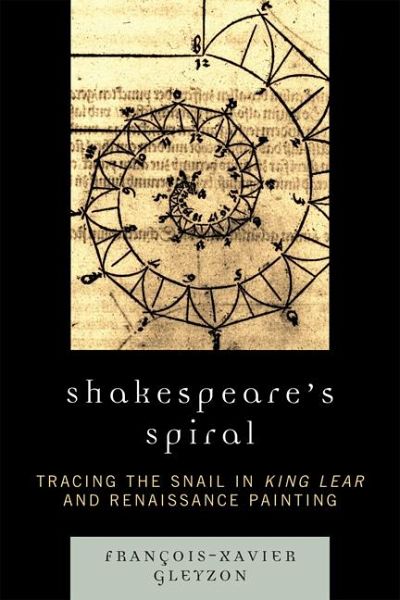
Shakespeare's Spiral aims to explore a figure forgotten in the dramatic texts of Shakespeare and in Renaissance painting: the snail. Taking as its point of departure the emergence of the gastropod object/subject in the text of King Lear as well as its iconic interface in Giovanni Bellini's painting Allegory of Falsehood (circa 1490), this study sets out to follow the particular path traced by the snail throughout the oeuvre. From the central scene in which the metaphor of the snail and of its shell is specifically made manifest when Lear discovers, in a raging storm, the spectacle of Edgar disguised as Poor Tom coming out of his shelter (III.3.6-9) to the monster, this fiend, displaying on the cliffs of Dover, "horms whelked and waved like the enridgèd sea" (IV.6.71), this work is the trace of a narrative - of a journey of the gaze - during the course of which the cryptic question of the gastropod - "Why a Snail [...]?" (I.5.26) - does not cease to be developed and transformed. Incorporating a wide-ranging post-structuralist critique, the study aims to bring to light the particular functions of this "revealing detail" in both its textual and visual dimension so as to put forward a new and innovatory understanding of the tragedy of King Lear.
Shakespeare's Spiral takes part in the new attention to the Creature, the Thing, and forms of life in literary, philosophical, and iconographic studies of Renaissance matter. In this witty and moving book, Gleyzon twists natural history, biopolitics, and the ecology of signs into a single spiral of incarnate thought, presenting the [snail] as both an object and a method for contemporary engagement with major and minor life forms of the past and present. -- Julia Reinhard Lupton, The University of California, Irvine The Spiral is at once beautiful and rare. -- Juliet Fleming, New York University and the University of Cambridge An evocative, genuinely exploratory study - rangy and surprising. Gleyzon combines an extraordinary range of theoretical reference, an instinct for the improbable and illuminating conjunction - Charcot and Durer, western thought and the gastropod - with a refined attentiveness to the poetics of text and language. -- Christopher Pye, Williams College Shakespeare's Spiral deserves to be read by scholars in and outside of the Shakespearean "shellter" (p. xix). The book invites critics to come out of their methodological shells; for this reason perhaps-in the words of an early review of Catch-22-it will prove to be 'a dazzling performance that will outrage nearly as many readers as it delights'. English Studies