47,95 €
inkl. MwSt.
Sofort per Download lieferbar
24 °P sammeln

Andere Kunden interessierten sich auch für
") Characterising Neighbourhoods (eBook, PDF)55,95 €
Characterising Neighbourhoods (eBook, PDF)55,95 €") EDRA 1 (eBook, PDF)34,95 €
EDRA 1 (eBook, PDF)34,95 €") Shaping Jerusalem (eBook, PDF)45,95 €
Shaping Jerusalem (eBook, PDF)45,95 €") Shaping the City (eBook, PDF)61,95 €
Shaping the City (eBook, PDF)61,95 €") Shaping Places (eBook, PDF)49,95 €
Shaping Places (eBook, PDF)49,95 €") Creating Neighbourhoods and Places in the Built Environment (eBook, PDF)58,95 €
Creating Neighbourhoods and Places in the Built Environment (eBook, PDF)58,95 €") Designing Therapeutic Environments (eBook, PDF)41,95 €
Designing Therapeutic Environments (eBook, PDF)41,95 €



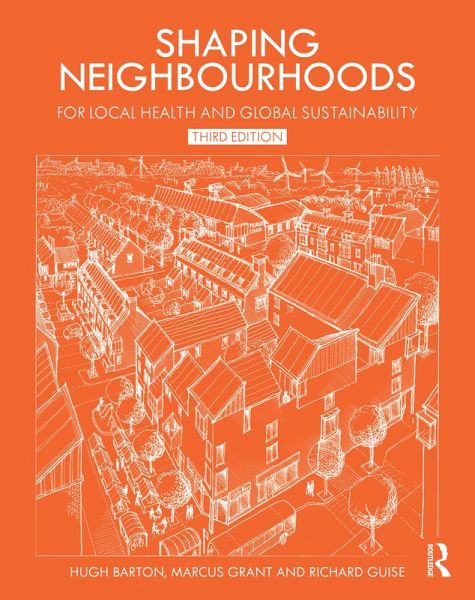
Shaping Neighbourhoods is unique in combining all aspects of the spatial planning of neighbourhoods and towns whilst emphasising positive outcomes for people's health and global sustainability. This new edition retains the combination of radicalism, evidence-based advice and pragmatism that made earlier editions so popular.
This updated edition strengthens guidance in relation to climate change and biodiversity, tackling crises of population health that are pushing up health-care budgets, but have elements of their origins in poor place spatial planning - such as isolation, lack of everyday physical activity, and respiratory problems. It is underpinned by new research into how people use their localities, and the best way to achieve inclusive, healthy, low-carbon settlements.
The guide can assist with:
. Understanding the principles for planning healthy and sustainable neighbourhoods and towns
. Planning collaborative and inclusive processes for multi-sectoral working
. Developing know-how and skills in matching local need with urban form
. Discovering new ways to integrate development with natural systems
. Designing places with character and recognising good urban form
Whether you are a student faced with a local planning project; a public health professional, planner, urban designer or developer involved in new development or regeneration; a council concerned with promoting healthy and sustainable environments; or a community group wanting to improve your neighbourhood - you will find help here.
This updated edition strengthens guidance in relation to climate change and biodiversity, tackling crises of population health that are pushing up health-care budgets, but have elements of their origins in poor place spatial planning - such as isolation, lack of everyday physical activity, and respiratory problems. It is underpinned by new research into how people use their localities, and the best way to achieve inclusive, healthy, low-carbon settlements.
The guide can assist with:
. Understanding the principles for planning healthy and sustainable neighbourhoods and towns
. Planning collaborative and inclusive processes for multi-sectoral working
. Developing know-how and skills in matching local need with urban form
. Discovering new ways to integrate development with natural systems
. Designing places with character and recognising good urban form
Whether you are a student faced with a local planning project; a public health professional, planner, urban designer or developer involved in new development or regeneration; a council concerned with promoting healthy and sustainable environments; or a community group wanting to improve your neighbourhood - you will find help here.
Dieser Download kann aus rechtlichen Gründen nur mit Rechnungsadresse in A, B, BG, CY, CZ, D, DK, EW, E, FIN, F, GR, HR, H, IRL, I, LT, L, LR, M, NL, PL, P, R, S, SLO, SK ausgeliefert werden.