55,95 €
55,95 €
inkl. MwSt.
Sofort per Download lieferbar

28 °P sammeln
55,95 €
Als Download kaufen
55,95 €
inkl. MwSt.
Sofort per Download lieferbar
28 °P sammeln
Jetzt verschenken
Alle Infos zum eBook verschenken
55,95 €
inkl. MwSt.
Sofort per Download lieferbar
Alle Infos zum eBook verschenken
28 °P sammeln

Andere Kunden interessierten sich auch für
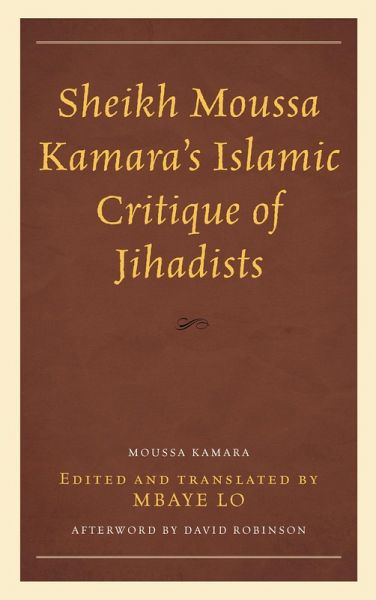
") Sheikh Moussa Kamara's Islamic Critique of Jihadists (eBook, ePUB)55,95 €
Sheikh Moussa Kamara's Islamic Critique of Jihadists (eBook, ePUB)55,95 €") Mugabeism? (eBook, PDF)40,95 €
Mugabeism? (eBook, PDF)40,95 €") Africana Faith (eBook, PDF)95,95 €
Africana Faith (eBook, PDF)95,95 €") Ghana (eBook, PDF)18,95 €
Ghana (eBook, PDF)18,95 €") Telling Stories, Making Histories (eBook, PDF)18,95 €
Telling Stories, Making Histories (eBook, PDF)18,95 €") Afrasia (eBook, PDF)37,95 €
Afrasia (eBook, PDF)37,95 €") Politics of Social Change in Ghana (eBook, PDF)80,95 €
Politics of Social Change in Ghana (eBook, PDF)80,95 €





Sheikh Moussa Kamara was one of the most prolific writers of the 20th century. His scholarship spanned many disciplines, including history, the ethnography of Sudanic Africa, theology, and poetry. His objection to jihad is one of his most pertinent works. As illustrated in this first English translation and commentary, he expounds upon the futility of waging Jihad bis-Sayf (Jihad of the Sword), as it could not be conducted without the killing of other Muslims or innocent civilians of any persuasion. Moreover, it is his contention that by its violent nature, jihad breaches one of Islam's main principles: preserving life. To support this argument, Kamara draws evidence from Prophet Muhammad's social life, the bloody legacy of Jihad waged among his companions after his death, and the opinions of pious scholars and Sufi saints on the subject as well as his own lived-experience of the economic devastation caused by the jihadists, or Pseudo-Jihadists in his parlance, of his time. Kamara goes further stipulating that if self-defense in the name of Jihad is a must, then there must be a balance of power with the enemy, unified leadership among the Muslims, and a legitimate leader who can authorize the enterprise.