3,56 €
3,56 €
inkl. MwSt.
Sofort per Download lieferbar

0 °P sammeln
3,56 €
Als Download kaufen
3,56 €
inkl. MwSt.
Sofort per Download lieferbar
0 °P sammeln
Jetzt verschenken
Alle Infos zum eBook verschenken
3,56 €
inkl. MwSt.
Sofort per Download lieferbar
Alle Infos zum eBook verschenken
0 °P sammeln

Andere Kunden interessierten sich auch für
 (eBook, ePUB)") Pandora's Box (Book 1 of the Sin Series) (eBook, ePUB)6,99 €
Pandora's Box (Book 1 of the Sin Series) (eBook, ePUB)6,99 € (eBook, ePUB)") Sin Eaters (Apocrypha, #1) (eBook, ePUB)4,49 €
Sin Eaters (Apocrypha, #1) (eBook, ePUB)4,49 € (eBook, ePUB)") The Eaters of Time (The Cycle of Bones, #2) (eBook, ePUB)4,99 €
The Eaters of Time (The Cycle of Bones, #2) (eBook, ePUB)4,99 € (eBook, ePUB)") The Fame Eaters (Tumultiverse, #2) (eBook, ePUB)2,99 €
The Fame Eaters (Tumultiverse, #2) (eBook, ePUB)2,99 €") The Book Eaters (eBook, ePUB)7,99 €
The Book Eaters (eBook, ePUB)7,99 € (eBook, ePUB)") Sins of the Angels (Armageddon's Offspring, #2) (eBook, ePUB)1,99 €
Sins of the Angels (Armageddon's Offspring, #2) (eBook, ePUB)1,99 €") The Sins on Their Bones (eBook, ePUB)11,95 €
The Sins on Their Bones (eBook, ePUB)11,95 €
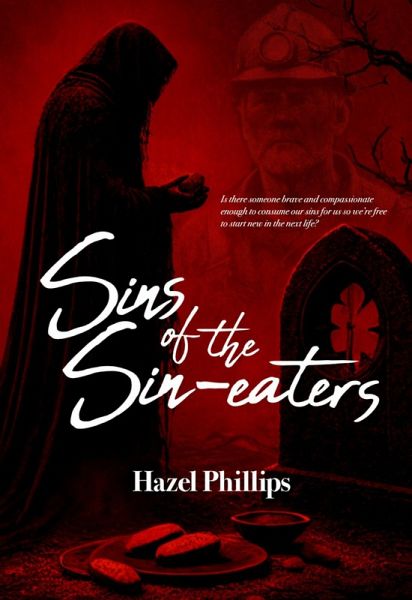
Every one of us is born with a death sentence. Our life cycle involves continuous changes as we develop from conception to death. Our challenge is to leave behind our sins and embark on another journey. We die as we are born - naked and hopefully without our sins. But how? How do we rid ourselves of these sins? Is there a way to leave them behind? Is there someone brave and compassionate enough to consume our sins for us, granting us the freedom to start anew in the next life?What Is Sin?The word "sin" has been used for over a thousand years, but more recently, it has been connected to Middle English, "Sinne" or, in Old English, "Syn".Sin has historically been linked to religious matters or moral law, but today, it is often trivialised to mean simply overindulging in desserts or drinking too much wine! This behaviour falls under acts of gluttony, which is one of Dante''s seven deadly sins.Newborns and young children carry no sins. However, as we go through life, we accumulate sins, not by our intentions but because we are subject to the pressures of our education, work, or pleasure-seeking environments. We learn to bully, to cheat, and to indulge. Our life may end when our usefulness or purpose fades. As we approach death, the sins we have accumulated become problematic. If we do believe in any afterlife, we cannot take them with us; who in the next life would want to inherit them? The following story explores the history of the tradition of sin-eating, what it is, how it''s done, how it became a custom and whether it exists today.
Dieser Download kann aus rechtlichen Gründen nur mit Rechnungsadresse in A, B, BG, CY, CZ, D, DK, EW, E, FIN, F, GR, HR, H, IRL, I, LT, L, LR, M, NL, PL, P, R, S, SLO, SK ausgeliefert werden.