52,95 €
inkl. MwSt.
Sofort per Download lieferbar
26 °P sammeln

Andere Kunden interessierten sich auch für
") Crime Prevention (eBook, PDF)69,95 €
Crime Prevention (eBook, PDF)69,95 €") Prevention of Violence Against Women and Girls (eBook, PDF)39,95 €
Prevention of Violence Against Women and Girls (eBook, PDF)39,95 € International Comparative Perspectives on the Treatment of "Urban Diseases" (eBook, PDF)41,95 €
") Uniting Green Criminology and Earth Jurisprudence (eBook, PDF)22,95 €
Uniting Green Criminology and Earth Jurisprudence (eBook, PDF)22,95 €") Reframing the Environment (eBook, PDF)41,95 €
Reframing the Environment (eBook, PDF)41,95 €") Metagovernance for Sustainability (eBook, PDF)46,95 €
Metagovernance for Sustainability (eBook, PDF)46,95 €") Religion and Development in the Asia-Pacific (eBook, PDF)37,95 €
Religion and Development in the Asia-Pacific (eBook, PDF)37,95 €

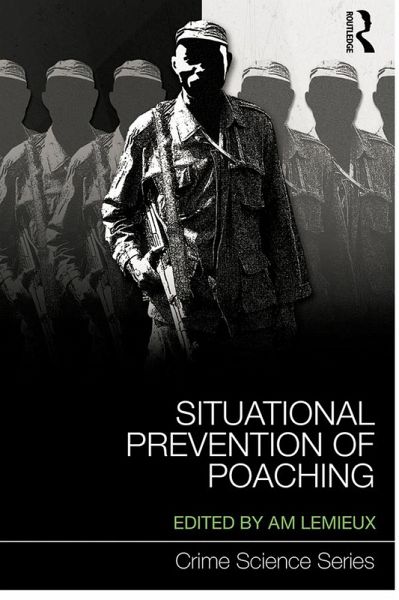
For centuries, criminologists have looked for scientific ways to study, understand, and ultimately prevent crime. In this volume, a unique offense, poaching, is explored in various contexts to determine what opportunity structures favor this crime and how situational crime prevention may reduce its prevalence. The data sources used range from publically available secondary data about animal populations, to interviews with hunters, to actual law enforcement data collected inside protected areas. Various methods are utilized to look for patterns in poaching behaviour regarding where poachers strike, which species they target and their modus operandi.
Collectively, the volume shows that principles of criminal opportunity theory and situational crime prevention are useful for studying and preventing poaching in a variety of contexts. The methods employed by each chapter are easily replicated and meant to stimulate empirical poaching research where data is available. While the theoretical grounding of this volume is drawn from criminology, it is written for a broad audience of academics, practitioners and those interested in wildlife conservation.
Collectively, the volume shows that principles of criminal opportunity theory and situational crime prevention are useful for studying and preventing poaching in a variety of contexts. The methods employed by each chapter are easily replicated and meant to stimulate empirical poaching research where data is available. While the theoretical grounding of this volume is drawn from criminology, it is written for a broad audience of academics, practitioners and those interested in wildlife conservation.
Dieser Download kann aus rechtlichen Gründen nur mit Rechnungsadresse in A, B, BG, CY, CZ, D, DK, EW, E, FIN, F, GR, HR, H, IRL, I, LT, L, LR, M, NL, PL, P, R, S, SLO, SK ausgeliefert werden.