0,00 €
0,00 €
inkl. MwSt.
Sofort per Download lieferbar

0 °P sammeln
0,00 €
Als Download kaufen
0,00 €
inkl. MwSt.
Sofort per Download lieferbar
0 °P sammeln
Jetzt verschenken
Alle Infos zum eBook verschenken
0,00 €
inkl. MwSt.
Sofort per Download lieferbar
Alle Infos zum eBook verschenken
0 °P sammeln

Andere Kunden interessierten sich auch für
") The Korean Crisis (eBook, ePUB)7,99 €
The Korean Crisis (eBook, ePUB)7,99 €") Did Stalin have a consistent national policy? (eBook, ePUB)13,99 €
Did Stalin have a consistent national policy? (eBook, ePUB)13,99 €") Sources of Japanese-Korean Relations (eBook, ePUB)6,49 €
Sources of Japanese-Korean Relations (eBook, ePUB)6,49 €") Cultural Heritage and Slavery (eBook, ePUB)0,00 €
Cultural Heritage and Slavery (eBook, ePUB)0,00 €") Die Indianer Nordamerikas (eBook, ePUB)9,99 €
Die Indianer Nordamerikas (eBook, ePUB)9,99 €") Geschichte der Türkei (eBook, ePUB)24,99 €
Geschichte der Türkei (eBook, ePUB)24,99 €") Under the Loving Care of the Fatherly Leader (eBook, ePUB)13,95 €
Under the Loving Care of the Fatherly Leader (eBook, ePUB)13,95 €





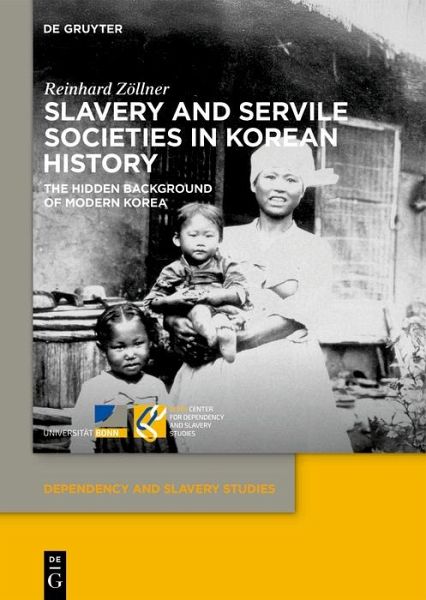
This study examines the long-overlooked institution of slavery in Korea, challenging its erasure from historical narratives and reassessing its role within the country's socio-political structure. It explores how slavery, deeply embedded in a lineage-based aristocracy, functioned not only as an economic driver but also as a hereditary status system that reinforced elite dominance and self-preservation. Using the concept of "servile society" (a society in which strong asymmetrical dependency is linked to hereditary social status in law and custom), the book examines how hereditary dependency shaped elite power, governance, and social hierarchies over centuries. The study combines political and legal history, social structures, and ideological frameworks to present the latest research on slavery in ancient Korea. It examines how slaves were constructed as a "special species" in the Korean Middle Ages, analyzes the role of slavery in the yangban-dominated society of the early modern period based on political-intellectual discourses and statistical data, and tracks the expansion of slavery discourses in Japanese and Western reception after c. 1800 based on texts and photographs; and examines the aftermath of slavery in the present.
Dieser Download kann aus rechtlichen Gründen nur mit Rechnungsadresse in A, B, BG, CY, CZ, D, DK, EW, E, FIN, F, GR, HR, H, IRL, I, LT, L, LR, M, NL, PL, P, R, S, SLO, SK ausgeliefert werden.