
51,95 €
51,95 €
inkl. MwSt.
Sofort per Download lieferbar

26 °P sammeln
51,95 €
Als Download kaufen
51,95 €
inkl. MwSt.
Sofort per Download lieferbar
26 °P sammeln
Jetzt verschenken
Alle Infos zum eBook verschenken
51,95 €
inkl. MwSt.
Sofort per Download lieferbar
Alle Infos zum eBook verschenken
26 °P sammeln

Andere Kunden interessierten sich auch für
") The Rotating European Union Council Presidency and Small Member States (eBook, ePUB)39,95 €
The Rotating European Union Council Presidency and Small Member States (eBook, ePUB)39,95 €") Small States of the European Union and Brexit (eBook, ePUB)42,95 €
Small States of the European Union and Brexit (eBook, ePUB)42,95 €") The Role of Small States in the European Union (eBook, ePUB)49,95 €
The Role of Small States in the European Union (eBook, ePUB)49,95 €") Small States in the Shatter Belt (eBook, ePUB)0,00 €
Small States in the Shatter Belt (eBook, ePUB)0,00 €") Small States in Europe (eBook, ePUB)55,95 €
Small States in Europe (eBook, ePUB)55,95 €") The Soft Power of Non-Western Small States (eBook, ePUB)42,95 €
The Soft Power of Non-Western Small States (eBook, ePUB)42,95 €") Europeanization and Territorial Politics in Small European Unitary States (eBook, ePUB)41,95 €
Europeanization and Territorial Politics in Small European Unitary States (eBook, ePUB)41,95 €
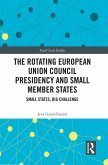



The most recent EU-enlargements have considerably increased the number of small member states. In the EU-27, 19 countries have fewer votes in the Council of Ministers than the EU-average. These small states face a series of size-related disadvantages in day-to-day EU negotiations. Against this backdrop the book asks: are some small states better at coping with structural disadvantages than others? How active are small states in participating in day-to-day EU negotiations and why do some states use negotiation strategies more frequently than others? Under which conditions are the different negotiation strategies effective and when can small states punch above their weight? Based on more than 100 interviews with policy-makers and an analysis of a unique database on the negotiation activities of EU member states, this book explains how active participation is essential for the shaping success of small states and shows that small states are more influential with persuasion-based rather than bargaining-based strategies. Two case studies on the pesticides and the spirit drinks regulations further reveal that persuasion strategies are especially effective if the arguments match the nature of the issue at stake and resonate well with prior beliefs of addressees. No other study comprehensively analyzes small states in a comparative perspective, examines their activity levels in EU negotiations and outlines which conditions are needed for the effectiveness of a broad range of strategies. An indispensable resource for students and researchers interested in how and under which conditions small states can influence policies in negotiations beyond the nation-state.
Dieser Download kann aus rechtlichen Gründen nur mit Rechnungsadresse in A, B, BG, CY, CZ, D, DK, EW, E, FIN, F, GR, HR, H, IRL, I, LT, L, LR, M, NL, PL, P, R, S, SLO, SK ausgeliefert werden.