39,95 €
inkl. MwSt.
Sofort per Download lieferbar
20 °P sammeln

Andere Kunden interessierten sich auch für
") Social Democratic Criminology (eBook, ePUB)39,95 €
Social Democratic Criminology (eBook, ePUB)39,95 €") Criminology and Democratic Politics (eBook, PDF)41,95 €
Criminology and Democratic Politics (eBook, PDF)41,95 €") American Hometown Renewal (eBook, PDF)76,95 €
American Hometown Renewal (eBook, PDF)76,95 €") Progressive Justice in an Age of Repression (eBook, PDF)42,95 €
Progressive Justice in an Age of Repression (eBook, PDF)42,95 €") The Enigma of Social Harm (eBook, PDF)22,95 €
The Enigma of Social Harm (eBook, PDF)22,95 €") Urban America Examined (eBook, PDF)21,95 €
Urban America Examined (eBook, PDF)21,95 €") Literary Theory and Criminology (eBook, PDF)39,95 €
Literary Theory and Criminology (eBook, PDF)39,95 €




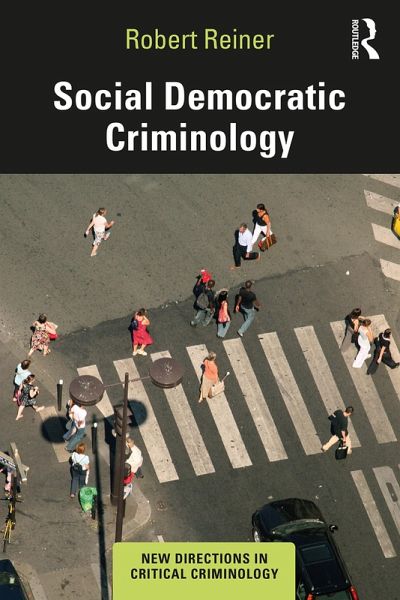
This book argues that 'social democratic criminology' is an important critical perspective which is essential for the analysis of crime and criminal justice and crucial for humane and effective policy. The end of World War II resulted in 30 years of strategies to create a more peaceful international order. In domestic policy, all Western countries followed agendas informed by a social democratic sensibility. Social Democratic Criminology argues that the social democratic consensus has been pulled apart since the late 1960s, by the hegemony of neoliberalism: a resuscitation of nineteenth-century free market economics. There is now a gathering storm of apocalyptic dangers from climate change, pandemics, antibiotic resistance, and other existential threats. This book shows that the neoliberal revolution of the rich pushed aside social democratic values and policies regarding crime and security and replaced them with tougher 'law and order' approaches. The initial consequence was a tsunami of crime in all senses. Smarter security techniques did succeed in abating this for a while, but the decade of austerity in the wake of the 2008 financial crisis has seen growing violent and serious crime.
Social Democratic Criminology charts the history of social democracy, discusses the variety of conflicting ways in which it has been interpreted, and identifies its core uniting concepts and influence on criminology in the twentieth century. It analyses the decline of social democratic criminology and the sustained intellectual and political attacks it has endured. The concluding chapter looks at the prospects for reviving social democratic criminology, itself dependent on the prospects for a rebirth of the broader social democratic movement.
Written in a clear and direct style, this book will appeal to students and scholars of criminology, sociology, cultural studies, politics, history, social policy, and all those interested in social democracy and its importance for society.
Social Democratic Criminology charts the history of social democracy, discusses the variety of conflicting ways in which it has been interpreted, and identifies its core uniting concepts and influence on criminology in the twentieth century. It analyses the decline of social democratic criminology and the sustained intellectual and political attacks it has endured. The concluding chapter looks at the prospects for reviving social democratic criminology, itself dependent on the prospects for a rebirth of the broader social democratic movement.
Written in a clear and direct style, this book will appeal to students and scholars of criminology, sociology, cultural studies, politics, history, social policy, and all those interested in social democracy and its importance for society.
Dieser Download kann aus rechtlichen Gründen nur mit Rechnungsadresse in A, B, BG, CY, CZ, D, DK, EW, E, FIN, F, GR, HR, H, IRL, I, LT, L, LR, M, NL, PL, P, R, S, SLO, SK ausgeliefert werden.
Robert Reiner is one of Britain's most esteemed criminologists. In Social Democratic Criminology, he offers a detailed analysis of the progress made during the social democratic era and the great harms associated with the neoliberal era. Reiner's goals are to persuade a new generation of criminologists of the benefits of social democracy and construct a plan for how we might revive it. Accessible, erudite and always insightful, Reiner's book is sure to become a classic.
Simon Winlow, Professor of Criminology, Northumbria University, UK.
The definitive account of what the author calls the 'strange death of social democratic criminology' and its implications for justice and liberty, this book ranges from the roots of social democracy to prospects for a 'green new deal'. It is challenging, rigorous - and in the current political context - much needed.
Nigel South, Professor of Sociology, University of Essex.
With trademark clarity and moral urgency, Reiner describes the intersecting existential threats facing us and makes the case for reviving social democratic criminology, encompassing both political economy and ethical critique. This important book offers a hopeful vision of criminology's future. A compelling read for confusing and disquieting times.
Elizabeth Turner, Lecturer in Sociology and Criminology, University of Liverpool.
This book speaks directly to the current moment: the neoliberal era is in crisis, the alternative has yet to be born. Social democracy - adapted and reinvented - can form the base for a broader social and justice movement.
Mary Corcoran, Keele University, UK.
Simon Winlow, Professor of Criminology, Northumbria University, UK.
The definitive account of what the author calls the 'strange death of social democratic criminology' and its implications for justice and liberty, this book ranges from the roots of social democracy to prospects for a 'green new deal'. It is challenging, rigorous - and in the current political context - much needed.
Nigel South, Professor of Sociology, University of Essex.
With trademark clarity and moral urgency, Reiner describes the intersecting existential threats facing us and makes the case for reviving social democratic criminology, encompassing both political economy and ethical critique. This important book offers a hopeful vision of criminology's future. A compelling read for confusing and disquieting times.
Elizabeth Turner, Lecturer in Sociology and Criminology, University of Liverpool.
This book speaks directly to the current moment: the neoliberal era is in crisis, the alternative has yet to be born. Social democracy - adapted and reinvented - can form the base for a broader social and justice movement.
Mary Corcoran, Keele University, UK.