7,99 €
7,99 €
inkl. MwSt.
Sofort per Download lieferbar

0 °P sammeln
7,99 €
Als Download kaufen
7,99 €
inkl. MwSt.
Sofort per Download lieferbar
0 °P sammeln
Jetzt verschenken
Alle Infos zum eBook verschenken
7,99 €
inkl. MwSt.
Sofort per Download lieferbar
Alle Infos zum eBook verschenken
0 °P sammeln

Andere Kunden interessierten sich auch für
") Learning and Behavior (eBook, ePUB)196,95 €
Learning and Behavior (eBook, ePUB)196,95 €") The Science of Learning (eBook, ePUB)64,95 €
The Science of Learning (eBook, ePUB)64,95 €") The psychology of revolution (eBook, ePUB)5,99 €
The psychology of revolution (eBook, ePUB)5,99 €") Person-Centered Theory (eBook, ePUB)7,99 €
Person-Centered Theory (eBook, ePUB)7,99 €") Sociocultural Theory (eBook, ePUB)8,99 €
Sociocultural Theory (eBook, ePUB)8,99 €") Self-Actualization Theory (eBook, ePUB)7,99 €
Self-Actualization Theory (eBook, ePUB)7,99 €") The Art of Thinking Critically (eBook, ePUB)4,49 €
The Art of Thinking Critically (eBook, ePUB)4,49 €





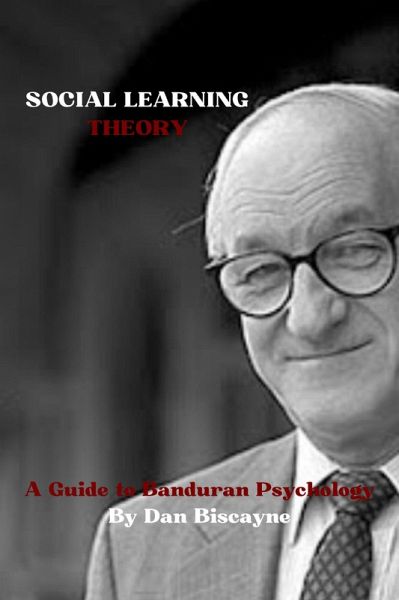
Human behavior is not formed in isolation. From infancy to adulthood, we learn by watching others-imitating their actions, internalizing their values, and shaping our understanding of the world through social interaction. At the heart of this process lies Social Learning Theory, a psychological framework that explains how observation, imitation, and modeling influence the way we think, feel, and behave.
This book is a comprehensive exploration of Social Learning Theory, originally developed by Albert Bandura in the mid-20th century. Moving beyond the limits of behaviorism, which emphasized learning through direct reinforcement, Bandura introduced the idea that people can also learn vicariously-by observing the actions and consequences experienced by others. This shift helped reshape modern psychology, integrating cognitive, emotional, and environmental factors into our understanding of how behavior is acquired and maintained.
The theory's core concepts-observational learning, modeling, self-efficacy, and reciprocal determinism-are not just theoretical constructs but tools for real-world insight. Whether in classrooms, workplaces, media, therapy, or everyday relationships, the principles of Social Learning Theory explain how behaviors are transmitted, values are shared, and cultures are formed.
This book aims to offer both a thorough theoretical grounding and practical applications of the theory. It is written for students of psychology, educators, social scientists, and anyone interested in understanding the profound influence of social environments on human development. Each chapter draws on both classic studies and contemporary examples to illustrate how this theory continues to evolve and remain relevant in today's complex, interconnected world.
As we engage with a society shaped by constant exposure to others-both in person and through screens-understanding how we learn socially is more important than ever. This book invites you to explore how observation shapes behavior, how belief shapes action, and how social learning shapes us all.
This book is a comprehensive exploration of Social Learning Theory, originally developed by Albert Bandura in the mid-20th century. Moving beyond the limits of behaviorism, which emphasized learning through direct reinforcement, Bandura introduced the idea that people can also learn vicariously-by observing the actions and consequences experienced by others. This shift helped reshape modern psychology, integrating cognitive, emotional, and environmental factors into our understanding of how behavior is acquired and maintained.
The theory's core concepts-observational learning, modeling, self-efficacy, and reciprocal determinism-are not just theoretical constructs but tools for real-world insight. Whether in classrooms, workplaces, media, therapy, or everyday relationships, the principles of Social Learning Theory explain how behaviors are transmitted, values are shared, and cultures are formed.
This book aims to offer both a thorough theoretical grounding and practical applications of the theory. It is written for students of psychology, educators, social scientists, and anyone interested in understanding the profound influence of social environments on human development. Each chapter draws on both classic studies and contemporary examples to illustrate how this theory continues to evolve and remain relevant in today's complex, interconnected world.
As we engage with a society shaped by constant exposure to others-both in person and through screens-understanding how we learn socially is more important than ever. This book invites you to explore how observation shapes behavior, how belief shapes action, and how social learning shapes us all.
Dieser Download kann aus rechtlichen Gründen nur mit Rechnungsadresse in A, B, BG, CY, CZ, D, DK, EW, E, FIN, F, GR, H, IRL, I, LT, L, LR, M, NL, PL, P, R, S, SLO, SK ausgeliefert werden.