Sie sind bereits eingeloggt. Klicken Sie auf 2. tolino select Abo, um fortzufahren.
Bitte loggen Sie sich zunächst in Ihr Kundenkonto ein oder registrieren Sie sich bei bücher.de, um das eBook-Abo tolino select nutzen zu können.
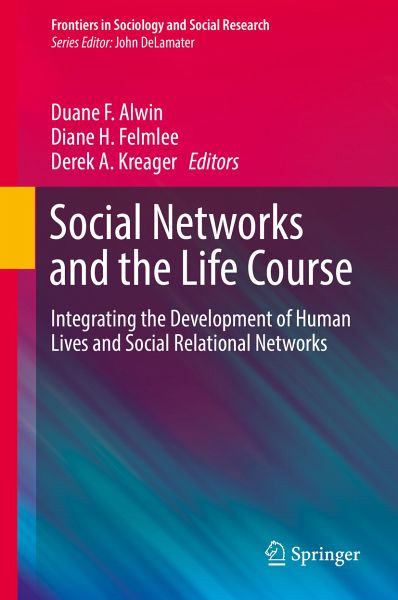
Brings together theoretical and methodological perspectives of social networks and life course Presents cutting-edge research at the interface of life course and social network studies Addresses hypotheses about the role of social relationships in people's lives and how these social network functions vary over the life course Identifies areas for future research studies aimed at gaps in knowledge from both sides of the social networks and life course equation
Brings together theoretical and methodological perspectives of social networks and life course
Presents cutting-edge research at the interface of life course and social network studies
Addresses hypotheses about the role of social relationships in people's lives and how these social network functions vary over the life course
Identifies areas for future research studies aimed at gaps in knowledge from both sides of the social networks and life course equation
Dieser Download kann aus rechtlichen Gründen nur mit Rechnungsadresse in A, B, BG, CY, CZ, D, DK, EW, E, FIN, F, GR, HR, H, IRL, I, LT, L, LR, M, NL, PL, P, R, S, SLO, SK ausgeliefert werden.
Die Herstellerinformationen sind derzeit nicht verfügbar.
Autorenporträt
Duane F. Alwin is the inaugural holder of the Tracy Winfree and Ted H. McCourtney Professorship in Sociology and Demography at Pennsylvania State University, where he directs the Center for Life Course and Longitudinal Studies. Diane H. Felmlee is Professor of Sociology and Demography and Research Associate in the PopulationResearch Institute at Pennsylvania State University. Derek A. Kreager is Professor of Sociology and Criminology, Research Associate in the Population Research Institute, and Director of the Justice Center for Research at Pennsylvania State University.
Inhaltsangabe
Chapter 1. Foreword.- Chapter 2. Introduction: Integrating Social Networks and the Life Course (Duane F. Alwin, Diane H. Felmlee, and Derek A. Kreager).-Part 1. Life Course Perspectives on Social Networks.-Chapter 3. Nine Ways that Social Relationships Matter for the Life Course (Richard A. Settersten, Jr.).-Chapter 4. The "Linked Lives" Principle in Life Course Studies: Classic Approaches andContemporary Advances (Deborah Carr).- Part 2. Social Network Perspectives on the Life Course.-Chapter 5. Life Course and Network Advantage: Peak Periods, Turning Points and Transition Ages (Ronald S. Burt).-Chapter 6. Life Course Events and Network Composition (Peter V. Marsden).-Part 3. Marriage and Family Networks.- Chapter 7. Calling on Kin: The Place of Parents and Adult Children in Egocentric Networks (Shira Offer and Claude Fischer).-Chapter 8. Changes in Spousal Relationships over the Marital Life Course (Paul R. Amato and Spencer L. James).- Chapter 9. Are Social Networks Good for People? Are Families Good for People? Are MarriagesGood for People? And Should Social Policy Encourage More of Them? (Scott Feld and Joey Marshall).- Part 4. Childhood and Adolescent Social Networks.- Chapter 10. The Evolution of Youth Friendship Networks from 6th to 12th Grade: School Transitions,Popularity and Centrality (Diane H. Felmlee, Cassie McMillan, Paulina Rodis and D. Wayne Osgood).- Chapter 11. Best Friends for Now: Ego-network Friendship Instability and Adolescents' Life CourseGoals (Robert W. Faris and Diane H. Felmlee).- Chapter 12. Problems at Home, Peer Networks at School, and the Social Integration of Adolescents (Rob Crosnoe, Julie Skalamera works.- Chapter 13. The Gendered Retreat from Marriage (Michael J. Rosenfeld).-Chapter 14. Gendered Life Course Transitions: The Case of Driving Cessation and Social Networks (Markus H. Schafer).-Chapter 15. How much can be Expected of One Child? Consequences of Multiplexity of Mothers'Support Preferences for Adult Children's Psychological Well-Being (J. Jill Suitor, Megan Gilligan, Siyun Peng and Marissa Rurka).-Part 6. Race and Social Networks.-Chapter 16. Reproducing Racism - Race, Social Networks and the Life Course (Duane F. Alwin, Jason R.Thomas and Kyler J. Sherman-Wilkins).- Chapter 17. Can Extracurricular Activities Reduce Adolescent Race/Ethnic Friendship Segregation? (David R. Schaefer, Sandra D. Simpkins and Andrea Vest Ettekal.- Part 7. Tracking Social Networks through Time.-Chapter 18. Ego-Network Recruitment in the Wake of Network Mortality (Benjamin Cornwell and Edward O. Laumann).-Chapter 19. Changes in Relational Ties that Constitute Personal Social Networks over the Life Courseinthe USA: A Latent Class Approach (Yoosik Youm, Edward O. Laumann, and Keun Bok Lee).-Part 8. Inter-generational Social Networks.-Chapter 20. Trajectories of Mother-child Relationships across the Life Course: Links with Adult Wellbeing (Jennifer L. Doty and Jeylan T. Mortimer).-Chapter 21. Linked Religious Lives Across Generational Time in Family Lineages: Grandparents asAgents of Transmission (Merril Silverstein and Vern L. Bengtson).-Part 9. Exploring the Potential of Social Networks as Mechanisms forPrevention.-Chapter 22. A Life Course and Networks Approach to Prison Therapeutic Communities (Derek Kreager, Martin Bouchard, George De Leon , David Schaefer, Michaela Soyer, Jacob Young and Gary Zajac).- Chapter 23. Impact of School-Based Prevention Programs on Friendship Networks and the Diffusion ofSubstance Use and Delinquency (Kelly L. Rulison, Scott D. Gest, Mark Feinberg and D. Wayne Osgood).-Chapter 24. Conclusions: Summarizing Social Networks and the Life Course(Derek A. Kreager, Diane H. Felmlee and Duane F. Alwin).-
Chapter 1. Foreword.- Chapter 2. Introduction: Integrating Social Networks and the Life Course (Duane F. Alwin, Diane H. Felmlee, and Derek A. Kreager).-Part 1. Life Course Perspectives on Social Networks.-Chapter 3. Nine Ways that Social Relationships Matter for the Life Course (Richard A. Settersten, Jr.).-Chapter 4. The "Linked Lives" Principle in Life Course Studies: Classic Approaches andContemporary Advances (Deborah Carr).- Part 2. Social Network Perspectives on the Life Course.-Chapter 5. Life Course and Network Advantage: Peak Periods, Turning Points and Transition Ages (Ronald S. Burt).-Chapter 6. Life Course Events and Network Composition (Peter V. Marsden).-Part 3. Marriage and Family Networks.- Chapter 7. Calling on Kin: The Place of Parents and Adult Children in Egocentric Networks (Shira Offer and Claude Fischer).-Chapter 8. Changes in Spousal Relationships over the Marital Life Course (Paul R. Amato and Spencer L. James).- Chapter 9. Are Social Networks Good for People? Are Families Good for People? Are MarriagesGood for People? And Should Social Policy Encourage More of Them? (Scott Feld and Joey Marshall).- Part 4. Childhood and Adolescent Social Networks.- Chapter 10. The Evolution of Youth Friendship Networks from 6th to 12th Grade: School Transitions,Popularity and Centrality (Diane H. Felmlee, Cassie McMillan, Paulina Rodis and D. Wayne Osgood).- Chapter 11. Best Friends for Now: Ego-network Friendship Instability and Adolescents' Life CourseGoals (Robert W. Faris and Diane H. Felmlee).- Chapter 12. Problems at Home, Peer Networks at School, and the Social Integration of Adolescents (Rob Crosnoe, Julie Skalamera works.- Chapter 13. The Gendered Retreat from Marriage (Michael J. Rosenfeld).-Chapter 14. Gendered Life Course Transitions: The Case of Driving Cessation and Social Networks (Markus H. Schafer).-Chapter 15. How much can be Expected of One Child? Consequences of Multiplexity of Mothers'Support Preferences for Adult Children's Psychological Well-Being (J. Jill Suitor, Megan Gilligan, Siyun Peng and Marissa Rurka).-Part 6. Race and Social Networks.-Chapter 16. Reproducing Racism - Race, Social Networks and the Life Course (Duane F. Alwin, Jason R.Thomas and Kyler J. Sherman-Wilkins).- Chapter 17. Can Extracurricular Activities Reduce Adolescent Race/Ethnic Friendship Segregation? (David R. Schaefer, Sandra D. Simpkins and Andrea Vest Ettekal.- Part 7. Tracking Social Networks through Time.-Chapter 18. Ego-Network Recruitment in the Wake of Network Mortality (Benjamin Cornwell and Edward O. Laumann).-Chapter 19. Changes in Relational Ties that Constitute Personal Social Networks over the Life Courseinthe USA: A Latent Class Approach (Yoosik Youm, Edward O. Laumann, and Keun Bok Lee).-Part 8. Inter-generational Social Networks.-Chapter 20. Trajectories of Mother-child Relationships across the Life Course: Links with Adult Wellbeing (Jennifer L. Doty and Jeylan T. Mortimer).-Chapter 21. Linked Religious Lives Across Generational Time in Family Lineages: Grandparents asAgents of Transmission (Merril Silverstein and Vern L. Bengtson).-Part 9. Exploring the Potential of Social Networks as Mechanisms forPrevention.-Chapter 22. A Life Course and Networks Approach to Prison Therapeutic Communities (Derek Kreager, Martin Bouchard, George De Leon , David Schaefer, Michaela Soyer, Jacob Young and Gary Zajac).- Chapter 23. Impact of School-Based Prevention Programs on Friendship Networks and the Diffusion ofSubstance Use and Delinquency (Kelly L. Rulison, Scott D. Gest, Mark Feinberg and D. Wayne Osgood).-Chapter 24. Conclusions: Summarizing Social Networks and the Life Course(Derek A. Kreager, Diane H. Felmlee and Duane F. Alwin).-
Es gelten unsere Allgemeinen Geschäftsbedingungen: www.buecher.de/agb
Impressum
www.buecher.de ist ein Internetauftritt der buecher.de internetstores GmbH
Geschäftsführung: Monica Sawhney | Roland Kölbl | Günter Hilger
Sitz der Gesellschaft: Batheyer Straße 115 - 117, 58099 Hagen
Postanschrift: Bürgermeister-Wegele-Str. 12, 86167 Augsburg
Amtsgericht Hagen HRB 13257
Steuernummer: 321/5800/1497
USt-IdNr: DE450055826