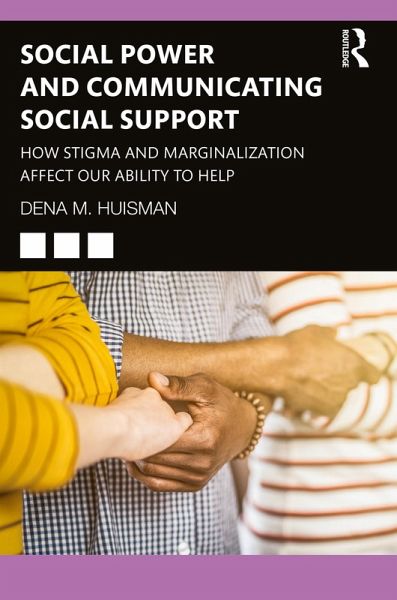
37,95 €
37,95 €
inkl. MwSt.
Sofort per Download lieferbar

19 °P sammeln
37,95 €
Als Download kaufen
37,95 €
inkl. MwSt.
Sofort per Download lieferbar
19 °P sammeln
Jetzt verschenken
Alle Infos zum eBook verschenken
37,95 €
inkl. MwSt.
Sofort per Download lieferbar
Alle Infos zum eBook verschenken
19 °P sammeln

Andere Kunden interessierten sich auch für
") Social Power and Communicating Social Support (eBook, PDF)37,95 €
Social Power and Communicating Social Support (eBook, PDF)37,95 €") Engaging Theories in Interpersonal Communication (eBook, ePUB)61,95 €
Engaging Theories in Interpersonal Communication (eBook, ePUB)61,95 €") Family Communication (eBook, ePUB)87,95 €
Family Communication (eBook, ePUB)87,95 €") The Routledge Handbook of Family Communication (eBook, ePUB)103,95 €
The Routledge Handbook of Family Communication (eBook, ePUB)103,95 €") Interpersonal Communication (eBook, ePUB)78,95 €
Interpersonal Communication (eBook, ePUB)78,95 €") Personal Conflict Management (eBook, ePUB)73,95 €
Personal Conflict Management (eBook, ePUB)73,95 €") Listening (eBook, ePUB)91,95 €
Listening (eBook, ePUB)91,95 €






This book gives readers an understanding of the theoretical foundations of social support communication along with practical tools to ethically and justly connect with and support others in daily life.
Incorporating research, real-world examples, and autoethnographic methods, this book examines how social hierarchies, personal power dynamics, and relational and social histories can be better understood to create stronger social support messages across all our relationships, including family, friend, workplace, and health provider-patient relationships. The book translates theories of social support communication into practical application, examining how support messaging goes wrong and how to do it right.
Intended as a supplementary text in interpersonal communication, psychology, and social work undergraduate courses, the book is also ideal for professionals who engage in caretaking and support tasks and wish to enhance their knowledge of social support theory.
Incorporating research, real-world examples, and autoethnographic methods, this book examines how social hierarchies, personal power dynamics, and relational and social histories can be better understood to create stronger social support messages across all our relationships, including family, friend, workplace, and health provider-patient relationships. The book translates theories of social support communication into practical application, examining how support messaging goes wrong and how to do it right.
Intended as a supplementary text in interpersonal communication, psychology, and social work undergraduate courses, the book is also ideal for professionals who engage in caretaking and support tasks and wish to enhance their knowledge of social support theory.
Dieser Download kann aus rechtlichen Gründen nur mit Rechnungsadresse in A, B, BG, CY, CZ, D, DK, EW, E, FIN, F, GR, HR, H, IRL, I, LT, L, LR, M, NL, PL, P, R, S, SLO, SK ausgeliefert werden.
"Social Power and Communicating Social Support is an important contribution for the field of social support. It brilliantly weaves outside research with this author's thought-provoking personal narrative. This is a must read for anyone wanting to further understand social support within a wide range of contexts."
Tracy Routsong, Washburn University, USA
"The communication discipline, like most social sciences, has struggled with white centeredness since its inception in the U.S. academy. Dena Huisman, a respected communication scholar, takes the critique head on and farther exposes omissions in the area of social support, making an argument that voices and experiences have been Othered, left out, or otherwise exceptionalized within communication scholarship. Dena gives scholars and practitioners the tools needed to do better when they design studies, teach curriculum or otherwise engage in social support literature, research, or practical application."
Amy Aldridge Sanford, Middle Tennessee State University, USA
Tracy Routsong, Washburn University, USA
"The communication discipline, like most social sciences, has struggled with white centeredness since its inception in the U.S. academy. Dena Huisman, a respected communication scholar, takes the critique head on and farther exposes omissions in the area of social support, making an argument that voices and experiences have been Othered, left out, or otherwise exceptionalized within communication scholarship. Dena gives scholars and practitioners the tools needed to do better when they design studies, teach curriculum or otherwise engage in social support literature, research, or practical application."
Amy Aldridge Sanford, Middle Tennessee State University, USA