24,95 €
24,95 €
inkl. MwSt.
Sofort per Download lieferbar

12 °P sammeln
24,95 €
Als Download kaufen
24,95 €
inkl. MwSt.
Sofort per Download lieferbar
12 °P sammeln
Jetzt verschenken
Alle Infos zum eBook verschenken
24,95 €
inkl. MwSt.
Sofort per Download lieferbar
Alle Infos zum eBook verschenken
12 °P sammeln

Andere Kunden interessierten sich auch für
") Nationalism and Identity Construction in Central Asia (eBook, ePUB)74,95 €
Nationalism and Identity Construction in Central Asia (eBook, ePUB)74,95 €") Soft Power in Central Asia (eBook, PDF)24,95 €
Soft Power in Central Asia (eBook, PDF)24,95 €") The Origins of the Civil War in Tajikistan (eBook, ePUB)42,95 €
The Origins of the Civil War in Tajikistan (eBook, ePUB)42,95 €") Encounters at the Edge of the Muslim World (eBook, ePUB)23,95 €
Encounters at the Edge of the Muslim World (eBook, ePUB)23,95 €") The Sense of Mission in Russian Foreign Policy (eBook, ePUB)41,95 €
The Sense of Mission in Russian Foreign Policy (eBook, ePUB)41,95 €") A Change in Worlds on the Sino-Tibetan Borderlands (eBook, ePUB)40,95 €
A Change in Worlds on the Sino-Tibetan Borderlands (eBook, ePUB)40,95 €") China's Soft Power Diplomacy in South Asia (eBook, ePUB)27,95 €
China's Soft Power Diplomacy in South Asia (eBook, ePUB)27,95 €






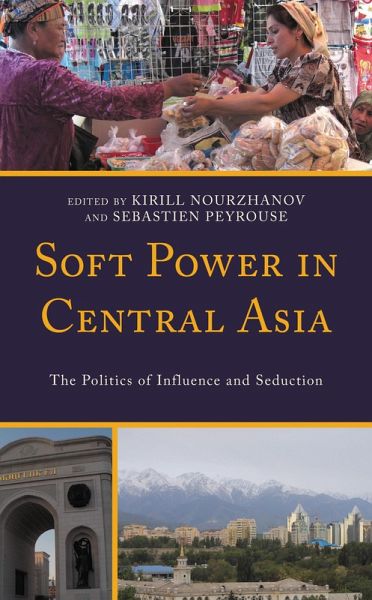
Central Asia often evokes images of imperial power rivalry dating back to the 19th century. Yet as the region's international politics becomes more complex in the age of globalization, the need for new ways of looking at its many actors is more pressing than ever. Today even the traditional great powers rely increasingly on subtle forms of influence to augment their military might and economic clout in order to achieve their objectives in Central Asia. Bearing this in mind, Soft Power in Central Asia examines the patterns of attraction and persuasion that help shape the political choices of countries in the region. Starting with an investigation of soft power projection by the US, Russia and China, it sheds light on normative transfer and public diplomacy of the European Union, Turkey and Israel, and concludes with a discussion of the Central Asian republics' active stance in the competition for the hearts and minds. Containing original chapters contributed by leading experts in the field, the volume will appeal to scholars and professionals with interest in international relations, political science and Central Asian studies.