Sie sind bereits eingeloggt. Klicken Sie auf 2. tolino select Abo, um fortzufahren.
Bitte loggen Sie sich zunächst in Ihr Kundenkonto ein oder registrieren Sie sich bei bücher.de, um das eBook-Abo tolino select nutzen zu können.
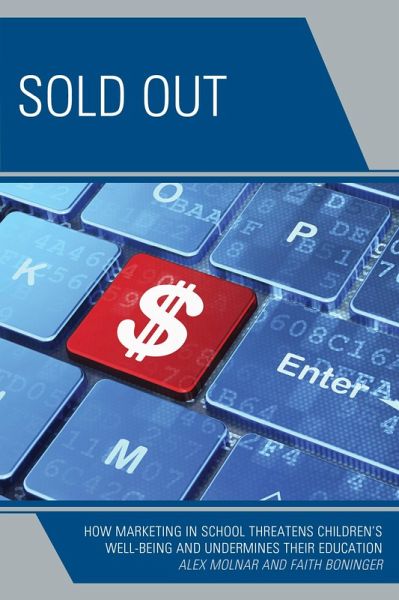
If you strip away the rosy language of "school-business partnership," "win-win situation," "giving back to the community," and the like, what you see when you look at corporate marketing activities in the schools is example after example of the exploitation of children for financial gain. Over the long run the financial benefit marketing in schools delivers to corporations rests on the ability of advertising to "brand" students and thereby help insure that they will be customers for life. This process of "branding" involves inculcating the value of consumption as the primary mechanism for…mehr
If you strip away the rosy language of "school-business partnership," "win-win situation," "giving back to the community," and the like, what you see when you look at corporate marketing activities in the schools is example after example of the exploitation of children for financial gain. Over the long run the financial benefit marketing in schools delivers to corporations rests on the ability of advertising to "brand" students and thereby help insure that they will be customers for life. This process of "branding" involves inculcating the value of consumption as the primary mechanism for achieving happiness, demonstrating success, and finding fulfillment. Along the way, "branding" children - just like branding cattle - inflicts pain. Yet school districts, desperate for funding sources, often eagerly welcome marketers and seem not to recognize the threats that marketing brings to children's well-being and to the integrity of the education they receive. Given that all ads in school pose some threat to children, it is past time for considering whether marketing activities belong in school. Schools should be ad-free zones.
Die Herstellerinformationen sind derzeit nicht verfügbar.
Autorenporträt
Alex Molnar is a Research Professor at the University of Colorado Boulder, where he serves as Publications Director of the National Education Policy Center (NEPC) and Director of the Commercialism in Education Research Unit (CERU). His work has examined curriculum and instruction topics, market-based education reforms, and policy formation. In addition to numerous articles, his earlier books on commercialism in schools are Giving Kids the Business: The Commercialization of America's Schools (2001) and Commercialism in education: From democratic ideal to market commodity (2005).
Inhaltsangabe
Acknowledgments Chapter 1 - The Problem of Schoolhouse Commercialism Chapter 2 - Schoolhouse Commercializing Trends, 1990-2006 Chapter 3 - Threats to Children's Psychological Well-Being Chapter 4 - Threats to Children's Physical Well-Being Chapter 5 - Threats to the Integrity of Children's Education Chapter 6 - Assessing the Intensity of the Threats Commercialism Poses to Children's Well-Being Chapter 7 - Threats to Children's Privacy and Digital Marketing Chapter 8 - Closing Thoughts Appendices Appendix A: Gubbins' Matrix of Thinking Skills Appendix B: State Laws and Regulations as of May 2004 Appendix C: State Bills Addressing School Commercialism Signed into Law, 2011-2014 Appendix D: Websites Associated with Relevant Topics Appendix E: State Laws Addressing Student Data Privacy: Synopses of Their Major Provisions With Their Significant Gaps in Protection, Exclusions and Omissions Noted (2011-2014)
Es gelten unsere Allgemeinen Geschäftsbedingungen: www.buecher.de/agb
Impressum
www.buecher.de ist ein Internetauftritt der buecher.de internetstores GmbH
Geschäftsführung: Monica Sawhney | Roland Kölbl | Günter Hilger
Sitz der Gesellschaft: Batheyer Straße 115 - 117, 58099 Hagen
Postanschrift: Bürgermeister-Wegele-Str. 12, 86167 Augsburg
Amtsgericht Hagen HRB 13257
Steuernummer: 321/5800/1497
USt-IdNr: DE450055826