0,49 €
0,49 €
inkl. MwSt.
Sofort per Download lieferbar

0 °P sammeln
0,49 €
Als Download kaufen
0,49 €
inkl. MwSt.
Sofort per Download lieferbar
0 °P sammeln
Jetzt verschenken
Alle Infos zum eBook verschenken
0,49 €
inkl. MwSt.
Sofort per Download lieferbar
Alle Infos zum eBook verschenken
0 °P sammeln

Andere Kunden interessierten sich auch für
") The Limit (eBook, ePUB)0,49 €
The Limit (eBook, ePUB)0,49 €") The Socialist (eBook, ePUB)0,49 €
The Socialist (eBook, ePUB)0,49 €") The Love-Story of Aliette Brunton (eBook, ePUB)0,99 €
The Love-Story of Aliette Brunton (eBook, ePUB)0,99 €") The Love-Story of Aliette Brunton (eBook, ePUB)1,97 €
The Love-Story of Aliette Brunton (eBook, ePUB)1,97 €") Thurston of Orchard Valley (eBook, ePUB)0,49 €
Thurston of Orchard Valley (eBook, ePUB)0,49 €") Athelstane Ford (eBook, ePUB)0,49 €
Athelstane Ford (eBook, ePUB)0,49 €") Masters of the Wheat-Lands (eBook, ePUB)0,49 €
Masters of the Wheat-Lands (eBook, ePUB)0,49 €


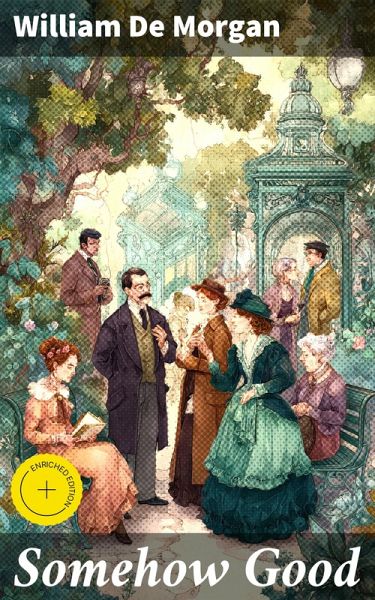
In "Somehow Good," William De Morgan presents a compelling narrative that intertwines elements of comedy and tragedy within the fabric of Victorian society. The novel delves into the lives of its characters as they navigate the complexities of love, morality, and social expectations. De Morgan's prose is characterized by its wit and sharp observations, revealing the contradictions of human nature while employing a rich tapestry of dialogue and vivid descriptions to enhance emotional resonance. The literary context of the late 19th century, marked by profound societal changes, influences De Morgan's exploration of themes such as redemption and the pursuit of happiness amidst adversity. William De Morgan, known primarily for his ceramic art, was also an accomplished novelist whose personal experiences and keen understanding of human psychology significantly shaped his literary voice. His background in the Arts and Crafts movement reflects a desire to integrate beauty and purpose into life'-and this philosophy permeates his writing. De Morgan's intimate knowledge of Victorian mores and societal constructs provides a rich backdrop for the characters' struggles and triumphs, making his work both engaging and reflective of his times. "Somehow Good" is a must-read for enthusiasts of Victorian literature and those seeking a nuanced exploration of morality and personal growth. De Morgan's unique blend of humor and pathos invites readers to reflect on their own lives while offering an insightful critique of the era's social constructs. The novel is not only entertaining but also a profound meditation on the complexities of goodness in an often contradictory world. In this enriched edition, we have carefully created added value for your reading experience: - Hand-picked Memorable Quotes shine a spotlight on moments of literary brilliance. - Interactive footnotes clarify unusual references, historical allusions, and archaic phrases for an effortless, more informed read.
Dieser Download kann aus rechtlichen Gründen nur mit Rechnungsadresse in A, B, BG, CY, CZ, D, DK, EW, E, FIN, F, GR, H, IRL, I, LT, L, LR, M, NL, PL, P, R, S, SLO, SK ausgeliefert werden.