42,95 €
inkl. MwSt.
Sofort per Download lieferbar
21 °P sammeln

Andere Kunden interessierten sich auch für
") Colonial and Post-Colonial Identity Politics in South Asia (eBook, ePUB)42,95 €
Colonial and Post-Colonial Identity Politics in South Asia (eBook, ePUB)42,95 €") The Press in Colonial India (eBook, ePUB)42,95 €
The Press in Colonial India (eBook, ePUB)42,95 €") The Royal Indian Navy (eBook, ePUB)41,95 €
The Royal Indian Navy (eBook, ePUB)41,95 €") Early Buddhist Artisans and Their Architectural Vocabulary (eBook, ePUB)42,95 €
Early Buddhist Artisans and Their Architectural Vocabulary (eBook, ePUB)42,95 €") Radical Politics in Colonial Punjab (eBook, ePUB)55,95 €
Radical Politics in Colonial Punjab (eBook, ePUB)55,95 €") Images of Maharashtra (eBook, ePUB)52,95 €
Images of Maharashtra (eBook, ePUB)52,95 €") Indian Liberalism between Nation and Empire (eBook, ePUB)41,95 €
Indian Liberalism between Nation and Empire (eBook, ePUB)41,95 €


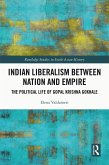
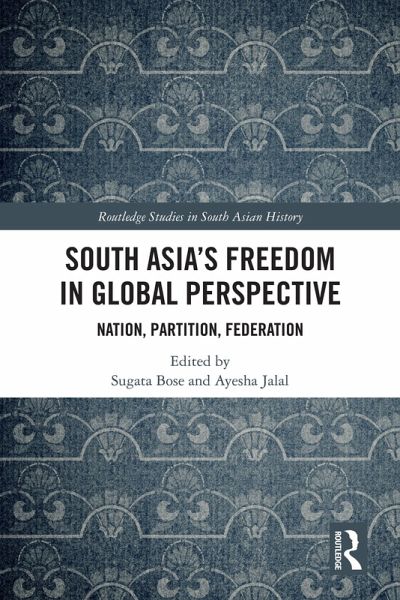
This book engages in a creative process of historical retrieval of visions for substantive democracy and federal union during the struggle for freedom that remained unrealized during the postcolonial transition.
Structured in three parts, the book examines the historical trajectory of South Asia in the twentieth and twenty-first centuries in its full complexity. Contributors to the book place the momentous event of independence and partition of India in a global perspective. Resisting the triumphalist nationalist narratives - that see the present-day nation-states of India and Pakistan, and also Bangladesh, Sri Lanka, and Burma as the preordained goal of the anticolonial struggle - the chapters analyze the process of South Asian independence, partition, and constitution-making. The book examines the relationship between nation, partition, and federation in the aftermath of liberal imperialism. Exposing the hollowness of celebratory accounts of liberal democracy in postcolonial South Asia, this book squarely confronts the historical roots of the contemporary crisis of authoritarianism in a global context. By identifying the requirements of genuine and substantive democracy in the subcontinent, the book charts a creative way toward a better constitutional and political future.
Raising questions that are fundamental to our understanding of modern South Asia and its place in the world, the book will be of interest to students and researchers of South Asian history, politics, and decolonization.
Structured in three parts, the book examines the historical trajectory of South Asia in the twentieth and twenty-first centuries in its full complexity. Contributors to the book place the momentous event of independence and partition of India in a global perspective. Resisting the triumphalist nationalist narratives - that see the present-day nation-states of India and Pakistan, and also Bangladesh, Sri Lanka, and Burma as the preordained goal of the anticolonial struggle - the chapters analyze the process of South Asian independence, partition, and constitution-making. The book examines the relationship between nation, partition, and federation in the aftermath of liberal imperialism. Exposing the hollowness of celebratory accounts of liberal democracy in postcolonial South Asia, this book squarely confronts the historical roots of the contemporary crisis of authoritarianism in a global context. By identifying the requirements of genuine and substantive democracy in the subcontinent, the book charts a creative way toward a better constitutional and political future.
Raising questions that are fundamental to our understanding of modern South Asia and its place in the world, the book will be of interest to students and researchers of South Asian history, politics, and decolonization.
Dieser Download kann aus rechtlichen Gründen nur mit Rechnungsadresse in A, B, BG, CY, CZ, D, DK, EW, E, FIN, F, GR, HR, H, IRL, I, LT, L, LR, M, NL, PL, P, R, S, SLO, SK ausgeliefert werden.