32,95 €
32,95 €
inkl. MwSt.
Sofort per Download lieferbar

16 °P sammeln
32,95 €
Als Download kaufen
32,95 €
inkl. MwSt.
Sofort per Download lieferbar
16 °P sammeln
Jetzt verschenken
Alle Infos zum eBook verschenken
32,95 €
inkl. MwSt.
Sofort per Download lieferbar
Alle Infos zum eBook verschenken
16 °P sammeln

Andere Kunden interessierten sich auch für
") Children, Spaces and Identity (eBook, PDF)23,95 €
Children, Spaces and Identity (eBook, PDF)23,95 €") Balkans in Focus (eBook, PDF)37,95 €
Balkans in Focus (eBook, PDF)37,95 €") Affective Spaces (eBook, PDF)65,95 €
Affective Spaces (eBook, PDF)65,95 €") Glasgow (eBook, PDF)0,00 €
Glasgow (eBook, PDF)0,00 €") Classes of Ladies of Cloistered Spaces (eBook, PDF)0,00 €
Classes of Ladies of Cloistered Spaces (eBook, PDF)0,00 €") Fragile Land (eBook, PDF)0,00 €
Fragile Land (eBook, PDF)0,00 €") What is Education? (eBook, PDF)0,00 €
What is Education? (eBook, PDF)0,00 €







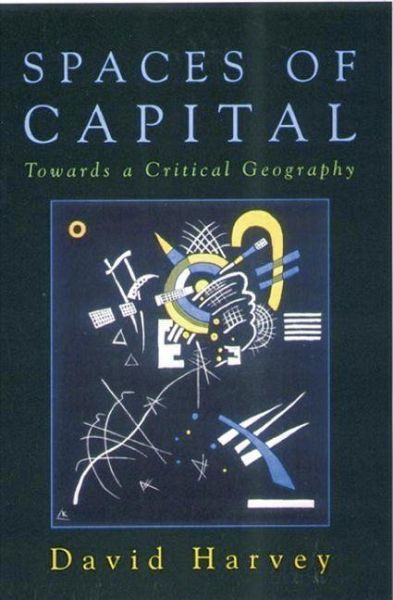
David Harvey is unquestionably the most influential, as well as the most cited, geographer of his generation. His reputation extends well beyond geography to sociology, planning, architecture, anthropology, literary studies and political science. This book brings together for the first time seminal articles published over three decades on the tensions between geographical knowledges and political power and on the capitalist production of space. Classic essays reprinted here include ''On the history and present condition of geography'', ''The geography of capitalist accumulation'' and ''The spatial fix: Hegel, von Thünen, and Marx''. Two new chapters represent the author's most recent thinking on cartographic identities and social movements. David Harvey's persistent challenge to the claims of ethical neutrality on behalf of science and geography runs like a thread throughout the book. He seeks to explain the geopolitics of capitalism and to ground spatial theory in social justice. In the process he engages with overlooked or misrepresented figures in the history of geography, placing them in the context of intellectual history. The presence here of Kant, Von Thünen, Humboldt, Lattimore, Leopold alongside Marx, Hegel, Heidegger, Darwin, Malthus, Foucault and many others shows the deep roots and significance of geographical thought. At the same time David Harvey's telling observations of current social, environmental, and political trends show just how vital that thought is to the understanding of the world as it is and as it might be.
Dieser Download kann aus rechtlichen Gründen nur mit Rechnungsadresse in A, B, BG, CY, CZ, D, DK, EW, E, FIN, F, GR, HR, H, IRL, I, LT, L, LR, M, NL, PL, P, R, S, SLO, SK ausgeliefert werden.