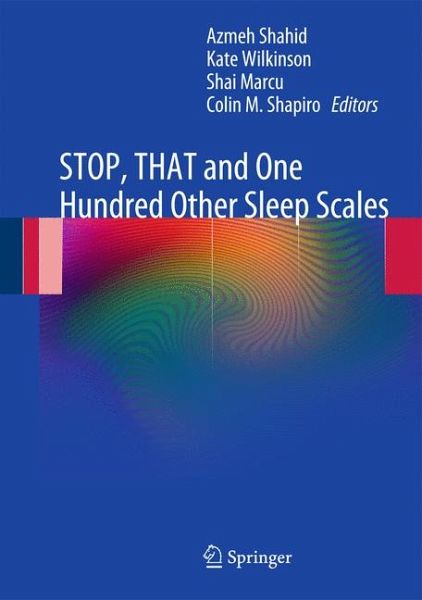
80,95 €
inkl. MwSt.
Sofort per Download lieferbar
40 °P sammeln

Andere Kunden interessierten sich auch für
") Sleep Medicine (eBook, PDF)96,95 €
Sleep Medicine (eBook, PDF)96,95 €") Atlas of Electroencephalography in Sleep Medicine (eBook, PDF)88,95 €
Atlas of Electroencephalography in Sleep Medicine (eBook, PDF)88,95 €") Sleep and Combat-Related Post Traumatic Stress Disorder (eBook, PDF)88,95 €
Sleep and Combat-Related Post Traumatic Stress Disorder (eBook, PDF)88,95 €") Handbook of Mental Health and Acculturation in Asian American Families (eBook, PDF)104,95 €
Handbook of Mental Health and Acculturation in Asian American Families (eBook, PDF)104,95 €") Person Centered Psychiatry (eBook, PDF)96,95 €
Person Centered Psychiatry (eBook, PDF)96,95 €") Mental Health and Older People (eBook, PDF)80,95 €
Mental Health and Older People (eBook, PDF)80,95 €") Improving Patient Treatment with Attachment Theory (eBook, PDF)64,95 €
Improving Patient Treatment with Attachment Theory (eBook, PDF)64,95 €

There are at least four reasons why a sleep clinician should be familiar with rating scales that evaluate different facets of sleep. First, the use of scales facilitates a quick and accurate assessment of a complex clinical problem. In three or four minutes (the time to review ten standard scales), a clinician can come to a broad understanding of the patient in question. For example, a selection of scales might indicate that an individual is sleepy but not fatigued; lacking alertness with no insomnia; presenting with no symptoms of narcolepsy or restless legs but showing clear features of apnea; exhibiting depression and a history of significant alcohol problems. This information can be used to direct the consultation to those issues perceived as most relevant, and can even provide a springboard for explaining the benefits of certain treatment approaches or the potential corollaries of allowing the status quo to continue.
Second, rating scales can provide a clinician with an enhanced vocabulary or language, improving his or her understanding of each patient. In the case of the sleep specialist, a scale can help him to distinguish fatigue from sleepiness in a patient, or elucidate the differences between sleepiness and alertness (which is not merely the inverse of the former). Sleep scales are developed by researchers and clinicians who have spent years in their field, carefully honing their preferred methods for assessing certain brain states or characteristic features of a condition. Thus, scales provide clinicians with a repertoire of questions, allowing them to draw upon the extensive experience of their colleagues when attempting to tease apart nuanced problems.
Third, some scales are helpful for tracking a patient's progress. A particular patient may not remember how alert he felt on a series of different stimulant medications. Scale assessments administered periodically over the course of treatment provide an objective record ofthe intervention, allowing the clinician to examine and possibly reassess her approach to the patient.
Finally, for individuals conducting a double-blind crossover trial or a straightforward clinical practice audit, those who are interested in research will find that their own clinics become a source of great discovery. Scales provide standardized measures that allow colleagues across cities and countries to coordinate their practices. They enable the replication of previous studies and facilitate the organization and dissemination of new research in a way that is accessible and rapid. As the emphasis placed on evidence-based care grows, a clinician's ability to assess his or her own practice and its relation to the wider medical community becomes invaluable. Scales make this kind of standardization possible, just as they enable the research efforts that help to formulate those standards. The majority of Rating Scales in Sleep and Sleep Disorders:100 Scales for Clinical Practice is devoted to briefly discussing individual scales. When possible, an example of the scale is provided so that readers may gain a sense of the instrument's content. Groundbreaking and the first of its kind to conceptualize and organize the essential scales used in sleep medicine, Rating Scales in Sleep and Sleep Disorders:100 Scales for Clinical Practice is an invaluable resource for all clinicians and researchers interested in sleep disorders.
Second, rating scales can provide a clinician with an enhanced vocabulary or language, improving his or her understanding of each patient. In the case of the sleep specialist, a scale can help him to distinguish fatigue from sleepiness in a patient, or elucidate the differences between sleepiness and alertness (which is not merely the inverse of the former). Sleep scales are developed by researchers and clinicians who have spent years in their field, carefully honing their preferred methods for assessing certain brain states or characteristic features of a condition. Thus, scales provide clinicians with a repertoire of questions, allowing them to draw upon the extensive experience of their colleagues when attempting to tease apart nuanced problems.
Third, some scales are helpful for tracking a patient's progress. A particular patient may not remember how alert he felt on a series of different stimulant medications. Scale assessments administered periodically over the course of treatment provide an objective record ofthe intervention, allowing the clinician to examine and possibly reassess her approach to the patient.
Finally, for individuals conducting a double-blind crossover trial or a straightforward clinical practice audit, those who are interested in research will find that their own clinics become a source of great discovery. Scales provide standardized measures that allow colleagues across cities and countries to coordinate their practices. They enable the replication of previous studies and facilitate the organization and dissemination of new research in a way that is accessible and rapid. As the emphasis placed on evidence-based care grows, a clinician's ability to assess his or her own practice and its relation to the wider medical community becomes invaluable. Scales make this kind of standardization possible, just as they enable the research efforts that help to formulate those standards. The majority of Rating Scales in Sleep and Sleep Disorders:100 Scales for Clinical Practice is devoted to briefly discussing individual scales. When possible, an example of the scale is provided so that readers may gain a sense of the instrument's content. Groundbreaking and the first of its kind to conceptualize and organize the essential scales used in sleep medicine, Rating Scales in Sleep and Sleep Disorders:100 Scales for Clinical Practice is an invaluable resource for all clinicians and researchers interested in sleep disorders.
Dieser Download kann aus rechtlichen Gründen nur mit Rechnungsadresse in A, B, BG, CY, CZ, D, DK, EW, E, FIN, F, GR, HR, H, IRL, I, LT, L, LR, M, NL, PL, P, R, S, SLO, SK ausgeliefert werden.
From the reviews:
"This is a comprehensive textbook of individual sleep scales that are used in clinical and/or research practices. ... Although targeted primarily for sleep clinicians and sleep researchers, the book also may be useful for medical students, residents, fellows, sleep technologists, or other members of the medical team. ... It provides an extensive compilation of the relevant scales and questionnaires that are used in the field of sleep medicine." (Margaret Park, Doody's Review Service, May, 2012)
"This is a comprehensive textbook of individual sleep scales that are used in clinical and/or research practices. ... Although targeted primarily for sleep clinicians and sleep researchers, the book also may be useful for medical students, residents, fellows, sleep technologists, or other members of the medical team. ... It provides an extensive compilation of the relevant scales and questionnaires that are used in the field of sleep medicine." (Margaret Park, Doody's Review Service, May, 2012)