13,95 €
inkl. MwSt.
Sofort per Download lieferbar
7 °P sammeln

Andere Kunden interessierten sich auch für
") African American Life and Culture in Orange Mound (eBook, ePUB)35,95 €
African American Life and Culture in Orange Mound (eBook, ePUB)35,95 €") The Death and Life of Main Street (eBook, ePUB)15,95 €
The Death and Life of Main Street (eBook, ePUB)15,95 €") The One-Way Street of Integration (eBook, ePUB)8,95 €
The One-Way Street of Integration (eBook, ePUB)8,95 €") Sex For Sale (eBook, ePUB)36,95 €
Sex For Sale (eBook, ePUB)36,95 €") Street Sex Workers' Discourse (eBook, ePUB)39,95 €
Street Sex Workers' Discourse (eBook, ePUB)39,95 €") Uneasy Street (eBook, ePUB)11,95 €
Uneasy Street (eBook, ePUB)11,95 €") Street Haunting: A London Adventure (eBook, ePUB)5,99 €
Street Haunting: A London Adventure (eBook, ePUB)5,99 €
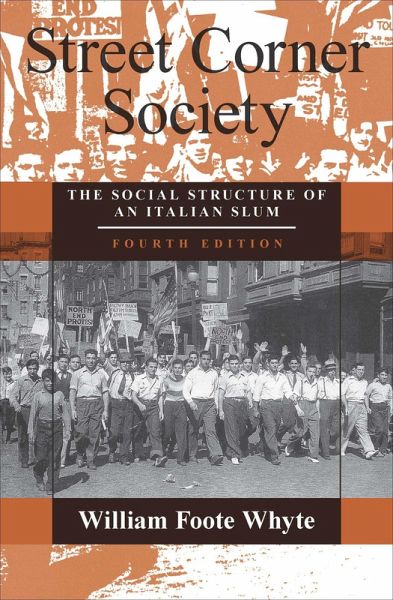
The classic study of a poor community in Boston's North End in the mid-twentieth century. Street Corner Society is one of a handful of works that can justifiably be called classics of sociological research. William Foote Whyte's account of the Italian American slum he called "Cornerville"-Boston's North End-has been the model for urban ethnography for fifty years. By mapping the intricate social worlds of street gangs and "corner boys," Whyte was among the first to demonstrate that a poor community need not be socially disorganized. His writing set a standard for vivid portrayals of real people in real situations. And his frank discussion of his methodology-participant observation-has served as an essential casebook in field research for generations of students and scholars. This fiftieth anniversary edition includes a new preface and revisions to the methodological appendix. In a new section on the book's legacy, Whyte responds to challenges to the validity, interpretation, and uses of his data. "The Whyte Impact on the Underdog," the moving statement by a gang leader who became the author's first research assistant, is preserved. " Street Corner Society broke new ground and set a standard for field research in American cities that remains a source of intellectual challenge."-Robert Washington, Reviews in Anthropology