38,95 €
38,95 €
inkl. MwSt.
Sofort per Download lieferbar

19 °P sammeln
38,95 €
Als Download kaufen
38,95 €
inkl. MwSt.
Sofort per Download lieferbar
19 °P sammeln
Jetzt verschenken
Alle Infos zum eBook verschenken
38,95 €
inkl. MwSt.
Sofort per Download lieferbar
Alle Infos zum eBook verschenken
19 °P sammeln

Andere Kunden interessierten sich auch für
") The Left Strikes Back (eBook, ePUB)12,95 €
The Left Strikes Back (eBook, ePUB)12,95 €") Strikes in Politicisation (eBook, ePUB)16,95 €
Strikes in Politicisation (eBook, ePUB)16,95 €") Paradigm Shift: The Palin Matrix: The Progressive Left Strikes Back! (eBook, ePUB)3,99 €
Paradigm Shift: The Palin Matrix: The Progressive Left Strikes Back! (eBook, ePUB)3,99 €") Murder in the Garment District (eBook, ePUB)14,95 €
Murder in the Garment District (eBook, ePUB)14,95 €") Organizing Insurgency (eBook, ePUB)11,95 €
Organizing Insurgency (eBook, ePUB)11,95 €") Storming Heaven (eBook, ePUB)11,95 €
Storming Heaven (eBook, ePUB)11,95 €") Who governs Britain? (eBook, ePUB)81,95 €
Who governs Britain? (eBook, ePUB)81,95 €






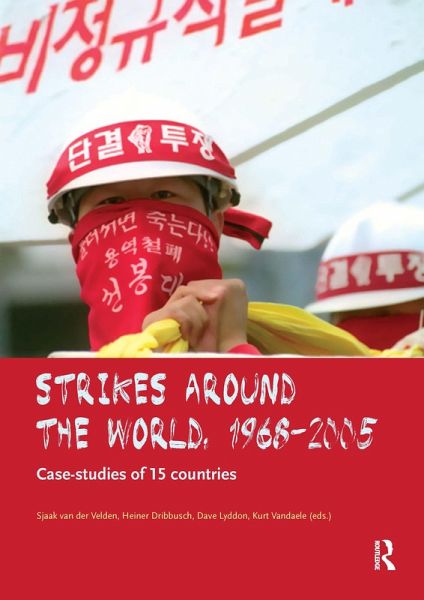
Are strikes going out of fashion or are they an inevitable feature of working life? This is a longstanding debate. The much-proclaimed 'withering away of the strike' in the 1950s was quickly overturned by the 'resurgence of class conflict' in the late 1960s and 1970s. The period since then has been characterized as one of 'labor quiescence'. Commentators again predict the strike's demise, at least in the former heartlands of capitalism.Patterns of employment are constantly changing and strike activity reflects this. The secular decline of manufacturing in mature industrialized economies is of major importance here (though the global relocation of manufacturing may lead to some 'relocation' of strikes). Simultaneously we see the growth of disputes in the service sector (the 'tertiarization' of strikes). This is evident particularly in public services, including health care, social care and education, and is accompanied by a 'feminization' of strikes, given the prevalence of women working there. This unique study draws on the experience of fifteen countries around the world - South Africa, Argentina, Canada, Mexico, United States, Korea, Australia, New Zealand, Belgium, Denmark, France, Germany, the Netherlands, Sweden and the United Kingdom. Covering the high and low points of strike activity over the period 1968-2005, the study shows continuing evidence of the durability, adaptability and necessity of the strike.
Dieser Download kann aus rechtlichen Gründen nur mit Rechnungsadresse in A, B, BG, CY, CZ, D, DK, EW, E, FIN, F, GR, HR, H, IRL, I, LT, L, LR, M, NL, PL, P, R, S, SLO, SK ausgeliefert werden.